make preferable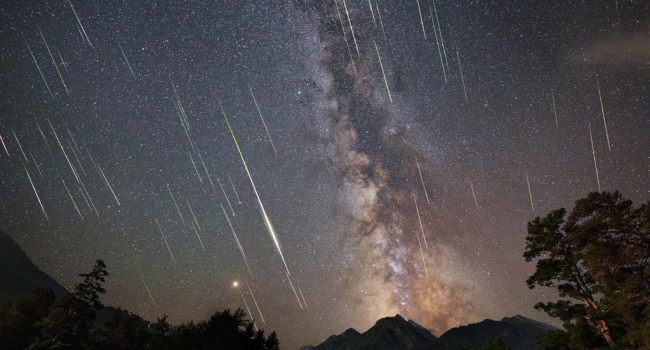
In the coming days, residents of Russia, Europe, and other countries in the Northern Hemisphere will be able to enjoy one of the most spectacular meteor showers of the year — the Perseids. This August “starfall” draws attention with its brilliance and abundance of meteors. Yevgeny Burmistrov, an astronomer at Perm Polytechnic University, explained the best ways to observe this event and why it is so impressive.
What are the Perseids?
The Perseids are named after the constellation Perseus, where the radiant — the point in the sky from which meteors appear to come — is located. In reality, these “shooting stars” are not stars at all, but tiny particles of dust and ice burning up in Earth’s atmosphere as they enter at a speed about 200 times faster than a bullet.
The meteor shower is linked to Comet Swift–Tuttle, which approaches the Sun once every 133 years, leaving behind a trail of cosmic debris. Every August, Earth passes through this trail. Some of these particles may have been ejected by the comet in 1992, 1862, 1737, or even earlier, in 1610.
The Perseids are one of the most intense meteor showers. At their peak, which will occur on the night of August 12–13, 2025, up to 150 meteors per hour can be seen, including bright fireballs with long glowing trails.
How to Best Observe the Perseids
To get the most out of the meteor shower, follow Yevgeny Burmistrov’s recommendations:
- Choose a time after the peak: Although the peak activity falls on August 12–13, the astronomer advises watching the Perseids until August 19. By then, the Moon’s brightness will have decreased from 90% to 30%, reducing skyglow and making more meteors visible, even if their frequency is slightly lower.
- Find a dark location: Choose a spot far from city lights where the sky is as dark as possible. The radiant in the constellation Perseus is highest after midnight, so the second half of the night is best for viewing.
- Be prepared: Bring a lounge chair or blanket to sit or lie comfortably. Meteors can appear anywhere in the sky, so simply look upward without focusing on one spot.
Alternative: Catching Meteors via Radio
If the weather doesn’t cooperate — for example, due to cloud cover — Burmistrov suggests an unusual method: “catching” the Perseids using FM radio. The ionized trails of meteors reflect radio signals, creating a radio echo effect. This works even during the day or in full cloud cover. To try it:
- Tune your FM receiver to a frequency without any station (usually between 88 and 108 MHz).
- Listen for short bursts of sound — these are radio signals reflected off meteor trails.
In Short
The Perseids of 2025 offer a chance to witness one of the year’s most breathtaking celestial events. Caused by particles from Comet Swift–Tuttle, the meteor shower peaks on the night of August 12–13, but the best time to observe will be until August 19, when the Moon becomes less bright. Choose a dark spot, be patient, and enjoy up to 150 meteors per hour. And if the weather doesn’t cooperate, try catching meteors on FM radio. This unique phenomenon is a reminder of just how wondrous and dynamic our Universe truly is.