make preferable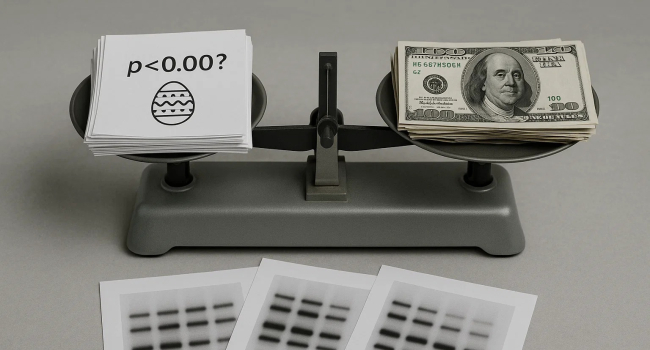
Until recently, astronomy and space sciences have remained largely untouched by the fraudulent practices of so-called “paper mills” and predatory journals — but that may be changing. A new report, published on August 4, 2025, in Proceedings of the National Academy of Sciences, warns that organized scientific fraud is beginning to threaten even this field. Researchers from Northwestern University, led by Rhys Richardson, reveal how criminal organizations make millions from fake studies — and why astronomy could become their next target.
Paper Mills and Predatory Journals: How the Fraud Works
As reported by Space.com, paper mills and predatory journals exploit researchers by offering, for a fee, to publish fake or low-quality studies. These works often contain plagiarism, meaningless data, or descriptions of trivial developments unworthy of publication. In some cases, authorship is sold for hundreds or thousands of dollars, with the papers undergoing sham peer review to appear in fraudulent journals.
- Example of journal hijacking: The British journal HIV Nursing ceased publication, but its domain was purchased by a criminal organization. Under the guise of the original journal, it began publishing articles unrelated to HIV or medicine — solely for profit.
- Fraudsters’ tactics: Paper mills reuse and copy data — for example, repeating identical graphs, as seen in some renewable energy studies. These “copy-paste” papers hinder legitimate research, including efforts to address the climate crisis.
According to Richardson, high-profit fields such as materials science, medicine, or energy are most vulnerable to fraudsters. Astronomy has so far remained relatively protected — but that may not last.
Why Astronomy Has Been Safe — For Now
Richardson identifies several reasons why astronomy has avoided widespread scientific fraud so far:
- Detection challenges: Experts tracking paper mills tend to focus on fields already heavily affected by fake research, such as medicine. Astronomy requires specialized knowledge, making fraudulent work harder to detect.
- Lower profitability: Astronomy is not yet seen as a high-revenue target for fraud, unlike renewable energy technologies or medicine. However, the growth of the space industry — particularly in developing countries where paper mills are most active — could attract criminal interest.
Richardson warns: “If paper mill activity already exists in astronomy, it may simply have gone undetected.”
A Growing Threat to Science
The report stresses that fake publications are beginning to outnumber legitimate journals in volume. If left unchecked, the problem could lead to:
- Polluted scientific literature: False data, if not caught in time, could become part of the scientific record, undermining trust in research.
- AI vulnerabilities: Artificial intelligence trained on fraudulent data may produce incorrect results in climate modeling, medical research, or space calculations.
- Risks to researchers’ careers: Systems that evaluate scientists by publication and citation counts incentivize the use of paper mills, normalizing fraud.
Co-author Luís Amaral warns: “If we do nothing, the scientific literature will become completely poisoned. We must recognize the seriousness of the problem and take action.”
AI as Both a Threat and a Challenge
The problem is worsened by artificial intelligence. Paper mills already use AI to mass-produce fake research, speeding its spread. If such work goes undetected, future generations of AI will be trained on false data — leading to errors in critical fields, including astronomy. For instance, inaccurate models of asteroid or stellar system orbits could affect space mission planning.
How to Protect Astronomy
To prevent the spread of fraud into astronomy, the report’s authors suggest:
- Tightening journal oversight: Stricter checks on editorial processes and peer review.
- Developing new detection methods: Using AI to identify repeated data patterns or suspicious publications.
- Rethinking academic incentives: Shifting the focus from the quantity of publications to their quality, reducing the temptation to use paper mills.
These measures are especially important as space research becomes an economic priority for many nations. The growth of investment in satellites, Mars missions, and telescopes could attract fraudsters unless preventive steps are taken.
In Brief…
Astronomy remains one of the few sciences that has avoided large-scale academic fraud, but its safety is at risk. Paper mills and predatory journals — earning millions from fake studies — may soon target the space sector as its profitability grows. The Richardson and Amaral report calls for urgent measures, from stricter journal oversight to rethinking how researchers are evaluated. Without action, fake data — amplified by AI — could erode trust in science, including space research. Astronomy must remain a reliable source of knowledge about the universe — and the time to protect its integrity is running out.