make preferable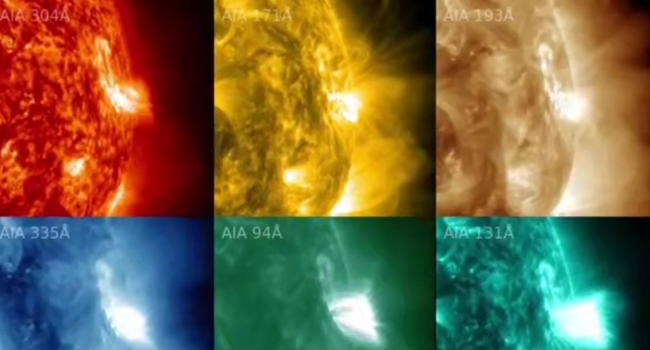
On August 10, 2025, the Sun experienced a massive explosive plasma ejection, affecting several active regions of the star at once. This was reported by the Solar Astronomy Laboratory of the Space Research Institute (IKI) of the Russian Academy of Sciences. The event, spanning an area about 500,000 kilometers in diameter — roughly a third of the visible solar disk — could have an impact on Earth, including the possibility of geomagnetic disturbances and auroras. Here’s what is known about the eruption and its potential consequences.
Details of the Solar Eruption
According to IKI RAS, the complex, explosive plasma ejection occurred in the Sun’s western hemisphere, in active region 4168. This region is at a significant angular distance from the Sun–Earth line, reducing the likelihood of a direct hit. However, secondary explosion centers are located closer to that line, and part of the ejected matter, along with magnetic fields, is heading toward Earth.
- Scale of the event: The ejection covered an area about 500,000 kilometers in diameter, roughly one-third of the visible solar disk. This makes it one of the largest events of the current solar cycle.
- Nature: The explosive ejection is classified as a coronal mass ejection (CME) accompanied by solar flares. Such events hurl billions of tons of plasma and charged particles into interplanetary space, which can interact with Earth’s magnetosphere.
- Date and time: The event was recorded on August 10, 2025. The plasma could arrive at Earth within 1–3 days, i.e., between August 11 and 13.
Potential Consequences for Earth
Some of the plasma and magnetic fields ejected toward Earth could trigger geomagnetic disturbances. Experts estimate the storm could reach G2 (moderate) levels, or, if intensified, G3 (strong) — similar to the geomagnetic storm forecast for August 8–9. Main risks include:
- Technological disruptions:
- Radio communications: Ionospheric disturbances may interfere with high-frequency (HF), very high-frequency (VHF), and ultra-high-frequency (UHF) communications, especially in polar regions.
- GPS and navigation: Satellite navigation errors may reach several meters, critical for aviation and maritime operations.
- Power grids: Geomagnetically induced currents may overload power systems, especially at high latitudes.
- Satellites: Charged particles threaten the electronics of low-orbit satellites, potentially affecting communication and observation systems.
- Health effects: Weather-sensitive individuals and those with cardiovascular conditions may experience headaches, blood pressure fluctuations, fatigue, or irritability. Recommendations include:
- Drink more water (2–3 liters daily).
- Avoid caffeine, alcohol, and stress.
- Maintain a regular sleep schedule (7–8 hours).
- Consult a doctor if you have chronic conditions.
- Auroras: As with the recent August 8–9 storm, the ejection could trigger bright auroras visible in northern and even mid-latitudes of Russia (Murmansk, Karelia, St. Petersburg, Moscow). The peak display is expected on the night of August 11–12, weather permitting.
Context: Recent Geomagnetic Storm
On August 10, 2025, the strongest geomagnetic storm in the past two months concluded after lasting over 30 hours. It was caused by an M4.5-class flare and activity from coronal hole CH69. That storm reached G3 levels, causing temporary radio communication outages and bright auroras. The current plasma ejection from region 4168 could be a continuation of this activity, as the Sun is at the peak of Solar Cycle 25, marked by heightened activity.
How to Prepare
To minimize risks, experts recommend:
For technology:
- Telecom and power grid operators: Increase system monitoring and prepare backup capacity.
- Users: Expect potential GPS inaccuracies from August 11–13 and avoid leaving devices in direct sunlight to prevent overheating.
For health:
- Weather-sensitive individuals: Keep medications for blood pressure and headaches handy, and avoid physical and emotional strain.
- Practice breathing exercises or light yoga to relieve stress.
For aurora viewing:
- Choose a location away from city lights (parks, rural areas).
- Use cameras with long exposure settings (ISO 800–3200, exposure 5–30 seconds).
- Check weather forecasts on sites like Gismeteo to find clear skies.
Summary
The explosive solar plasma ejection of August 10, 2025 — spanning a third of the Sun’s visible disk — could cause moderate to strong geomagnetic storms between August 11–13. This poses risks to radio communications, GPS, power grids, and satellites, and may affect the health of weather-sensitive people. At the same time, it offers the chance to witness spectacular auroras, especially in northern Russia. Stay tuned to updates from IKI RAS, NOAA, or xras.ru to be prepared for possible impacts and not miss this rare cosmic display.