make preferable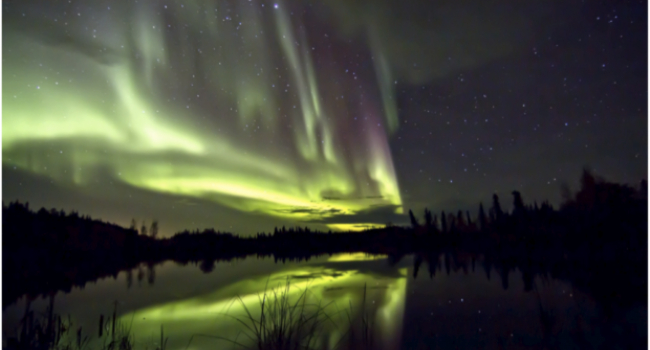
In the coming days, August 8 and 9, 2025, Earth will be hit by one of the strongest geomagnetic storms of the past two months, caused by a rare combination of a solar flare, a coronal mass ejection (CME), and coronal hole activity. According to forecasts, the storm will reach G2 (moderate) level on Friday and may intensify to G3 (strong) on Saturday. This event could impact technology, the health of weather-sensitive individuals, and offer a rare sight — a vivid aurora borealis. Experts from Perm Polytechnic University (PNRPU) and other sources spoke about the potential consequences and safety measures.
Cause of the Geomagnetic Storm
As PNRPU astronomer Evgeny Burmistrov told Gazeta.Ru, on August 5, 2025, a powerful M4.5-class solar flare occurred, accompanied by a coronal mass ejection. At the same time, coronal hole CH69 became active, releasing high-speed solar wind (up to 750–800 km/s). This rare coincidence intensifies disturbances in Earth’s magnetosphere.
According to the Solar Astronomy Laboratory of the Space Research Institute of the Russian Academy of Sciences, another flare of M2.8 strength was recorded on the morning of August 8, confirming high solar activity.
The geomagnetic storm will begin during the night of August 7–8, when Earth enters the coronal hole’s influence zone, with peak activity expected on August 8–9. The Kp index is forecasted at 5–6, corresponding to G2–G3 storm levels.
Impact on Technology
Geomagnetic storms of this magnitude can seriously affect technological infrastructure:
- Radio communication disruptions: High-frequency (HF), very-high-frequency (VHF), and ultra-high-frequency (UHF) radio communications may experience interference due to ionospheric disturbances that disrupt radio wave propagation. This is especially relevant for polar regions, where short-term outages are possible.
- GPS issues: Geomagnetic disturbances reduce satellite navigation accuracy, which may affect GPS in aviation, shipping, and mobile devices. Positioning errors could reach several meters.
- Power grid overloads: Increased electrical currents in the magnetosphere can cause power grid overloads, particularly at high latitudes. In 2024, NOAA reported similar malfunctions during a G5-level storm, although no major blackouts occurred in the U.S.
- Satellite risks: High-speed solar wind and charged particles can damage satellite electronics, particularly in low Earth orbit, threatening communication and observation systems.
According to NOAA, cellular networks (AT&T, T-Mobile) are less vulnerable, as they operate on frequencies unaffected by ionospheric disturbances. Nevertheless, telecom and energy companies are preparing for potential disruptions by enhancing infrastructure monitoring.
Impact on Health
For most people, the geomagnetic storm will pass unnoticed, but weather-sensitive individuals, the elderly, pregnant women, and those with chronic illnesses may feel unwell. Research indicates that about 70% of hypertensive crises, heart attacks, and strokes occur during geomagnetic storms. Symptoms may include:
- Headaches and migraines
- Blood pressure fluctuations
- Rapid heartbeat
- Weakness, irritability, drowsiness
- Exacerbation of chronic conditions (cardiovascular, neurological, respiratory)
These effects can appear 2–3 days before, during, or 1–2 days after the storm’s peak. General practitioner Marat Farrakhov advises weather-sensitive people to:
- Drink more water (2–3 liters daily)
- Avoid alcohol, caffeine, and energy drinks
- Maintain a regular sleep schedule (7–8 hours)
- Reduce physical and emotional stress, practice yoga or breathing exercises
- Ventilate rooms and spend more time outdoors
Aurora Borealis: A Rare Sight
One of the storm’s positive effects will be the chance to see the aurora borealis at latitudes where it normally doesn’t appear. According to Burmistrov, if skies are clear on the night of August 9, bright auroras will be visible across much of Russia, especially in northern regions (Murmansk, Karelia, Arkhangelsk).
In 2024, auroras were seen as far south as 28–38°N (Canary Islands, USA), and in Russia — in Moscow, Tula, and Kazan during a G3–G4 storm. Residents of St. Petersburg and the Leningrad Region may also witness the phenomenon if skies are cloud-free.
How to Prepare
For technology:
- Telecom operators and power grid managers: Strengthen monitoring and prepare backup systems
- GPS users: Expect possible navigation inaccuracies on August 8–9
- Check device battery levels and avoid leaving them in direct sunlight to prevent overheating
For health:
- Weather-sensitive individuals: consult a doctor in advance, keep medications for blood pressure or headaches on hand
- Follow a healthy lifestyle: balanced diet (vegetables, fruits, fish), avoid smoking and alcohol, engage in moderate physical activity
For aurora viewing:
- Choose a location with minimal light pollution (outside the city or in a park)
- Use cameras with long exposure settings (ISO 800–3200, exposure 5–30 seconds)
- Check the weather forecast to ensure clear skies
Conclusion
The geomagnetic storm of August 8–9, 2025, triggered by an M4.5 flare, a coronal mass ejection, and CH69 coronal hole activity, will be one of the most powerful in recent months. It could cause radio, GPS, and power grid disruptions and affect the well-being of weather-sensitive individuals. At the same time, it offers a rare chance to see vivid auroras even in mid-latitudes of Russia.
To minimize risks, follow forecasts from sources like Meteoagent, Gismeteo, or xras.ru, heed medical advice, and get ready to enjoy a cosmic spectacle. This storm is a reminder of how solar activity influences our planet — connecting technology, health, and natural wonders.