make preferable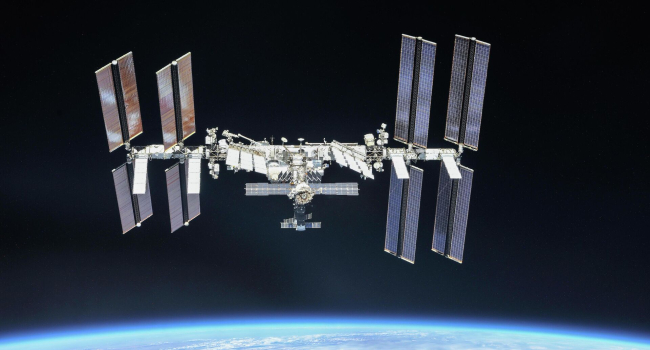
The International Space Station (ISS), which has stood for nearly 30 years as a symbol of international scientific cooperation, is nearing the end of its mission. Both Roscosmos and NASA have confirmed that the station will remain operational until 2028, with deorbiting to be completed by 2030–2031, depending on the strategy chosen and technical readiness.
Joint Operations Until 2028, Deorbit by 2030
Following a visit to the U.S., Roscosmos head Dmitry Bakanov announced that Russia and the U.S. had reached an agreement on the ISS program's timeline:
“We agreed to jointly operate the ISS until 2028, and the deorbit will take place by 2030,”
as reported by Gazeta.ru.
Technically, Russia will be represented by Roscosmos Deputy Director Sergey Krikalev, and the U.S. by NASA Deputy Administrator Kenneth Bowersox.
NASA and SpaceX’s Plan: Burn Up Over the Pacific
According to NASA, the ISS will be deorbited in early 2031 using a modified SpaceX Dragon capsule. The spacecraft will be equipped with 46 engines and over 16 tonnes of fuel, designed to safely direct the 430-ton structure toward Point Nemo in the South Pacific—known as the “satellite graveyard”, the most remote place on Earth.
NASA rejected plans to disassemble the ISS in orbit and return the parts to Earth, calling the idea too expensive and risky. A proposal to move the station to a higher orbit was also ruled out due to logistical challenges and concerns about space debris.
Why the ISS Is Being Retired
Constructed in the late 1990s and early 2000s, the ISS now contains many outdated systems. It requires constant orbital corrections by Russian Progress spacecraft, and its key components are no longer upgradeable, according to Roar News.
NASA has thus shifted to a strategy of developing commercial space stations, which are expected to replace the ISS by 2030. New platforms are being developed by companies like Axiom Space and SpaceX, while NASA also focuses on the Gateway project, a lunar-orbit space station planned under the Artemis program.
How the Final Phase Will Unfold
About six months before the final deorbit, the ISS crew will leave the station. Then, the autonomous SpaceX craft will begin gradually lowering the orbit. Four days before the last maneuver, the station will be brought down to about 220 km altitude, after which a controlled descent will begin.
NASA estimates that some debris — ranging in size from microwaves to small cars — may survive reentry and fall within a narrow 2,000 km long corridor.
Artifacts and Legacy of the ISS
Some items from the ISS will be returned to Earth for museum display, including the ship’s bell, logbooks, and commemorative panels. However, recovering large components isn’t feasible — Bowersox noted that it's simply not economically viable.
Saying goodbye to the ISS marks the end of an era, but not of space exploration. NASA hopes that a new commercial model and the lunar program will bring even greater opportunities for science and space development.