make preferable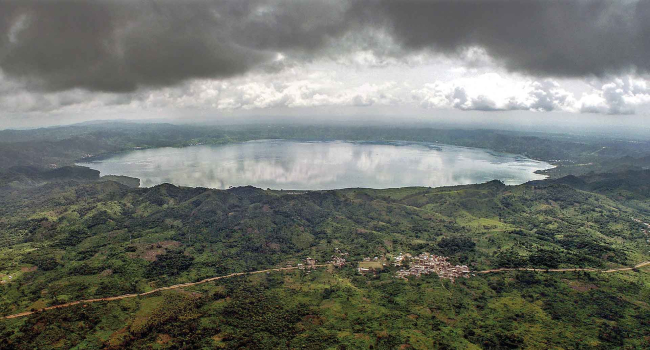
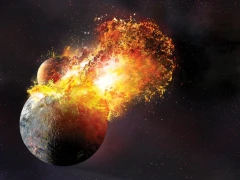
The Bosumtwi Crater in Ghana is a rare natural formation created around 1.07 million years ago by a meteorite impact. Located in the mineral-rich Ashanti Belt, it is the only natural inland lake in Ghana and one of just 190 confirmed meteorite craters worldwide — only 20 of which are found on the African continent. Recognized as a geological heritage site by the International Union of Geological Sciences (IUGS), Bosumtwi holds immense scientific, cultural, and economic value. Yet this unique site is under threat from illegal mining operations.
The Uniqueness of Bosumtwi Crater
Meteorite, asteroid, or comet impacts are fundamental geological processes that shape the surfaces of planets across the Solar System. While the Moon, Mercury, Mars, and Venus are covered in such craters, they are rare on Earth due to erosion, sedimentation, and other processes that erase their traces over time. Bosumtwi stands out due to its exceptional preservation: a well-defined circular basin about 10.5 km in diameter filled with a lake, surrounded by an uplifted crater rim and outer plateau. This makes it an ideal natural laboratory for studying impact processes, past climates, and planetary evolution.
Lake Bosumtwi is one of only six known impact crater lakes on Earth, highlighting its extraordinary scientific significance. The crater allows researchers to investigate rare geological phenomena such as rampart craters — crater types commonly seen on Mars, Venus, and icy moons like Ganymede and Europa. A 2019 study showed that Bosumtwi is an Earth-based analog of such formations, crucial for understanding how similar craters form on other worlds.
Beyond its scientific value, the crater holds deep cultural importance for the Ashanti people, who consider the lake sacred and spiritually significant. Economically, the site supports ecotourism and local livelihoods through fishing and tourism, with its stunning scenery drawing visitors from around the globe.
The Threat of Illegal Mining
Despite its uniqueness, Bosumtwi Crater faces growing threats from illegal artisanal gold mining, which is widespread in the Ashanti Belt. Research conducted in 2019, along with satellite imagery analysis in 2025, reveals that such activities have intensified over the past decade. Miners use primitive tools and toxic chemicals such as mercury and cyanide, and they extract soil from riverbeds, causing extensive environmental damage.
These operations threaten the crater in several critical ways:
- Lake contamination: Toxic heavy metals used in mining are polluting Lake Bosumtwi, endangering its ecosystem and the health of nearby residents who rely on it for household use.
- Destruction of geological features: Mining on the crater rim and surrounding areas is damaging valuable geological records essential for research.
- Deforestation and land degradation: Illegal mining contributes to deforestation and soil erosion, harming biodiversity and nearby agricultural land.
- Risk to ecotourism: Environmental damage reduces the area’s appeal to tourists, potentially undermining the local economy.
If these trends continue unchecked, Bosumtwi could lose its scientific, cultural, and economic significance — a devastating loss for Ghana and for global scientific heritage.
The Need for Protection
The IUGS geo-heritage designation underscores the urgent need for protection. Key recommended actions include:
- Enhanced satellite monitoring: Utilizing optical satellite imagery (e.g. Sentinel-2, Landsat, PlanetScope) enables detection of illegal mining, deforestation, and environmental changes. These tools can track mining pits, sediment runoff, and forest loss over time.
- Strict enforcement of mining bans: Stronger legal enforcement, including patrolling and penalties, is necessary to curb illegal operations.
- Community engagement programs: Creating educational and economic alternatives for local residents — such as ecotourism or sustainable fishing — can reduce reliance on illegal mining.
- International collaboration: Given its global importance, international organizations like IUGS and UNESCO could assist Ghana in developing and funding conservation strategies.
Conclusion
The Bosumtwi Crater is not just a geological wonder — it is a cultural and economic treasure for Ghana. Its preservation offers a rare opportunity to study meteorite impacts and planetary history, while also serving as a cornerstone of local ecotourism and spirituality. But this remarkable site is now at risk from illegal gold mining that pollutes the environment and destroys invaluable heritage. Urgent actions — including satellite monitoring, enforcement, and local community support — are essential to preserve this irreplaceable site for future generations of scientists, visitors, and residents alike.