make preferable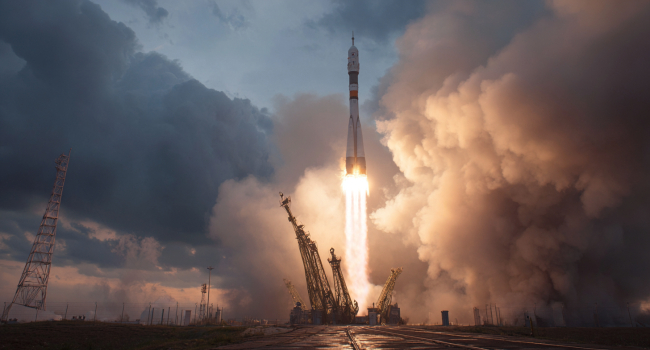
An international team of chemists led by Professor Peter Schreiner from the University of Giessen in Germany has made a breakthrough by synthesizing a stable molecule of hexanitrogen (N₆) for the first time. This substance, described as the most energy-dense ever created by humans, could become the basis for a new generation of environmentally friendly rocket fuel that leaves no carbon footprint. Schreiner spoke about this in an interview with the German TV channel n-tv, and the research results were published in the journal Nature.
Hexanitrogen: A New Level of Energy Density
Hexanitrogen (N₆) is a molecule consisting exclusively of six nitrogen atoms bonded in a stable configuration. Its uniqueness lies in its high energy density, which, according to Schreiner, surpasses all previously known non-nuclear substances. The synthesis of N₆ was carried out in laboratory conditions at an extremely low temperature of minus 196°C, resulting in a thin film of pure hexanitrogen.
“This discovery opens the path to creating rockets that emit only pure nitrogen—the main component of air—as opposed to modern rockets like SpaceX’s Falcon 9, which use methane and oxygen and produce significant CO₂ emissions,” Schreiner explained. Traditional rocket fuels like kerosene with liquid oxygen or hydrazine have high energy density, but their combustion leads to carbon dioxide and other harmful emissions, creating environmental strain.
Toward “Green” Rockets
The main goal of Schreiner’s team is to develop rocket fuel with a zero carbon footprint. When decomposed, hexanitrogen releases only molecular nitrogen (N₂), which makes up about 78% of Earth’s atmosphere, making it environmentally safe. This is especially relevant in light of studies showing that frequent rocket launches may harm the planet’s ozone layer.
However, using N₆ in rocketry requires overcoming many technical and engineering challenges. “In our laboratory, initiating N₆ explosions is prohibited for safety reasons,” Schreiner noted. For further testing, the team has begun collaborating with a laboratory in Dresden that has a remote facility for safe production and testing of hexanitrogen.
“If we get sufficient funding and solve the engineering challenges, a test rocket based on N₆ could be built in 3–5 years,” the professor added. He emphasized that implementing the project will require significant investment and further research to confirm the substance’s stability and safety under real conditions.
Potential and Risks
In addition to rocket fuel, hexanitrogen could be used in other areas, such as high-energy storage materials or eco-friendly explosives in the mining industry. Schreiner also noted the theoretical possibility of using N₆ for military purposes, although his team has not yet received any inquiries from defense institutes. “I’m surprised we haven’t yet gotten a call from some military research institute,” he added with a smile.
However, N₆’s high energy density makes it potentially dangerous. The nitrogen molecule in this configuration is unstable under normal conditions, and its decomposition can release a vast amount of energy. This requires strict control during production and testing to avoid uncontrolled reactions.
Context and Significance of the Discovery
The discovery of hexanitrogen comes amid growing interest in green technologies in the space industry. Modern rocket fuels like kerosene with liquid oxygen (used in RD-180, Merlin, and other engines) or hydrazine provide high performance, but their environmental shortcomings are becoming increasingly apparent. For example, solid rocket fuel based on ammonium perchlorate, used in space shuttles, releases the equivalent of 550 tons of hydrochloric acid with each launch.
Meanwhile, Swedish scientists previously developed eco-friendly fuel based on nitrogen and oxygen, which is 20–30% more efficient than traditional analogs. Schreiner’s team is taking it further by offering fuel with potentially even greater energy density and a completely zero carbon footprint.
What’s Next?
The next step is testing N₆ in conditions close to real-world usage. Collaboration with the Dresden lab will allow Schreiner’s team to study hexanitrogen’s behavior under high temperatures and pressures typical for rocket engines. Success in these experiments could open a new era in space technologies, making rockets not only more powerful but also environmentally safe.
“If everything goes well, we can challenge current rocketry standards, including the approaches of companies like SpaceX,” Schreiner noted. However, he stressed that the path from laboratory synthesis to practical use will take years and require major investment.
Conclusion
The synthesis of hexanitrogen (N₆) is not just a scientific achievement, but a potential game-changer for the space industry. If Schreiner’s team manages to prove the viability of this substance as rocket fuel, humanity could gain an eco-friendly alternative that may revolutionize space launches. For now, the discovery remains in the research stage, and the coming years will show whether hexanitrogen will become the fuel of the future or remain a laboratory curiosity. In any case, the work of German scientists is already setting a new direction for the development of green technologies in space.