make preferable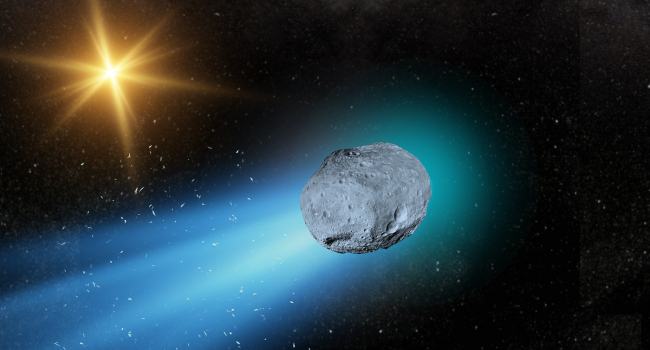
The interstellar object 3I/ATLAS, discovered on July 1, 2025, has sparked lively discussions in the scientific community and among the public. This is the third interstellar visitor to the Solar System, after 1I/ʻOumuamua (2017) and 2I/Borisov (2019). It is approaching the inner planets, and its unusual characteristics give rise to both scientific hypotheses and speculation. Here is when 3I/ATLAS will get close to Earth, what we know about it, and why some scientists consider the possibility of its artificial origin.
When will 3I/ATLAS approach Earth?
The interstellar object 3I/ATLAS, also known as comet C/2025 N1 (ATLAS), is moving along a hyperbolic trajectory through the Solar System. According to calculations, it will reach perihelion—the closest point to the Sun—on October 29, 2025, at a distance of about 1.36 astronomical units (AU), or 203.5 million kilometers from the star. The closest approach to Earth is expected on December 19, 2025, when the object will be at a distance of 1.8 ± 0.1 AU, or about 270 million kilometers from our planet.
Some sources, citing Harvard astrophysicist Avi Loeb, suggest that 3I/ATLAS may approach Earth between November 21 and December 5, 2025. However, these dates are not confirmed by more accurate orbital calculations and are likely an exaggeration. NASA and other authoritative sources emphasize that the minimum distance of 1.6–1.8 AU (240–270 million kilometers) makes the object safe for Earth.
What is 3I/ATLAS?
3I/ATLAS was discovered on July 1, 2025, by the ATLAS (Asteroid Terrestrial-impact Last Alert System) telescope in Chile at a distance of 4.5 AU (670 million kilometers) from the Sun. Initially, the object received the temporary designation A11pl3Z, but after confirmation of its interstellar origin, the International Astronomical Union (IAU) assigned it the designation 3I (third interstellar object) and classified it as the non-periodic comet C/2025 N1 (ATLAS).
The object has a record orbital eccentricity (6.15 ± 0.17), confirming its origin beyond the Solar System. It moves on a retrograde trajectory at a speed of about 58 km/s (210,000 km/h) relative to the Sun, which greatly exceeds the speed of local objects. Observations conducted on July 2, 2025, using the Deep Random Survey telescopes (Chile), Lowell Discovery Telescope (Arizona), and Canada-France-Hawaii Telescope (Mauna Kea) showed a coma and a short tail about 3 arcseconds long, indicating the object’s cometary nature.
According to estimates, the nucleus of 3I/ATLAS is about 15–24 kilometers in diameter, making it the largest known interstellar object (for comparison: 1I/ʻOumuamua — about 100 meters, 2I/Borisov — about 1 kilometer). Spectroscopic data obtained from telescopes such as the Nordic Optical Telescope and the Palomar 200-inch telescope indicate the presence of water ice and silicates, as well as a reddish coma color typical of dusty comets like 2I/Borisov.
Why did controversy arise?
The excitement around 3I/ATLAS stems from a hypothesis by Avi Loeb, published on July 16, 2025, on the preprint server arXiv. Loeb, known for his bold theories on extraterrestrial technology, suggested that 3I/ATLAS might be an artificial object, possibly an alien probe or spacecraft. He justifies this with the following arguments:
- Unusual trajectory: The object's orbit is inclined by only 5 degrees to the plane of Earth's orbit, which, according to Loeb, has a chance coincidence probability of less than 0.2%. Moreover, 3I/ATLAS passes close to Venus, Mars, and Jupiter, which resembles gravity assists used in spaceflight (the probability of such flybys is estimated at 0.005%).
- Stealth: At perihelion on October 29, 2025, the object will be behind the Sun, making it difficult to observe from Earth. Loeb considers this a possible sign of “strategic behavior.”
- Size and brightness: The abnormally large size (up to 24 km) and high brightness (11th magnitude near Mars) make 3I/ATLAS stand out among other interstellar objects.
Loeb also references the “dark forest” hypothesis from science fiction, suggesting that extraterrestrial civilizations may hide their presence and send out probes for reconnaissance. He previously made similar claims about ʻOumuamua, which were not confirmed.
Reaction from the scientific community
Many scientists are skeptical of Loeb’s hypothesis. Nathan Eismont from the Space Research Institute of the Russian Academy of Sciences emphasized that there is no reason to consider 3I/ATLAS an artificial object. According to him, the object's trajectory is fully explained by orbital mechanics, and the hype is due to the rarity of interstellar visitors. Astronomer Vladimir Surdin, in an interview with Gazeta.Ru, confirmed that 3I/ATLAS is a comet and that even potential changes in its trajectory would not indicate an artificial origin.
Chris Lintott from Oxford University called Loeb’s speculation “nonsense” that undermines trust in serious research on interstellar objects. He noted that the composition of 3I/ATLAS (water ice and silicates) is typical for comets, and its behavior falls within natural processes such as ice sublimation. NASA also confirms that the object poses no threat and that its activity is caused by the evaporation of volatiles like water, carbon monoxide, or ammonia.
Observations and further research
3I/ATLAS is already being actively studied. Early images of the object were found in ATLAS and Zwicky Transient Facility data from June 5–29, 2025, as well as in observations by the Weizmann Observatory (May 21) and the TESS telescope (May 7 – June 3). The Hubble Space Telescope captured images on July 21, 2025, and will conduct ultraviolet spectroscopy in November to analyze the composition of gases and the sulfur-to-oxygen ratio. The James Webb Space Telescope (JWST) has scheduled observations in August and December 2025 for infrared spectroscopy to detect the presence of water, carbon dioxide, carbon monoxide, and ammonia.
These studies will help clarify the nature of the object. If 3I/ATLAS is indeed a comet, its activity is explained by ice sublimation, which accounts for the coma and tail. If anomalies are found that do not correspond to natural processes, this may revive the debate about its origin.
Is 3I/ATLAS safe for Earth?
Despite sensational headlines, 3I/ATLAS poses no threat to Earth. The distance of 240–270 million kilometers (1.6–1.8 AU) at closest approach rules out any chance of a collision. For comparison, this is nearly twice the distance between Earth and the Sun. Nathan Eismont noted that a catastrophe would only be possible in the event of a direct impact, but the current trajectory excludes such a scenario.
The object will pass 28 million kilometers from Mars, where it will reach 11th magnitude, making it barely visible to the MRO spacecraft. After passing perihelion, 3I/ATLAS will exit the Solar System, continuing on its hyperbolic path.
Conclusion: comet or something more?
As of now, 3I/ATLAS is classified as an interstellar comet with typical characteristics: hyperbolic orbit, coma, tail, and a composition including water ice and silicates. Avi Loeb’s hypothesis about an artificial origin remains speculative and is not supported by most scientists due to a lack of evidence. However, the object’s unusual features, such as its size and trajectory, make it an interesting subject for continued research.
By December 2025, when 3I/ATLAS reaches its closest point to Earth, astronomers will have more data thanks to observations from Hubble, JWST, and ground-based telescopes. These data will either confirm its cometary nature or, in the unlikely case, reveal anomalies that could change our understanding of interstellar objects. For now, humanity can only observe and study this mysterious visitor, which most likely is just another “cosmic snowball” from a distant star system.