make preferable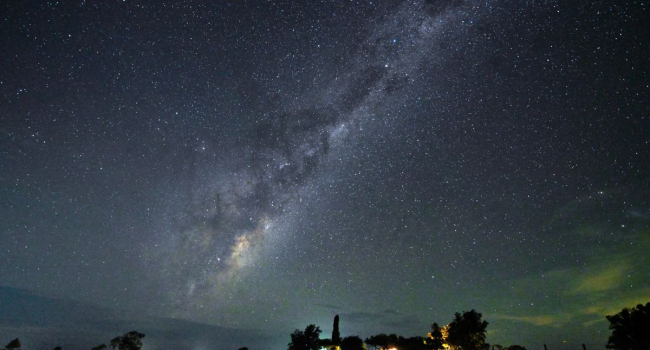
Just as Earth has its Seven Wonders of the World, the cosmos offers its own “wonders”—awe-inspiring celestial objects visible to the naked eye, with binoculars, or through a small telescope. Inspired by the ancient list of seven as a symbol of perfection, Space.com compiled a selection of seven cosmic marvels that amaze with their beauty and mystery. These “Wonders of the Universe” are based on the opinions of astronomers and stargazing enthusiasts alike.
- The Moon — The Closest Wonder
The Moon is the brightest object in the night sky and a unique celestial body, always showing us the same face due to its synchronous rotation with Earth. Even with binoculars, hundreds of craters, mountains, and rifts become visible. Astronomer Ernest Cherrington noted that with 7x50 binoculars, 605 of the Moon’s 670 named features can be seen, including major craters and mountain ranges. The best time to observe the Moon is during its first and last quarters, when shadows along the terminator (the line between light and darkness) emphasize the terrain. More than just a beautiful sight, the Moon is a “geographical” map of another world accessible to everyone.
- Saturn’s Rings — The Jewel of the Solar System
Saturn and its rings are a true spectacle of the night sky. To the unaided eye, it appears as a bright yellowish-white star, but through a telescope at 30x magnification or more, its magnificent rings—made of billions of ice particles ranging in size from tiny grains to kilometers—become visible. These rings orbit the planet, creating a mesmerizing scene. Saturn moves slowly, spending about 2.5 years in each zodiac constellation, and takes 29.5 years to orbit the Sun. In 2032, its rings will be at their most open from Earth’s perspective, tilted at 26.9°, offering an unforgettable view even to seasoned observers.
- Orion Nebula — A Stellar Nursery
The constellation Orion, with its distinctive belt of three stars, houses the famous Orion Nebula in its “sword.” This 25-light-year-wide cloud of gas and dust lies 1,350 light-years away. Through binoculars, it appears as a gray-green glow; with a telescope, it becomes a luminous region lit by ultraviolet radiation from four hot stars within. Scientists believe it's a birthplace for new stars. Orion also features notable stars like Rigel, 47,000 times brighter than the Sun, and Betelgeuse, a pulsating supergiant nearing the end of its life.
- The Milky Way — Our Galaxy
The Milky Way appears as a glowing band of stars stretching across the sky in dark, rural locations. It is our galaxy, containing over 100 billion stars. Its brightest section lies in the constellation Sagittarius, home to the galactic center about 30,000 light-years away. Binoculars reveal star clusters, dark dust lanes like the Great Rift in Cygnus, and rich stellar regions in Auriga, Perseus, and Cassiopeia. In winter, we view the “suburbs” of our galaxy; in summer, we peer into its “downtown.” The Milky Way reminds us of the vastness of our cosmic home.
- Hercules Globular Cluster (M13) — A Starry Chrysanthemum
Located in the constellation Hercules, between the stars Arcturus and Vega, M13 is one of the most spectacular globular clusters in the northern sky. To the naked eye, it's a faint smudge; binoculars show it as a glowing cloud, and a 150 mm telescope begins to resolve individual stars. Containing hundreds of thousands of stars packed into a spherical shape, M13 is part of a halo of clusters surrounding our galactic center. Observing it offers a glimpse into the structure of the Milky Way.
- Crab Nebula (M1) — A Supernova’s Legacy
The Crab Nebula in the constellation Taurus is the remnant of a supernova that exploded in 1054 CE. The star, ten times more massive than the Sun, shone so brightly it was visible in daylight for 23 days. Today, the nebula, expanding at 1,500 km/s, appears in telescopes as a cloud of gas with a central pulsar—a neutron star spinning 30.2 times per second. Though only 30 km wide, this pulsar has the mass of the Sun and a density so extreme that a teaspoon of its matter would weigh a billion tons. M1 inspired Charles Messier to begin cataloging nebulae.
- Andromeda Galaxy (M31) — Our Cosmic Neighbor
Located in the constellation Andromeda, M31 is the closest spiral galaxy to our own, 2.5 million light-years away. It appears as a faint, elongated smudge to the unaided eye but becomes a bright cloud with a starlike core in binoculars or a telescope. The light we see began its journey when mastodons still roamed Earth. Andromeda contains about a trillion stars and is accompanied by two satellite galaxies, M32 and M110. This majestic sight offers a powerful reminder of the vast scale of the Universe.
Why These Seven?
These objects were chosen for their beauty, accessibility, and scientific importance. The Moon astonishes with its detail, Saturn with its rings, Orion with its stellar nursery, the Milky Way with its grandeur, M13 with its star-packed density, the Crab Nebula with its explosive history, and Andromeda with its staggering scale. With just a pair of binoculars or a small telescope, you can experience these wonders firsthand and feel your connection to the cosmos.