make preferable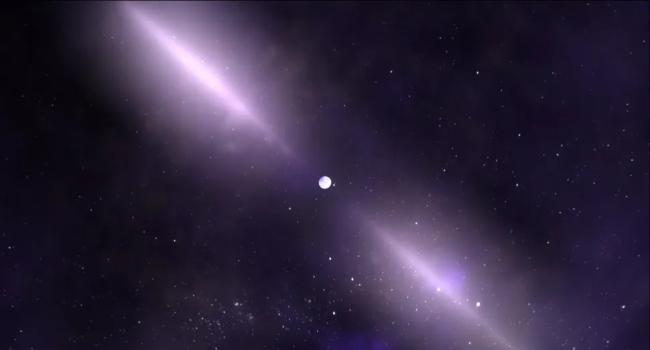
Twenty-two years of observations of the pulsar PSR J0922+0638 have revealed astonishing features in its behavior, raising new questions about the physics of neutron stars. This object — a superdense remnant of a long-dead star — displays unusual “glitches” in its rotation that occur with surprising regularity.
What Is a Pulsar?
Pulsars are neutron stars that rotate at incredibly high speeds and emit regular pulses of radiation. PSR J0922+0638 spins with a period of 0.43063 seconds, maintaining this rhythm with remarkable consistency over hundreds of thousands of years. These stars are extremely dense: their mass is several times greater than that of the Sun, yet they span only a few kilometers in diameter. This makes them some of the densest objects in the universe, second only to black holes.
Inside a pulsar, matter is compressed to the extreme — neutrons and protons fuse into a massive atomic nucleus. While scientists have a partial understanding of the outer layers of neutron stars, the processes occurring in their cores remain a complete mystery. Exotic quantum forces prevent pulsars from collapsing into black holes, but the true nature of these forces is still unknown.
Glitches and Their Regularity
Astronomers analyzed data collected over 22 years from the Nanshan radio telescope in China and the MeerKAT array in South Africa. They found that PSR J0922+0638 is not as stable as it appears. More than a dozen "glitches" — sudden changes in rotation speed — were recorded over two decades. Though these glitches alter the star’s spin by less than a billionth, for a pulsar, this represents a significant change in energy.
What’s especially surprising is that the glitches occur roughly every 550 days. Additionally, scientists noticed that the pulsar’s rotation speed gradually speeds up and slows down in a cycle lasting between 500 and 600 days. The matching durations of these phenomena suggest a possible connection.
Possible Causes
Researchers have not yet identified the exact cause of the glitches, but they propose several theories:
- Magnetic Fields: Pulsars possess incredibly strong magnetic fields that may store and release energy in cycles. PSR J0922+0638 could be undergoing magnetic activity cycles similar to the Sun’s, with alternating periods of strong and weak magnetic forces.
- Superfluid Core: The pulsar’s core might contain a layer of superfluid particles. Variations in this exotic fluid could affect the star’s rotation, and sudden shifts in flow direction might trigger the observed glitches.
The Enigma of Pulsar Physics
The precise cause of the glitches and their connection to the star’s cyclical rotation changes remain unknown. However, the observations of PSR J0922+0638 highlight just how complex and unique the processes inside neutron stars truly are. Long-term studies like this one help scientists gradually unravel the mysteries of physics under the most extreme conditions in the universe.
In the future, astronomers hope to gather more data to better understand the structure of pulsars and the origins of their strange behaviors. PSR J0922+0638 has already shown that even dead stars can surprise us with their activity and mystery.