make preferable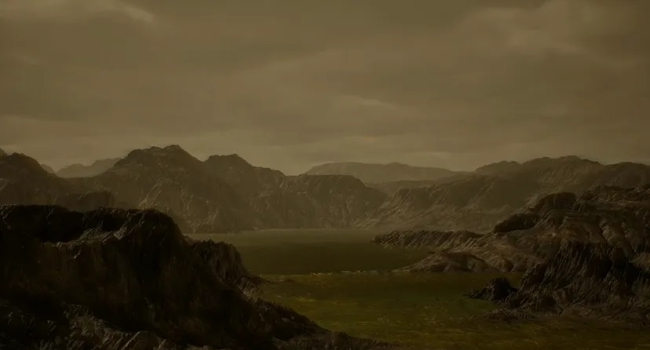
NASA scientists have discovered that vesicles—cell-like structures crucial in the origin of life—may be forming on Titan, Saturn’s largest moon. Unlike Earth, where water is central to life, Titan’s lakes and seas are filled with liquid hydrocarbons like methane and ethane. A new study, published on July 10 in the International Journal of Astrobiology and reported by Space.com, offers a mechanism that explains how complex, life-essential molecules could emerge under these conditions.
A Unique Environment
Titan is the largest satellite in the solar system—larger than Mercury—and has a thick atmosphere about 1.5 times denser than Earth’s. This is due to its low surface temperature (around -180°C) and its distance from the Sun, which shields its atmosphere from solar wind. The atmosphere is mostly nitrogen (about 95%), while its clouds are rich in methane, which plays a major role in a weather cycle: it falls as rain, fills rivers, lakes, and seas, and then evaporates under sunlight, returning to the atmosphere.
NASA’s Cassini mission (2004–2017) revealed that this methane cycle shapes rivers, lakes, and seas on Titan’s surface, much like water does on Earth. Under solar radiation, methane molecules break down and form complex organic compounds—potential building blocks of life.
Vesicle Formation on Titan
The key finding is that vesicles—structures similar to cell membranes—might be forming in Titan’s hydrocarbon lakes. On Earth, these structures form from amphiphiles: molecules with a water-loving (hydrophilic) and a water-repelling (hydrophobic) part, which self-assemble into spherical shells. On waterless Titan, scientists believe amphiphiles adapted to hydrocarbon environments could form similar structures.
Led by Conor Nixon from NASA’s Goddard Space Flight Center, the research team proposed the following scenario:
- Methane rain creates splashes in Titan’s lakes, which get coated with amphiphiles.
- As these droplets fall back into the lake, their shells merge with a surface amphiphile layer, forming double-layered vesicles that trap internal liquid.
- These vesicles, like primitive cells, could spread across the lakes and interact—potentially initiating further chemical evolution.
“The presence of vesicles on Titan shows an increase in order and complexity, a necessary condition for the emergence of life,” Nixon explained. Though not true cells, these structures represent a significant step toward forming protocells that might evolve into more complex systems.
Scientific Impact and Missions
This discovery heightens interest in NASA’s upcoming Dragonfly mission, scheduled to launch in 2028 and arrive on Titan in 2034. The nuclear-powered rotorcraft will investigate Titan’s prebiotic chemistry and habitability. Insights into vesicle formation could reshape the way we search for life on Titan, expanding our understanding of where and how life might arise.
The research also sheds light on the origins of life on Earth. If vesicles can form in Titan’s hydrocarbon environment, it supports the idea that life doesn’t necessarily require water and could emerge under alternative conditions.
Challenges and Future Directions
While the study confirms that vesicle formation is possible, researchers emphasize that more data is needed on the chemical composition of Titan’s lakes to assess their potential for sustaining protocells. Dragonfly will analyze organic molecules on the moon’s surface and in its atmosphere to test these ideas.
Key challenges include:
- Complex chemistry: It’s unclear which amphiphiles exist on Titan and how they behave in hydrocarbons.
- Extreme conditions: Titan’s cold, waterless environment makes biological modeling difficult.
- Energy sources: Protocell evolution requires energy, which is limited on Titan due to weak sunlight.
Conclusion
NASA’s discovery of possible vesicle formation in Titan’s lakes is a major step forward in understanding prebiotic chemistry and life’s potential beyond Earth. The hydrocarbon lakes of this Saturnian moon may host the molecular precursors of life. The Dragonfly mission, set to explore Titan in 2034, is expected to deliver critical data that could confirm or challenge this hypothesis.
This research underscores a profound idea: life may not be bound to water. Titan’s alien chemistry opens new frontiers in astrobiology and expands the search for extraterrestrial life to worlds once thought uninhabitable.