make preferable
Solar activity, which will peak in 2025, is expected to gradually decline over the next four years. However, this does not rule out the possibility of powerful solar flares and geomagnetic storms on Earth. This was stated in an interview with RIA Novosti by Sergey Bogachev, head of the Solar Astronomy Laboratory at the Space Research Institute of the Russian Academy of Sciences (IKI RAN). Meanwhile, scientists from Perm Polytechnic and the Polytechnic School have developed a model that predicts solar cycles with over 90% accuracy, helping to better prepare for such events.
Solar Activity Forecast
According to Sergey Bogachev, the current 25th solar cycle, which will reach its peak in 2025, will gradually decline over the next four years, until 2029. However, this period may still see unexpected and powerful events.
“The cycle will slowly fall over four years. And during this period, unexpected, very strong events — powerful flares and storms — are possible,” the scientist emphasized.
Historical data supports the likelihood of such anomalies. For example:
- In 2003, two years after the peak of the 23rd cycle, a record-breaking flare of the 21st century occurred.
- In 2017, three years after the 24th cycle's peak, the most powerful flare of that cycle was recorded.
Bogachev compared solar cycles to earthly climate: just as snow can fall in May, anomalous flares can occur even during the decline of solar activity. A truly calm period is expected only by 2029–2030, possibly partially extending into 2031.
Consequences of Magnetic Storms
Magnetic storms caused by solar flares can significantly affect Earth in several ways:
- Satellites: Geomagnetic disturbances may disrupt navigation and communication systems, including GPS and satellite communications.
- Power Systems: Strong storms can overload electrical grids — for example, in 1989, millions were left without power in Canada due to a geomagnetic event.
- Human Health: Some studies suggest a link between magnetic storms and worsened health in weather-sensitive individuals, although this effect requires further research.
In 2025 alone, several powerful X-class solar flares have already been recorded, including an event on July 14 that triggered a G4-level geomagnetic storm — one of the strongest categories. These events highlight the importance of accurate forecasting.
New Prediction Model
Scientists at the Perm National Research Polytechnic University (PNRPU) and the Polytechnic School have developed a unique model to forecast solar activity up to 11 years ahead. According to PNRPU graduate student Georgy Tashkinov, the model replicates 11-year solar cycles with more than 90% accuracy compared to historical data over the past 40–50 years. This allows researchers to:
- Predict activity peaks and potential magnetic storms
- Assess infrastructure and technology risks
- Plan protection measures for satellites and power grids
The model analyzes sunspots and solar magnetic fields using data from space observatories such as SOHO and SDO. In the future, the scientists plan to integrate the model with real-time monitoring systems to provide flare warnings several days in advance.
Global Context
Solar cycles, which last about 11 years, are a key factor influencing space weather. The current 25th cycle has been more active than expected — in 2024, the number of sunspots exceeded NOAA forecasts by 15%. This led to a series of strong flares and magnetic storms, including incidents in May and July 2025 that disrupted Starlink satellite operations.
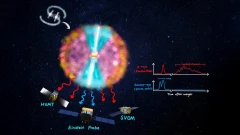
The global scientific community is actively studying solar activity. For instance, China launched the Xihe-2 satellite to monitor solar flares, while the European Space Agency is preparing the Proba-3 mission to study the solar corona. These initiatives complement efforts in Russia, where IKI RAN and PNRPU are developing tools to protect against space weather.
Conclusion
Although solar activity will gradually decline after its 2025 peak, the risk of powerful magnetic storms remains high through 2029. According to Sergey Bogachev, unexpected flares may continue to occur, posing threats to satellites, energy systems, and human health. The new PNRPU model, capable of predicting solar cycles with high accuracy, is expected to become a key tool for minimizing these risks. Past anomalies — such as the 2003 and 2017 flares — highlight the need for ongoing preparation for unpredictable cosmic events that could affect life on Earth.