make preferable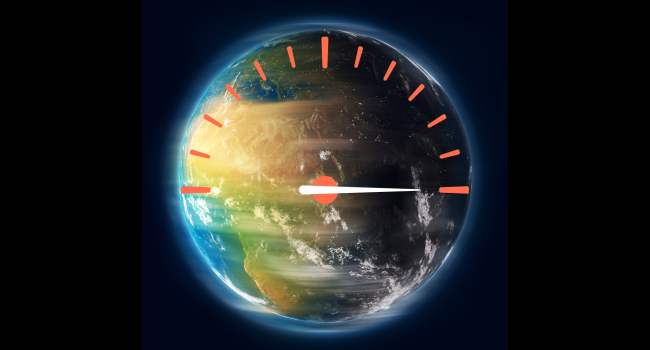
On July 22, 2025, Earth will complete its rotation slightly faster than usual, making this day the second shortest since observations began in 1973. The difference will be just 1.34 milliseconds compared to the standard 24 hours — imperceptible to humans, but indicating a mysterious trend of our planet’s accelerating rotation. If this trend continues, a “negative leap second” may be required in 2029 — an unprecedented event in the history of atomic clocks.
Earth’s Rotation Acceleration
From the invention of atomic clocks in 1973 until 2020, the shortest recorded day was shorter than 24 hours by 1.05 milliseconds. However, since 2020, Earth has been consistently breaking its own speed records. The absolute record was set on July 5, 2024, when the planet completed a full rotation 1.66 milliseconds faster than usual. In 2025, scientists predicted the shortest days would be July 9, July 22, and August 5. However, new data showed that July 10 became the shortest day of the year with a 1.36 millisecond difference, while July 22, with 1.34 milliseconds, takes second place. August 5 is expected to be shorter by 1.25 milliseconds.
Why Is Earth Spinning Faster?
Historically, Earth had shorter days — about 19 hours during its early existence, according to a 2023 study. This was due to the balance between solar atmospheric tides and lunar oceanic tides. Over time, the Moon, moving away from Earth due to tidal friction, slowed the planet’s rotation and lengthened the days. However, in recent years, the opposite process has been observed — a speeding up of rotation, with unclear causes.
One hypothesis, proposed in a 2024 study, links the acceleration to the melting of polar ice and rising sea levels, which redistribute Earth’s mass. However, this process is more likely to slow down acceleration rather than cause it. A more likely reason lies in changes within Earth’s liquid core. Leonid Zotov, an Earth rotation expert from Moscow State University, noted that “oceanic and atmospheric models do not explain this acceleration” and suggests the cause lies within the planet, possibly in the redistribution of angular momentum between the core, mantle, and crust.
Consequences and Forecasts
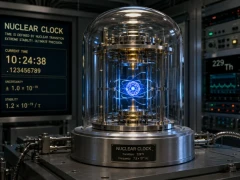
Earth’s accelerated rotation could lead to the need for a “negative leap second” around 2029 to synchronize atomic clocks with the planet’s actual rotation. This would be the first such event in history, as leap seconds have only ever been added in the past due to rotational slowing.
Zotov predicts that Earth’s acceleration may soon reverse, returning to the long-term trend of lengthening days. This suggests the current anomaly may be temporary.
Conclusion
July 22, 2025, will be the second shortest day in recorded history, highlighting the mysterious trend of Earth’s accelerating spin. While the causes of this phenomenon — whether due to core changes or mass redistribution — remain unclear, it compels scientists to reassess models of planetary dynamics. Future observations and studies will help reveal whether this acceleration is temporary or a sign of more significant changes in Earth’s behavior.