make preferable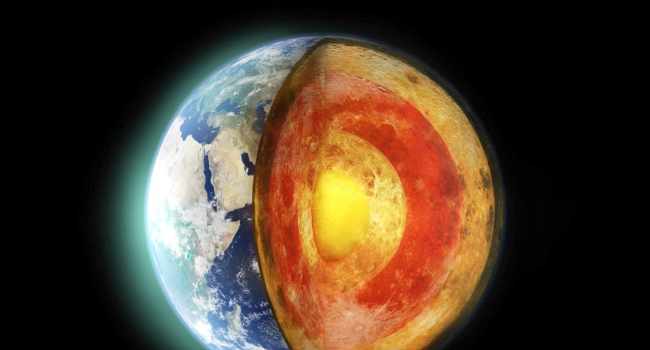
Chinese scientists have made a breakthrough in understanding how microorganisms survive deep underground where there is no sunlight. A study published in Science Advances reveals that organisms living in subterranean rock formations derive energy from chemical reactions triggered by tectonic faults. This discovery challenges the traditional notion that all life on Earth depends on the Sun and opens up new possibilities for the search for extraterrestrial life.
Mechanism of Survival
The study was conducted by Professors He Hongping and Zhu Jianxi from the Guangzhou Institute of Geochemistry, Chinese Academy of Sciences. They examined processes occurring in tectonic fault zones, where movements of the Earth’s crust create fractures in rocks. The researchers found that the formation of these cracks releases free radicals — highly reactive particles that split water molecules. This process produces hydrogen and hydrogen peroxide, which together create a redox (oxidation-reduction) gradient.
This gradient initiates chemical reactions involving iron found in water and rocks. Iron can transition between its ferrous (Fe²⁺) and ferric (Fe³⁺) states, supporting biochemical cycles of carbon, nitrogen, and sulfur. These cycles supply microorganisms with essential substances for metabolism, enabling them to survive in environments devoid of sunlight and organic compounds.
The Role of Tectonic Faults
A particularly significant finding is that tectonic faults, especially during earthquakes, produce vast amounts of hydrogen — up to 100,000 times more than other known mechanisms such as serpentinization (a reaction between minerals and water) or radiolysis (the splitting of water molecules under radiation). This makes fault zones a crucial energy source for the subsurface biosphere, allowing microorganisms to thrive several kilometers beneath the surface in extreme conditions.
Scientific Significance
The research reshapes our understanding of Earth's subsurface biosphere. Previously, it was believed that life deep underground depended on limited energy sources, such as seepage of organic matter from the surface or rare geochemical processes. Now, scientists have shown that tectonic faults create a powerful and stable energy source capable of sustaining complex microbial ecosystems. This explains how microorganisms can persist in harsh environments lacking light and nearly devoid of nutrients.
Moreover, the findings are highly relevant to astrobiology. The conditions created by tectonic activity on Earth may resemble those on other rocky planets, such as Mars or the moons of Jupiter and Saturn. The hydrogen and redox reactions identified in this study could be key to the search for life in subsurface oceans or rock formations on other celestial bodies.
Future Directions
The authors emphasize that their work opens new avenues for exploring underground life. Future studies aim to investigate how different types of tectonic faults affect microbial communities and identify which microorganisms are most resilient in such environments. Researchers also plan to simulate similar processes on other planets to better understand the potential for extraterrestrial life.
This discovery highlights the importance of interdisciplinary research that combines geochemistry, microbiology, and planetary science. Understanding how life survives in Earth's extreme environments could be crucial to unlocking the mysteries of biospheres beyond our planet.
Conclusion
The discovery by Chinese scientists changes our understanding of life in Earth's depths. Tectonic faults, which generate hydrogen and hydrogen peroxide, provide microorganisms with energy, allowing them to survive without sunlight. This not only expands our knowledge of the subsurface biosphere but also offers new perspectives for the search for life in the universe. The research underscores the idea that life may be far more resilient and widespread than previously thought and inspires further exploration of both Earth and space.