make preferable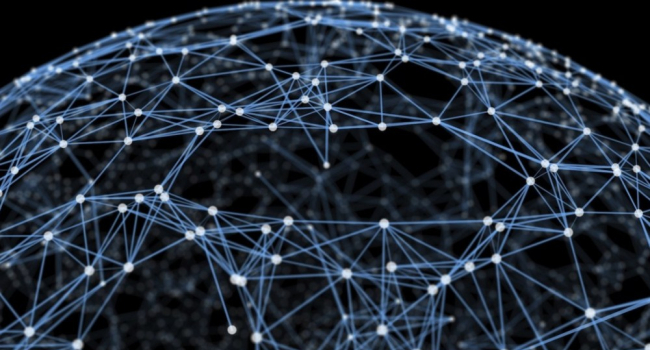
Scientists from the University of Illinois and Harvard have developed a groundbreaking experimental concept that could, for the first time, test the interaction between quantum mechanics and gravity. Their study, published in PRX Quantum, suggests that quantum networks—originally designed for the quantum internet—could become tools for probing the fundamental laws of nature. The experiment aims to explore how quantum mechanics behaves within the warped spacetime described by Einstein’s general theory of relativity.
Quantum Networks: From Internet to Fundamental Physics
Quantum networks are systems that allow information to be transferred between quantum computers using entangled particles. These particles, when linked through quantum entanglement, enable ultra-secure data transmission and distributed quantum computing. But according to this new research, such networks may do more than enable communication—they could help resolve one of modern science’s greatest mysteries: the relationship between quantum mechanics and gravity.
As Igor Pikovski, one of the study’s authors, noted, “The interplay between quantum physics and gravity remains unsolved. Our proposal is the first real way to test that connection experimentally.”
The Experimental Idea
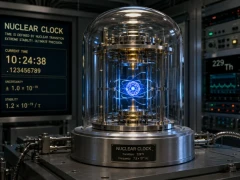
At the heart of the concept is the use of atomic clocks connected via a quantum network. These clocks can be placed in a state of quantum superposition—meaning they exist in multiple states simultaneously. According to general relativity, time flows more slowly near massive objects due to the warping of spacetime. If quantum clocks are placed in different regions of a gravitational field, they will experience different “rates of time,” which will affect their quantum states.
This method would allow scientists to observe how gravity influences quantum processes. For instance, if entangled particles in the network are located in regions with varying gravitational strength, their quantum properties—such as entanglement or superposition—could shift. This would offer an opportunity to test whether quantum mechanics still holds in curved spacetime.
Technological Foundations
To carry out the experiment, researchers propose leveraging advanced quantum technologies, including:
- Quantum teleportation: A technique for transferring quantum information between distant network nodes.
- Entangled atomic states: Creating pairs of quantum-linked particles to measure state changes.
- Ultra-precise atomic clocks: Instruments capable of detecting minute changes in time caused by gravity.
These technologies are already in development for the future quantum internet, but applying them to fundamental physics could mark a revolutionary step forward.
Why This Matters
The experiment could answer a critical question: does quantum mechanics still apply in curved spacetime? “We tend to assume quantum mechanics is universal,” Pikovski explained, “but we have no direct evidence of its validity in gravitational fields. Now we can try to find out.”
If the experiment reveals unexpected deviations in quantum system behavior, it may indicate the need to revise current theories—or point to entirely new laws of physics. In the long run, such findings could move scientists closer to formulating a unified theory that merges quantum mechanics with gravity.
Looking Ahead
Successfully conducting the experiment will require further development of quantum networks and ultra-precise measurement tools. In the coming years, initiatives like DARPA’s quantum internet program in the U.S. and the Quantum Internet Alliance in Europe could provide the necessary infrastructure and data. Additionally, satellite-based experiments—like China’s Micius—have already shown that long-distance quantum information transmission is feasible, which could be adapted to study gravitational effects.
Conclusion
This new research outlines a realistic path to experimentally investigate the link between quantum mechanics and gravity using quantum networks. The approach not only enhances the potential of future technologies like the quantum internet but also promises to deepen our understanding of the Universe itself. If successful, the experiment could mark the first step toward unifying two of the most fundamental theories in physics—forever changing our view of reality.