make preferable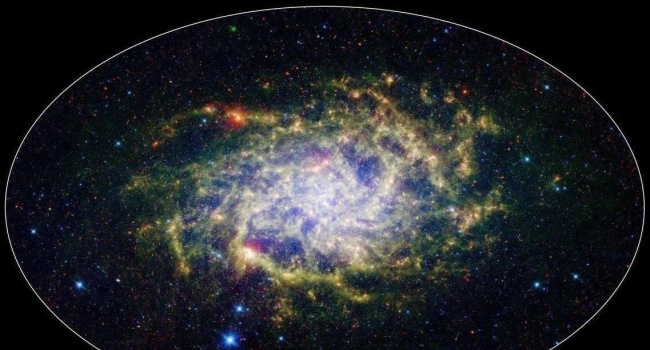
The question of the center of the universe has intrigued scientists and philosophers for centuries. As astronomy and cosmology have advanced, it has become clear that the universe is not static but constantly expanding. So where is its center? According to recent studies, the answer may be surprising: the universe might not have a center at all. This article, based on a piece by Rob Coyne published on Space.com, explains why that’s the case.
The Expanding Universe: A New Perspective
In the early 20th century, Albert Einstein developed the theory of general relativity, initially assuming that the universe was static and unchanging. However, observations of distant galaxies using powerful telescopes revealed that the universe is expanding. Galaxies are moving away from us — and the farther they are, the faster they seem to be receding. This discovery, made nearly a hundred years ago, debunked the idea of a static universe.
It’s important to understand that this expansion doesn’t mean galaxies are flying through space — rather, the space between them is expanding. Imagine raisins in dough rising in the oven: the raisins (galaxies) stay in place, but the dough (space) stretches, increasing the distance between them. Similarly, the fabric of the universe — space-time — stretches, carrying galaxies apart.
Why the Universe Has No Center
A common analogy for the expanding universe is the surface of an inflating balloon. If you draw dots on the balloon and start inflating it, the dots move away from each other, but no single dot is at the center. The surface of the balloon has no central point — and in this sense, the universe is like that two-dimensional surface, but in four-dimensional space-time.
Unlike a balloon, which has an inside (the air within), the universe doesn’t have an “interior” or a central point as we usually understand it. Asking where the center of the universe is, is like asking where the center of the balloon’s surface is — there simply isn’t one. No matter which direction you travel in the universe, you will never reach a center because space-time itself does not include such a point.
A Four-Dimensional Reality
Part of what makes the concept of a center so difficult to grasp is the four-dimensional nature of space-time. Our brains are accustomed to thinking in three dimensions — length, width, and height — plus time as a separate element. But in Einstein’s theory, space and time are unified into a single entity: space-time. This radically changes how we view the universe and renders our intuitive ideas of centers or edges irrelevant.
The balloon analogy, though helpful, is limited because the balloon exists in a three-dimensional space, whereas the universe is described in four dimensions. This makes visualization difficult, but it reinforces the idea that the universe has no beginning, end, or center in the conventional sense.
The Mystery of Endless Expansion
Scientists are still trying to understand what fuels the universe’s expansion. Dark energy, which makes up about 68% of the universe’s total energy, is believed to be the main driver — but its true nature remains a mystery. Expansion occurs everywhere at once, and every point in the universe seems like the center to observers located there. This makes the question of the universe’s center more philosophical than physical.
Conclusion
The search for the universe’s center leads to the realization of how unique and complex our reality is. The universe has no center because space-time expands uniformly, separating galaxies from one another in every direction. While this idea defies intuition, it’s precisely what makes the cosmos so extraordinary. As scientists continue exploring space with telescopes like Spitzer and future instruments, they hope to uncover even more mysteries about the nature of our universe.