make preferable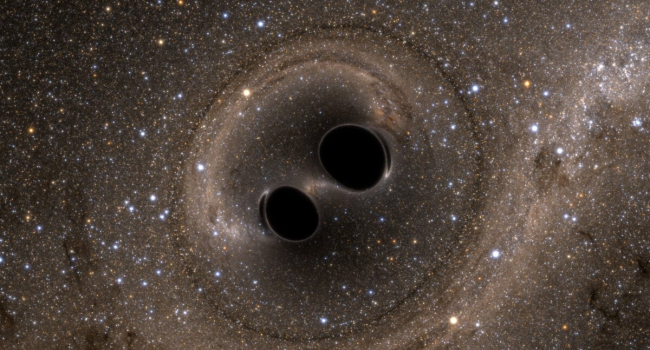
On November 23, 2023, gravitational wave detectors at LIGO in Washington and Louisiana recorded the most massive black hole merger in observational history. The signal, designated GW231123, originated from a distance of approximately 10 billion light-years and was caused by the collision of two supermassive black holes with masses of 103 and 137 times that of the Sun. According to The Guardian, the resulting black hole weighs in at around 265 solar masses, making this event a record-breaking milestone in gravitational wave astronomy.
Event Details
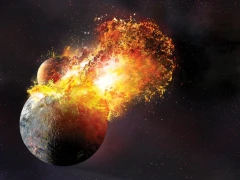
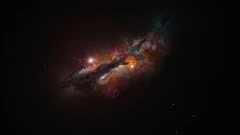
The merger took place in a distant galaxy, where the two black holes spiraled toward each other at speeds 400,000 times faster than Earth’s rotation before finally merging into a single object. The signal lasted only 0.1 seconds, but analysis revealed that roughly five solar masses worth of energy was released in the form of gravitational waves — ripples in space-time thousands of times smaller than the width of a proton.
This event surpassed the previous record set by GW190521 in 2021, which produced a final black hole of about 140 solar masses.
Physicists from the LIGO-Virgo-KAGRA (LVK) collaboration, which includes observatories in the US, Italy, and Japan, believe such massive black holes likely formed through multiple successive mergers. “This discovery challenges traditional models of black hole formation,” said astrophysicist Mark Hannam of Cardiff University. He emphasized that objects of this size cannot result from standard stellar evolution, and their extreme spin rates approach the theoretical limits predicted by Einstein’s General Relativity.
How LIGO Works
LIGO (Laser Interferometer Gravitational-Wave Observatory) consists of two detectors located 3,002 km apart — one in Livingston, Louisiana, and the other in Hanford, Washington. Each detector features an L-shaped configuration with 4-kilometer-long arms, in which laser beams measure minuscule changes in length caused by the passage of gravitational waves.
These waves, predicted by Albert Einstein in 1916, are disturbances in space-time caused by massive cosmic events like black hole mergers. LIGO is capable of detecting changes in distance 10⁻²¹ times smaller than the diameter of an atom.
Since 2015, when LIGO first detected gravitational waves from the merger of black holes with 36 and 29 solar masses (GW150914), the LVK collaboration has recorded over 300 such events, with more than 200 during the fourth observation run (2023–2025). The GW231123 event is now the most massive ever observed.
Scientific Significance
This groundbreaking detection not only validates Einstein’s predictions but also opens new frontiers for cosmic exploration. As LIGO director Dave Reitze put it: “Gravitational waves are a new way of observing the universe, beyond what’s possible with electromagnetic radiation.”
The GW231123 event allows scientists to:
- Study the formation of supermassive black holes through hierarchical mergers
- Test the limits of General Relativity under extreme conditions
- Refine models of galaxy evolution, since such mergers likely occur in galactic centers
In the coming years, researchers plan to utilize the GRAVITY+ instrument for direct measurements of black hole mass and spin, which could help correlate mass with emitted radiation brightness.
Context and Future Prospects
The discovery of GW231123 is part of an ongoing revolution in gravitational astronomy. Since 2015, LIGO and its partners — Virgo (Italy) and KAGRA (Japan) — have significantly enhanced their detectors’ sensitivity. The 2023 upgrade increased the range of observation to up to 5 billion light-years, and future plans include launching the LISA space observatory, which will detect mergers involving black holes with millions of solar masses.
Over the next 10–15 years, improved detectors are expected to:
- Capture all black hole mergers occurring in the observable universe
- Possibly detect new cosmic phenomena, such as cosmic strings or primordial waves from the Big Bang
Conclusion
The merger of two black holes with masses of 103 and 137 solar masses, detected by LIGO on November 23, 2023, marks the most massive black hole merger ever observed. The signal, which traveled 10 billion light-years to reach Earth, confirms that such massive objects can form through multiple prior mergers, challenging existing theories.
This monumental discovery underscores the power of LIGO and opens up new avenues for understanding the cosmos, positioning gravitational waves as a key to unlocking the deepest mysteries of the universe.