make preferable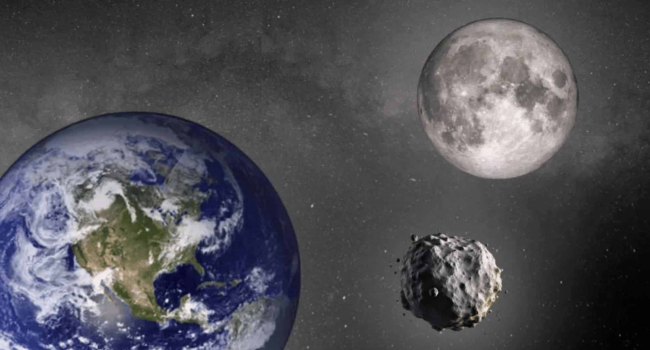
A recent study published in Icarus in 2025 reveals that Earth may host an average of 6.5 mini-moons—tiny temporary satellites between 1 and 2 meters in diameter—that orbit our planet for several months before returning to a heliocentric orbit around the Sun. These objects, largely of lunar origin, are believed to be fragments ejected into space after impacts on the Moon’s surface. The research, led by Robert Jedicke of the University of Hawai‘i, sheds light on their origins and significance for both science and industry. So, where do these mysterious mini-moons come from—and why are they so hard to detect?
What Are Mini-Moons?
Mini-moons are small objects temporarily captured by Earth's gravity, completing at least one full orbit while coming within four lunar distances (around 1.5 million km) at some point in their trajectory. While the International Astronomical Union (IAU) hasn’t officially defined them, mini-moons differ from permanent natural satellites like the Moon due to their short lifespans and small size.
Previously thought to originate mainly from the asteroid belt between Mars and Jupiter, new evidence—including the discovery of objects 469219 Kamo‘oalewa (2016) and 2024 PT5 (2024)—suggests that most mini-moons may actually come from the Moon itself.
Lunar Origin: How Mini-Moons Are Born
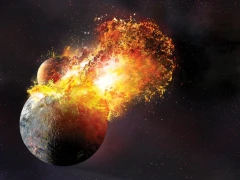
When meteoroids or asteroids collide with the Moon, they eject a cloud of debris into space. While most fragments are pulled into heliocentric orbits by the Sun’s gravity, some smaller pieces—1 to 2 meters in diameter—can be temporarily captured by Earth, becoming mini-moons.
Jedicke’s simulations estimate that about 20% of such lunar fragments may briefly orbit Earth before escaping.
A prominent example is Kamo‘oalewa, discovered by the Pan-STARRS1 telescope in Hawai‘i in 2016. With a diameter of 40–100 meters, spectral analysis shows it matches lunar rock, likely ejected 1 to 10 million years ago during the formation of the Giordano Bruno crater. Similarly, 2024 PT5, discovered in 2024, exhibits a lunar composition unlike typical asteroids.
“It’s like a dance where partners constantly switch, and some leave the floor,” Jedicke explains, comparing their orbital dynamics to a square dance.
How Many Mini-Moons Does Earth Have?
Simulations suggest Earth has about 6.5 mini-moons of lunar origin at any given time. These objects are unstable, typically orbiting Earth for about 9 months before escaping back to solar orbits—or in rare cases, colliding with Earth or the Moon.
However, Jedicke cautions that this estimate is highly uncertain, due to variables like crater sizes, debris velocities, and distribution. “If there were that many, telescopes would be seeing them more often,” he notes, emphasizing the need for further observation.
Why Are They So Hard to Detect?
Mini-moons are challenging targets for astronomers due to their small size and high velocity. Most are just 1–2 meters across—comparable to a car or SUV—and must be very close to Earth to appear bright enough for detection.
Their speed—up to 1–3 km/s relative to Earth—creates streaks rather than dots on telescope images, making it difficult for image-processing algorithms to identify them.
For example, 2020 CD3, another mini-moon, was visible in just 2 out of 1,000 nights within the Catalina Sky Survey’s detection range. Despite this, modern sky surveys like Pan-STARRS and ATLAS have shown growing capability, detecting mini-moons at distances of up to several million kilometers.
The launch of the Vera Rubin Observatory in 2025—with its 3.2-gigapixel LSST camera—is expected to boost detection rates, potentially discovering 6 to 51 mini-moons per year.
Scientific and Commercial Value
Mini-moons are not just curiosities—they offer valuable opportunities:
- Scientific Potential: Studying their composition and trajectories helps scientists understand lunar cratering processes and the evolution of the Solar System. For example, analyzing Kamo‘oalewa confirmed that lunar ejecta can preserve clues to ancient impacts, which is key to assessing future asteroid threats.
- Commercial Opportunities: Their proximity and low orbital energy make mini-moons attractive for resource extraction. Companies like AstroForge and TransAstra aim to mine mini-moons for water, minerals, and even helium-3, without needing to reach the asteroid belt.
“Mini-moons may become the most accessible targets for space mining,” Jedicke says, highlighting their closeness to Earth.
Context: Comparing to Other Mini-Moons
While some mini-moons may still originate from the asteroid belt, as suggested in a 2018 study, discoveries like Kamo‘oalewa and 2024 PT5 have shifted focus to the Moon as the primary source. Unlike larger asteroids such as 101955 Bennu (~500 meters in diameter), mini-moons are smaller and less stable, making them a unique class of objects.
Future Prospects
Upcoming observations using James Webb, Hubble, and the Vera Rubin Observatory will help:
- Refine models of crater formation and ejecta dynamics
- Estimate the frequency and population of mini-moons
- Develop capture and utilization technologies for commercial use
Conclusion
Earth may host an average of 6.5 mini-moons at any given time—tiny, mostly lunar-origin satellites that orbit temporarily before escaping. Formed from meteor impacts on the Moon, these 1–2 meter objects typically remain for about 9 months in Earth orbit. Despite the detection challenges, modern telescopes—and soon, the Vera Rubin Observatory—are beginning to reveal their presence.
Mini-moons not only deepen our understanding of the Solar System’s history, but may soon play a key role in the future of space exploration and industry.