make preferable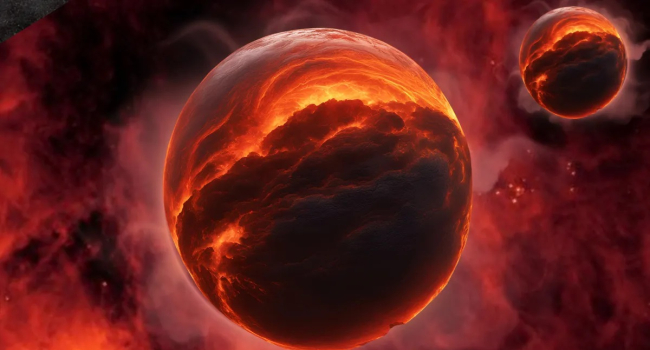
Dark matter, which makes up about 25% of the mass of the universe, remains one of the greatest enigmas in modern cosmology. It neither emits nor absorbs light, revealing itself only through its gravitational effects. A new study published on July 7, 2025, in the Journal of Cosmology and Astroparticle Physics (JCAP) introduces an unexpected way to investigate dark matter—through hypothetical objects called dark dwarfs. These substellar bodies, potentially formed from brown dwarfs, may be powered by dark matter annihilation, making them potential keys to unlocking the true nature of this elusive substance. Here's how dark dwarfs could change our understanding of the cosmos—and why they’re tied to WIMPs (Weakly Interacting Massive Particles).
What Are Dark Dwarfs?
According to space.com, dark dwarfs are theorized objects that may represent brown dwarfs that have been “turned to the dark side” under the influence of dark matter. Brown dwarfs, often called “failed stars,” form from clouds of gas and dust, like ordinary stars, but they lack the mass (less than ~8% of the Sun’s mass) required to sustain stable hydrogen fusion. As a result, they emit only faint light, powered by limited nuclear reactions and gravitational compression.
However, in regions of high dark matter density, such as galactic centers, brown dwarfs can gravitationally capture dark matter particles. If dark matter consists of WIMPs—massive particles that interact weakly with ordinary matter—these particles can accumulate in the dwarf’s core and annihilate, releasing energy. This heats the object, making it brighter and larger than a typical brown dwarf.
Dark matter interacts gravitationally, so it can be captured by stars and accumulate inside them. If that happens, it may interact with itself and annihilate, releasing energy that heats the star, explains Jeremy Sakstein, a physics professor at the University of Hawaiʻi and co-author of the study.
Why Are Dark Dwarfs Important?
Dark dwarfs could serve as natural detectors of dark matter, as their existence would directly depend on dark matter's properties. While candidates for dark matter include axions, sterile neutrinos, and primordial black holes, only WIMPs or similarly massive self-annihilating particles could power a dark dwarf.
- Ruling out lighter candidates: Particles like axions are too light to accumulate inside stars and cannot form dark dwarfs.
"With light dark matter candidates like axions, I don’t think you can get something like a dark dwarf—they just don’t build up in stars," says Sakstein.
- Supporting the WIMP model: Discovering a dark dwarf would be strong evidence that dark matter consists of heavy, self-annihilating particles that interact weakly with regular matter.
- Galactic centers as ideal hunting grounds: Dark matter is densest in galactic cores, such as the center of the Milky Way.
The more dark matter around, the more can be captured. And the more inside a star, the more energy is released during annihilation, Sakstein adds.
If dark dwarfs are confirmed, it would eliminate models based on non-self-interacting or lightweight dark matter particles.
How Can Dark Dwarfs Be Found?
The key signature of a dark dwarf is its chemical composition—especially the presence of lithium-7 (⁷Li). In typical stars and brown dwarfs, lithium-7 is destroyed quickly by fusion. But in dark dwarfs, where nuclear reactions are minimal due to energy from dark matter annihilation, this isotope remains intact.
“We proposed lithium-7 because it’s a truly unique marker. If you find an object resembling a dark dwarf, you can check for this isotope, which wouldn’t be found in a regular brown dwarf or star,” says Sakstein.
Scientists suggest two main detection strategies:
- Direct observation:
The James Webb Space Telescope (JWST), with its infrared capabilities, can detect cold, dim objects like dark dwarfs near the Milky Way’s center and analyze their spectra for lithium-7. - Statistical analysis:
Researchers could study the population of stars in galactic centers, looking for anomalies that indicate a subgroup of dark dwarfs.
You can examine an entire population and statistically determine whether it fits better with a subgroup of dark dwarfs, Sakstein explains.
Connection to Previous Research
The dark dwarf idea echoes the concept of dark stars, introduced in 2007 by Katherine Freese and colleagues. These were massive (up to 10 million solar masses), early-universe stars powered by dark matter annihilation. In 2023, JWST identified three candidates for dark stars (JADES-GS-z13-0, -z12-0, -z11-0) with extreme redshifts. Initially thought to be galaxies, their brightness and spectral features suggest they may be powered by dark matter.
While dark dwarfs are smaller and form in the modern universe, both object types support the idea that WIMPs could release usable energy through annihilation, impacting stellar evolution.
Significance for Cosmology
Confirming dark dwarfs would have major implications:
- Evidence for dark matter’s nature: It would strongly support the WIMP hypothesis while ruling out light or non-interacting models.
- Insight into galactic formation: Dark dwarfs could influence star formation models in dark matter–dense regions.
- Advancement of observational techniques: Instruments like JWST—and future telescopes like the Nancy Grace Roman Space Telescope—could be optimized to find dark dwarfs via their spectral fingerprints.
Discovering a dark dwarf wouldn’t conclusively prove dark matter is WIMPs—but it would show it behaves like WIMPs, concludes Sakstein.
Challenges and Prospects
Despite its appeal, the dark dwarf hypothesis faces several challenges:
- Detection difficulty: These objects are cold and faint, requiring extremely sensitive instruments like JWST.
- Ambiguous signatures: While lithium-7 is a promising marker, it might also result from other astrophysical processes—meaning additional confirmation is necessary.
- Model dependence: If dark matter isn’t made of WIMPs, dark dwarfs may not exist, limiting the model’s scope.
In the near future, researchers plan to use JWST to examine spectral features of objects in galactic cores and to develop machine learning algorithms to detect anomalies in star populations.
Conclusion
Dark dwarfs, as proposed in the Journal of Cosmology and Astroparticle Physics, represent a novel approach to probing the mysterious world of dark matter. These theoretical objects—formed from brown dwarfs in high–dark matter regions—could glow due to the energy released from WIMP annihilation. Their unique lithium-7 signature makes them detectable by next-generation telescopes like JWST. If discovered, they would mark a breakthrough in understanding the composition of dark matter, supporting the theory of heavy, self-annihilating particles—and potentially opening an entirely new chapter in modern cosmology. While still hypothetical, dark dwarfs offer a concrete path toward solving one of the universe’s greatest riddles.