make preferable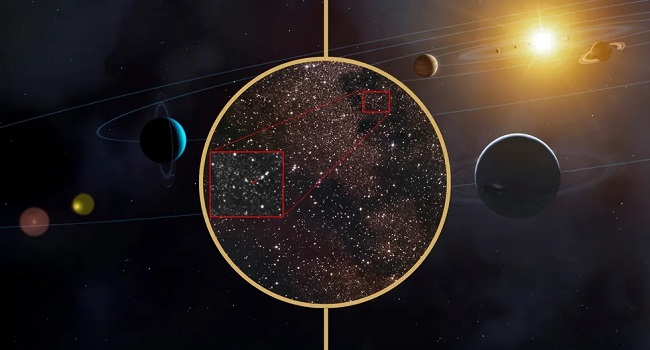
On July 1, 2025, astronomers made a sensational discovery: a third interstellar object had entered our Solar System. Named 3I/ATLAS (also designated C/2025 N1 (ATLAS)), the object was discovered by the ATLAS telescope in Chile as part of the Deep Random Survey project. Its unusual trajectory and size immediately caught scientists' attention. But what makes 3I/ATLAS so special? Could it pose a threat to Earth? And why might this be the first of many such visitors? Here's everything we know so far about this cosmic wanderer.
How Do We Know 3I/ATLAS Is Interstellar?
The key lies in its trajectory. 3I/ATLAS is on a hyperbolic orbit with an eccentricity of 6.2, meaning it's not gravitationally bound to the Sun. By comparison, objects within our Solar System typically have eccentricities under 1. Even the two previous interstellar visitors — 1I/ʻOumuamua (2017, e ≈ 1.2) and 2I/Borisov (2019, e ≈ 3.6) — had far lower values. This extreme orbit confirms that 3I/ATLAS is an interstellar object, arriving from beyond and destined to leave our system forever.
"Some long-period comets can have slightly hyperbolic paths after close encounters with Jupiter, but 3I/ATLAS was already clearly hyperbolic before entering the inner system," noted Olivier Hainaut of the European Southern Observatory.
Originally labeled A11pl3Z, the object was renamed 3I/ATLAS after it was confirmed to be a comet — it has a visible coma and a short tail.
How Is 3I/ATLAS Different from Its Predecessors?
3I/ATLAS isn't just the third interstellar object; it's also the largest and brightest we've ever seen:
- Estimated diameter: ~15 km (possibly up to 20 km)
- ʻOumuamua: ~100 meters
- 2I/Borisov: <1 km
This makes 3I/ATLAS an ideal target for observation.
"It's the largest interstellar object we've discovered. Its brightness and size give us a rare opportunity to study the chemistry and structure of material from another star system," said Professor Martin Barstow of the University of Leicester.
Unlike the still-debated ʻOumuamua, 3I/ATLAS is unmistakably a comet, with a coma and a tail about 25,000 km long, confirmed by observatories in Chile, Arizona, and Hawaii.
Is 3I/ATLAS Dangerous?
No — it poses no threat to Earth.
Currently, 3I/ATLAS is about 520 million km from Earth and 670 million km from the Sun. Its closest approach to Earth will be on December 19, 2025, at 270 million km (~1.8 AU).
Other key dates:
- October 2, 2025: Passes within 30 million km of Mars
- October 29, 2025: Reaches perihelion (closest point to the Sun) at 210 million km
- Speed: ~245,000 km/h (~68 km/s)
After that, it will leave the Solar System forever.
Can You See 3I/ATLAS?
For most people, no — not without specialized equipment.
- As of July 2025, it is located in Sagittarius, low in the southern sky for northern observers.
- Apparent magnitude: ~18.5 — about 5 million times dimmer than Polaris.
To observe it, you'll need:
- Telescope with 150–200 mm aperture
- CCD camera
- For visual observation: at least a 400 mm aperture
By perihelion, it may brighten to magnitude 11, making it visible to experienced amateur astronomers using powerful telescopes.
After vanishing into the Sun’s glare in late September 2025, it will become visible again in December, remaining observable until mid-2026.
Why Is 3I/ATLAS Important for Science?
Interstellar objects like 3I/ATLAS are rare messengers from distant star systems. Their chemical composition offers clues about planetary formation in other parts of the galaxy and may even help in the search for extraterrestrial life.
“These objects carry chemical signatures from other systems,” Barstow explains. “Studying them helps us understand how matter travels between planetary systems.”
3I/ATLAS is particularly exciting because:
- It's bright and large
- Its high speed (~61 km/s) and retrograde orbit (inclination ~175°) suggest it might come from the galactic center
- It may be our best chance yet to study such an object in detail
Could We Send a Probe?
Sadly, no — not with current technology.
At 68 km/s, 3I/ATLAS is simply too fast to intercept. According to Barstow, we would need a pre-positioned spacecraft capable of high-speed maneuvering.
ESA is working on Comet Interceptor, launching in 2029, designed to intercept long-period comets — but even that may be too slow for interstellar visitors like 3I/ATLAS.
Why Are We Finding More Interstellar Objects?
This discovery is not a coincidence — it's thanks to better tech.
Modern telescopes like ATLAS and Zwicky Transient Facility scan the sky with unprecedented sensitivity and speed, detecting faint, fast-moving objects.
A major role is played by the new Vera Rubin Observatory in Chile. In its first 10 hours, it discovered over 2,000 new asteroids. With its Large Synoptic Survey Telescope (LSST) beginning full operation in 2025, scientists expect to find up to 10 interstellar objects per year.
“Our telescopes are just getting better — it’s not that the outer Solar System has changed. We’re finally able to see what we used to miss,” said Hainaut.
Scientists estimate that around 7 interstellar objects the size of 3I/ATLAS pass through the Solar System each year — we’ve simply lacked the tools to detect them.
What’s Next?
3I/ATLAS is already being targeted by major Southern Hemisphere observatories, where it’s most visible. Observations will intensify after the Moon sets on July 18, 2025.
Telescopes such as the James Webb Space Telescope (JWST) and the Vera Rubin Observatory will provide high-resolution data on its composition, size, and possible organic molecules.
"This could be the most exciting astronomical discovery of recent years," said Sam Dean of the Deep Random Survey.
3I/ATLAS is not only a unique object — it may be the harbinger of a new era in astronomy. With Rubin Observatory and future missions like Comet Interceptor, scientists expect a wave of interstellar discoveries. As Hainaut suggests, we may soon see 4I, 5I — maybe even 42I.
In Summary
3I/ATLAS is the third interstellar visitor ever discovered in our Solar System — and the largest and brightest so far. Detected on July 1, 2025, it is on a hyperbolic orbit, definitively interstellar, and poses no threat to Earth. While invisible to the naked eye, its study with advanced telescopes could reveal secrets of other star systems, the origins of planets, and possibly even the building blocks of life. With the Vera Rubin Observatory now active, many more such discoveries await — and 3I/ATLAS is only the beginning.