make preferable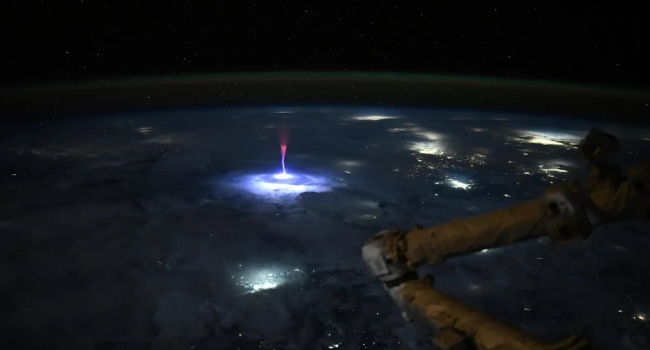
American astronaut Nicole "Vapor" Ayers, currently aboard the International Space Station (ISS) at an altitude of 400 km above Earth, captured a stunning image of a rare atmospheric phenomenon — a sprite appearing above a powerful thunderstorm. This vibrant, multicolored spectacle, seen over Mexico and the United States, marks another important step in the study of mysterious Transient Luminous Events (TLEs). Here's what sprites are, why they matter to science, and how Ayers’ photo helps reveal their secrets.
What Is a Sprite?
Sprites are rare electrical discharges that occur in the upper atmosphere, around 80 km (50 miles) above the Earth’s surface, typically above intense thunderstorm systems. They appear after powerful lightning strikes and take on bizarre forms — thread-like tendrils or bright red flashes reaching high into the mesosphere. According to Ayers, sprites are a type of TLE, triggered by intense electric activity within storms.
“Just. Wow. As we went over Mexico and the U.S. this morning, I caught this sprite. Sprites are TLEs or Transient Luminous Events, that happen above the clouds and are triggered by intense electrical activity in the thunderstorms below. We have a great view above the clouds, so scientists can use these types of pictures to better understand the formation, characteristics, and relationship of TLEs to thunderstorms,” Ayers wrote in her post accompanying the dramatic image.
The photo she captured shows a giant red sprite towering above thunderclouds lit up by lightning. Its reddish glow starkly contrasts with the man-made lights of cities in Mexico and the U.S., creating a breathtaking scene.
Why Are Sprites Important?
Sprites are among the least understood and most visually spectacular phenomena in Earth’s atmosphere. Occurring in the mesosphere, where the air is thin, they are linked to intense electrical discharges. But many questions remain unanswered:
- How and why exactly do sprites form?
- How do they interact with the surrounding atmosphere?
- What role do they play in Earth's global electrical system?
Images like Ayers’ are invaluable for researchers. From the ISS, scientists have a clear vantage point, free from the atmospheric interference like clouds and dust that often obstruct ground-based observations.
NASA’s Spritacular Project and the Role of Astronauts
NASA is actively investigating sprites through the Spritacular project, which invites citizen scientists to contribute photographs of TLEs. Anyone can submit images of sprites captured from Earth to help build a database for analysis. Orbital images like the one taken by Ayers greatly enhance these efforts by providing high-resolution views from 400 km above Earth.
Astronauts aboard the ISS, including Ayers, increasingly use photography not only as a form of creative expression but also as a means of documenting rare natural events. These images are not only inspirational — they are critical to science. For example, sprite photos help researchers:
- Identify the atmospheric conditions necessary for sprite formation,
- Study the link between sprites and thunderstorm dynamics,
- Analyze the impact of TLEs on the upper atmosphere.
What Else Should You Know?
Despite advances, sprites remain an enigmatic phenomenon. Scientists hope that new data from the ISS and ground-based observations will help uncover the physics behind them. In the future, tools like the James Webb Space Telescope or other orbital platforms capable of capturing infrared wavelengths might join the study.
The Spritacular project continues to grow, and anyone can participate by submitting their photos through NASA’s official website. It’s a unique opportunity for enthusiasts to contribute to science — and perhaps even capture the next dazzling sprite.