make preferable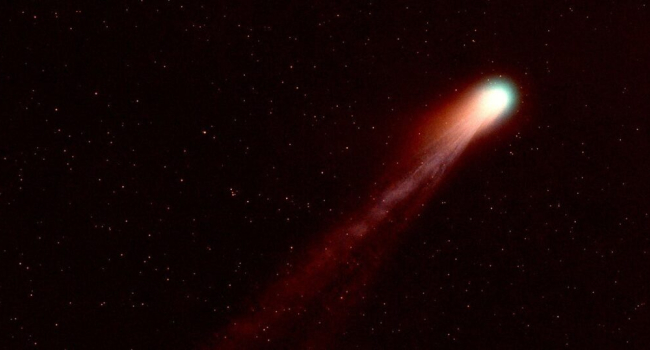
A new interstellar object has entered the Solar System, designated A11pl3Z (3I/ATLAS), according to EarthSky citing the European Space Agency (ESA). This marks only the third time in history that astronomers have detected an object originating from beyond our star system. Here’s what we know about the mysterious visitor, its trajectory, its scientific significance, and the recent discovery of a potentially habitable exoplanet, GJ 12 b.
A11pl3Z: What is This Object?
The object A11pl3Z was discovered on July 1, 2025, by the ATLAS (Asteroid Terrestrial-impact Last Alert System), which scans the sky using telescopes in Hawaii and South Africa. Additional images taken between June 25 and 29 helped refine its trajectory. Scientists believe it is a comet with a nucleus up to 20 kilometers in diameter, although its exact nature—comet or asteroid—remains unconfirmed.
A11pl3Z is moving on a hyperbolic orbit with an eccentricity of around 6, which is significantly higher than that of previous interstellar objects: ʻOumuamua (1.2) and comet Borisov (3.35). This indicates its origin lies outside the Solar System, as it is not gravitationally bound to the Sun and is traveling almost in a straight line at a speed of about 245,000 km/h (68 km/s).
- Current position: Inside Jupiter’s orbit
- Closest approach to the Sun: In October 2025, A11pl3Z will pass about 2 astronomical units (~300 million km) from the Sun, within Mars’ orbit
- Mars flyby: The object will pass about 0.4 AU (~60 million km) from Mars, making it a potential target for observation by rovers such as the Mars Reconnaissance Orbiter
- Earth flyby: It will pass no closer than 1.35 AU (~200 million km) from Earth, posing no threat. Earth will be on the opposite side of the Sun, making observations more difficult
Note: Unlike comet Borisov, A11pl3Z currently shows no visible coma or tail, similar to ʻOumuamua, making its nature mysterious. Scientists hope that as it brightens in October, the object will become observable even through small telescopes.
Why Is This Important?
A11pl3Z is only the third known interstellar object after ʻOumuamua (2017) and comet 2I/Borisov (2019), making it a unique opportunity to study material from another star system. Its hyperbolic trajectory and high speed confirm it did not form in the Solar System and is simply passing through before returning to interstellar space.
- Scientific value: A11pl3Z may reveal information about the composition and conditions in other star systems. For example, ʻOumuamua sparked debate due to its anomalous acceleration, while Borisov turned out to be a typical comet. A11pl3Z could add new data about interstellar objects.
- Observations: The object is being monitored by observatories worldwide, including NASA and the International Astronomical Union. Astrophysicist Avi Loeb has proposed using the James Webb Space Telescope for a detailed study, and Mars rovers may capture images during its flyby.
Context: The Search for Life and Interstellar Visitors
The discovery of A11pl3Z coincides with another significant event: in June 2025, astronomers found the exoplanet GJ 12 b, which resembles Earth in size, density, and temperature. Located 40 light-years away, it lies within the habitable zone of its star and is considered a promising candidate in the search for extraterrestrial life. This highlights the link between studying interstellar objects and exoplanets—one reveals material from other systems, the other their potential for life.
Interstellar objects like A11pl3Z are rare, but new technologies, including the Vera Rubin Observatory (set to launch in 2025), will make their detection more common. Such discoveries help us understand how star systems form and what processes occur beyond our own.
What’s Next?
A11pl3Z will continue its journey toward the Sun, reaching perihelion (closest point) on October 29, 2025, after which it will exit the Solar System forever. Scientists plan to:
- Determine the object's nature: the appearance of a coma or tail would confirm it is a comet
- Use telescopes such as James Webb and ground-based observatories to analyze its composition
- Attempt to capture images from Mars rovers during its flyby near Mars
For astronomy enthusiasts, this is a chance to observe a rare phenomenon through telescopes with lens diameters of 10–12 inches, especially in October, when A11pl3Z is expected to brighten (with an apparent magnitude around 18.3).
Conclusion
The interstellar object A11pl3Z (3I/ATLAS), discovered in the Solar System, is the third confirmed visitor from another star system in history. Traveling at 245,000 km/h on a hyperbolic trajectory, it will pass by the Sun in October 2025, posing no threat to Earth. This discovery, along with the finding of exoplanet GJ 12 b, highlights the advances in astronomy and our exploration of the cosmos. A11pl3Z offers scientists a rare opportunity to study material from beyond the Solar System, and upcoming telescopes promise even more discoveries. Stay tuned—this cosmic traveler might reveal new secrets of the Universe.