make preferable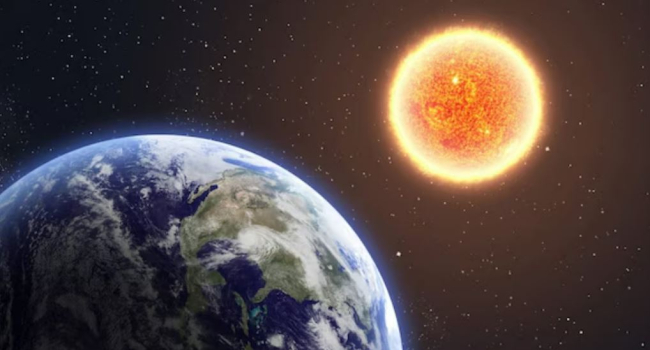
On July 3, 2025, Earth will reach aphelion — the farthest point in its orbit from the Sun, according to the Moscow Planetarium, as reported by TASS. On this day, our planet will be more than 147 million kilometers away from the Sun. This annual event is due to the elliptical shape of Earth’s orbit.
Here’s what aphelion is and why it doesn’t affect the weather.
Aphelion: Earth at Its Maximum Distance
Aphelion is the point in Earth’s orbit where it is farthest from the Sun. On July 3, 2025, the distance will be about 147.1 million kilometers — approximately 3% more than at perihelion (the closest point to the Sun), which occurs in early January at around 142.5 million kilometers. According to the Moscow Planetarium, this happens because Earth’s orbit is not a perfect circle, but slightly elliptical.
“Earth’s orbit is nearly circular, so the distance changes are minimal, around 3% throughout the year,” the Planetarium explained. These small variations do not noticeably affect the climate or weather. The seasons — such as summer and winter — are caused by the tilt of Earth’s axis (about 23.5°) relative to the orbital plane, not by its distance from the Sun.
Interesting Fact: During aphelion, the Sun appears slightly smaller in the sky, and the intensity of solar radiation decreases by about 7% compared to perihelion. However, this difference is not noticeable in daily life and does not impact Earth’s temperatures.
How to Observe Aphelion
Aphelion is an astronomical event that cannot be seen with the naked eye, but it can be studied using telescopes or solar filters. On July 3 at 12:23 PM Moscow time (08:23 GMT), Earth will officially reach aphelion. For astronomy enthusiasts, this is a good opportunity to:
- Observe the Sun using a telescope with a solar filter (such as Baader AstroSolar).
- Compare the apparent size of the solar disk to how it looked in January (during perihelion).
- Use apps like Stellarium to visualize Earth’s orbit.
Important: Never look directly at the Sun without proper solar filters, as this can cause serious eye damage.