make preferable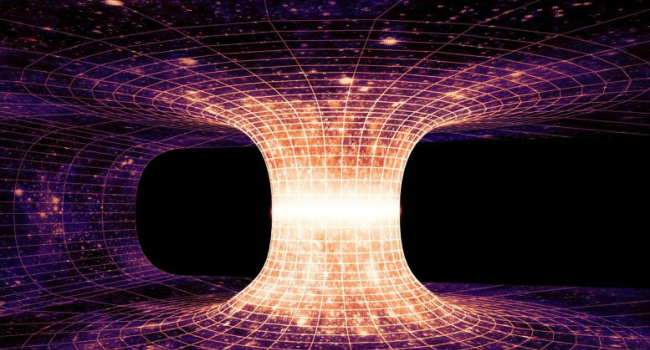
Black holes may hold the key to developing a theory of quantum gravity — the long-sought "Holy Grail" of modern physics that would unite Einstein's general relativity (GR) with quantum mechanics. A new study published on June 19, 2025, in A Letters Journal Exploring the Frontiers of Physics proposes a revolutionary approach: quantum corrections to Einstein’s equations offer a new way of describing black holes, paving the path toward the long-awaited unification of the two main pillars of physics. Here's how it works and why black holes remain such an enduring mystery.
Black Holes: Where Physics Breaks Down
Black holes are regions of space where gravity is so intense that even light cannot escape. They first emerged as theoretical solutions to Einstein’s equations, which describe gravity on large scales. But at the very center of a black hole lies a singularity — a point of infinite density — where the laws of physics based on GR break down. This reveals the incompleteness of Einstein’s theory.
Quantum physics, which perfectly describes three of the four fundamental forces (electromagnetic, strong nuclear, and weak nuclear), also fails to explain singularities. “General relativity works on macroscopic scales, but on microscopic levels, it must be replaced by a quantum theory of gravity,” explains lead author Xavier Calmet from the University of Sussex. Such a theory would unify GR with quantum mechanics — one of the greatest challenges in physics.
A New Recipe for Black Holes
Calmet’s team applied quantum corrections to Einstein’s equations, developing a new way to model black holes. These corrections are based on the assumption that any viable quantum gravity theory must reduce to GR at large scales. Using methods from quantum field theory, the researchers calculated “quantum solutions” for black holes that differ from classical ones.
“We’ve shown that there are new solutions for black holes in quantum gravity that don’t exist in GR,” says Calmet. “These aren’t just tweaks to old models — they are entirely new black holes that exist in the quantum realm.” These solutions describe black holes near the event horizon (the boundary beyond which light cannot escape) and at large distances, but not yet the singularity itself — which would require a full quantum gravity theory.
Why It Matters
Discovering new quantum solutions for black holes is a step toward understanding how quantum mechanics and gravity might work together. Black holes are ideal laboratories for this because they combine extreme conditions where both theories fail. However, limitations remain:
- Observations: Astrophysical black holes are too far away to distinguish whether they follow classical or quantum solutions. On large scales, both models converge.
- Singularities: The quantum corrections still don’t explain what happens at the black hole’s center — a task for a complete theory.
- Experiments: Testing quantum gravity remains difficult, unlike string theory (which suggests 11 dimensions), which also lacks experimental confirmation.
Calmet emphasizes that their approach does not require a full theory of quantum gravity, making it unique. “We can compute corrections that should hold true for any quantum gravity theory,” he adds.
Context: The Search for Quantum Gravity
The problem of unifying GR and quantum physics has been debated for decades. String theory, which replaces particles with vibrating “strings” in 11 dimensions, is a leading candidate, though unproven. Alternatives such as loop quantum gravity also remain incomplete.
What’s Next?
Calmet’s study raises new questions:
- How can we distinguish quantum black holes from classical ones? Future telescopes like the Event Horizon Telescope might detect differences near the event horizon.
- Could quantum corrections explain other anomalies, such as the behavior of dark matter?
- Will this stimulate new experimental approaches, like simulating black holes in lab conditions?
Testing these hypotheses will require more sensitive tools, possibly including gravitational wave analysis from black hole mergers. Missions like NASA and ESA’s LISA (launching in 2035) may provide fresh insights.
Conclusion
This new study offers a revolutionary look at black holes, introducing quantum corrections to Einstein’s equations and creating a “quantum recipe” for these enigmatic objects. While singularities remain out of reach, the work of Xavier Calmet and his team brings physicists one step closer to a theory of quantum gravity — the “Holy Grail” that would unite the macro and micro scales of the universe. Black holes continue to guard their secrets, but studying them may be the key to understanding the fundamental laws of reality.