make preferable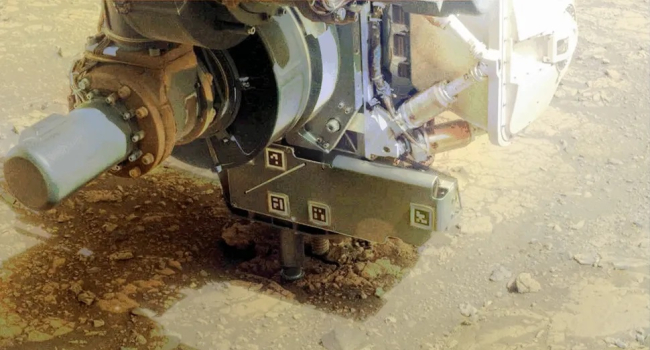
NASA’s Perseverance rover continues to unravel the geological history of Mars, now analyzing a peculiar rock known as Kenmore in Jezero Crater. This “odd and uncooperative” stone may hold vital clues about the planet’s ancient environment and its potential for life. Using advanced instruments, the rover is exposing surfaces untouched for billions of years to study their composition and possible signs of microbial activity. Here's how Perseverance is exploring Mars—and what it has discovered so far.
Kenmore: A Challenging but Promising Target
In early June 2025, Perseverance used its abrasion tool to remove the upper layer of the Kenmore rock, revealing a fresh surface for study. The process wasn’t easy. “Kenmore was a strange, stubborn rock,” said Ken Farley, deputy project scientist for Perseverance. During grinding, the rock vibrated and chipped in places, but the rover ultimately succeeded in penetrating deep enough to begin analysis.
Abrasion combines mechanical grinding with dust removal using the gDRT (Gaseous Dust Removal Tool), which blasts five jets of nitrogen gas to clear debris. Unlike earlier Mars rovers that used brushes, Perseverance’s method minimizes contamination, allowing for more accurate data collection.
What Did Perseverance Find in Kenmore?
After abrasion, the rover deployed its scientific toolkit:
- WATSON (Wide Angle Topographic Sensor for Operations and Engineering): Captured detailed surface images.
- SuperCam: Used laser-induced breakdown spectroscopy (LIBS) to vaporize material and analyze its chemical composition, as well as visible and infrared spectroscopy.
- SHERLOC (Scanning Habitable Environments with Raman & Luminescence for Organics & Chemicals): Searched for organic compounds and potential biosignatures.
- PIXL (Planetary Instrument for X-ray Lithochemistry): Identified mineral composition and signs of past water activity.
The results revealed:
- Clay minerals, containing water molecules as hydroxides, bonded with iron and magnesium—typical of early Mars, when liquid water was common.
- Feldspar, a silicate mineral found in Earth’s crust, the Moon, and other rocky planets.
- Manganese hydroxide, detected for the first time in a Perseverance sample, suggesting chemical processes involving water.
“Debris showed the rock is rich in clays, and abrasion spectra revealed elevated levels of iron and magnesium,” explained SuperCam team member Katie Quanten-Nataf. These findings support the hypothesis that Jezero Crater, once home to a river and lake, still retains evidence of a wetter Martian past.
Why It Matters
Jezero Crater, 45 km wide, is considered one of the most promising sites for detecting biosignatures—evidence of ancient life. Its sedimentary rocks preserve the record of a water-rich environment that could have supported microbial ecosystems. Kenmore is the 30th rock studied in such detail by Perseverance, marking a shift from reconnaissance to in-depth analysis.
The data from rocks like Kenmore will help future missions:
- Identify ideal sampling targets for drilling.
- Investigate methods to extract oxygen and hydrogen from water for fuel.
- Assess building materials for future Mars habitats.
Perseverance continues to collect core samples for the Mars Sample Return (MSR) mission, intended to bring Martian material back to Earth. However, the Trump administration’s proposed 2026 NASA budget includes major cuts to MSR, threatening the project's future.
The Bigger Picture: The Search for Life on Mars
Jezero Crater isn’t Perseverance’s only target. Since landing in 2021, the rover has detected carbonates, sulfates, and organic molecules—strong indicators of a watery environment 3.5 to 4 billion years ago. On social media, users actively discuss discoveries such as the 2024 “leopard spots,” initially suspected to be biosignatures but later explained as chemical phenomena. The new detection of manganese hydroxide is of special interest—on Earth, it is often linked to biological processes—but scientists remain cautious in their interpretations.
Challenges and Outlook
Kenmore proved to be a difficult subject. Its vibrations and brittleness complicated the abrasion process, but the mission’s success highlights the reliability of Perseverance’s instruments. Looking ahead, NASA plans to:
- Enhance analysis using additional tools such as MAHLI (Mars Hand Lens Imager) for microscopic study.
- Continue collecting samples, despite uncertainty around MSR funding.
- Apply the findings to prepare for human missions in the 2030s.
In Summary
The study of the Kenmore rock by Perseverance opens a new chapter in the search for signs of ancient life on Mars. The discovery of clays, feldspar, and manganese hydroxide confirms that Jezero Crater holds remnants of a once-wet environment potentially suitable for life. Despite challenges with resistant rock and budgetary threats to the MSR mission, the rover’s findings are paving the way for a deeper understanding of Martian history and future exploration. Each new sample brings us closer to answering the age-old question: Was Mars ever home to life?