make preferable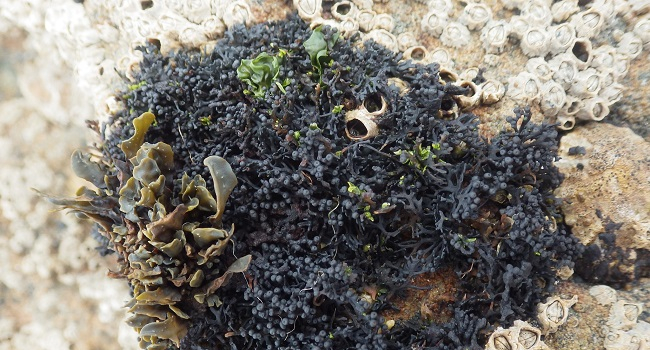
A new study published on June 12, 2025, in the journal Astrobiology shows that lichens from the Mojave Desert can withstand intense ultraviolet radiation previously thought to be lethal. This discovery, made by scientists from the Desert Research Institute and the University of Nevada, suggests that photosynthetic organisms like lichens could thrive on exoplanets exposed to high levels of stellar radiation.
“In exploring these limits, we inch closer to understanding where life might be possible beyond this planet we call home,” said lead researcher Tejinder Singh from NASA’s Goddard Space Flight Center.
Lichens: Nature’s Sunscreen
Lichens are symbiotic organisms formed by fungi and algae or cyanobacteria. The focus of the study was the species Clavascidium lacinulatum, which is widespread in arid regions, including the Mojave Desert, Europe, Asia, and North Africa. Scientists noticed that these lichens are black, despite containing chlorophyll, which typically gives plants a green color.
“I was just walking in the desert, and I noticed that the lichens growing there aren't green, they're black. They are photosynthetic and contain chlorophyll, so you would think they'd be green? So I wondered, 'What is the pigment they're wearing?' And that pigment turned out to be the world's best sunscreen,” explained lead author Henry Sun.
It turned out that this dark pigment functions as a natural sunscreen, shielding the lichens from ultraviolet-C (UVC) radiation. Researchers exposed lichen samples to UVC, a type of radiation fully blocked by Earth’s atmosphere but potentially lethal on other planets. After three months of intense exposure in laboratory conditions, half the lichen cells regained the ability to reproduce once rehydrated, despite severe damage.
How Do Lichens Survive?
The key to lichen survival lies in their upper layer, less than a millimeter thick, which acts as a photostabilizer. This layer, rich in acids similar to those used in UV-resistant plastics, protects cells from DNA damage and harmful reactive oxygen species caused by radiation. The study found that:
- The lichens' surface layer darkens, similar to a human tan, increasing protection.
- When fungi and algae were separated, the algae died within minutes under UVC, whereas in symbiosis, the fungi shielded them effectively.
- This protective layer likely evolved as a byproduct of defense against UVA and UVB—types of UV present on Earth—rather than as a specific adaptation to UVC, which doesn't naturally reach Earth's surface.
This layer shields the cells beneath it from destructive chemical reactions, Sun explained.
Why It Matters for the Search for Alien Life
UVC radiation, typical of hot M and F-type stars, is considered one of the major threats to life on exoplanets. These stars, hotter and more active than our Sun, emit intense UVC flares that can damage DNA and prevent reproduction. However, the study suggests that organisms like lichens can adapt to such hostile conditions through protective pigments.
Since the launch of the James Webb Space Telescope (JWST), which can examine distant exoplanets, interest has shifted from Mars to potentially habitable planets with liquid water and atmospheres. Lichens that survive extreme conditions in the Mojave Desert serve as models for photosynthetic organisms that might live on rocky exoplanets.
These planets could “be teeming with colonial microorganisms that, like the lichens in the Mojave Desert, are 'tanned' and virtually immune to UVC stress,” Sun noted.
Context: Life in Extreme Conditions
Lichens have long been seen as “pioneers of life” on Earth, capable of surviving in environments where most life cannot. For example:
- They thrive in Antarctica, enduring temperatures down to -40°C and extreme dryness.
- In experiments aboard the International Space Station, lichens survived exposure to open space and cosmic radiation.
- Their symbiotic structure enables efficient use of limited resources like light and moisture.
This new study confirms that their resilience to UVC makes them an ideal model for exploring extraterrestrial life. It aligns with recent JWST findings, such as the detection of exoplanet TWA 7b in the protoplanetary disk of the star CE Antliae. Such planets might offer conditions in which lichen-like organisms could survive.
Future Prospects and Challenges
The research opens new directions in astrobiology:
- Biomarker detection: Scientists could look for pigments similar to those in lichens in exoplanet atmospheres using spectroscopy.
- Laboratory testing: Long-term experiments with other radiation-resistant organisms, such as cyanobacteria, may enhance understanding of adaptation.
- Exoplanet missions: Future telescopes like the Nancy Grace Roman Space Telescope could identify planets with environments suitable for lichen-like life.
However, limitations remain. Lichen UVC resistance depends on their symbiotic structure, and it’s unclear whether other life forms could evolve similar mechanisms. Moreover, exoplanets with thin or no atmospheres may offer far less protection than Earth, making survival even for adapted organisms more difficult.
Conclusion
The discovery of lichen resistance to UVC radiation reshapes our understanding of life’s potential in the universe. Their ability to endure and recover from extreme radiation suggests that photosynthetic organisms could thrive even under deadly stellar conditions. Inspired by the “tan” of desert lichens, this research brings us closer to answering the question of where life might exist beyond Earth.