make preferable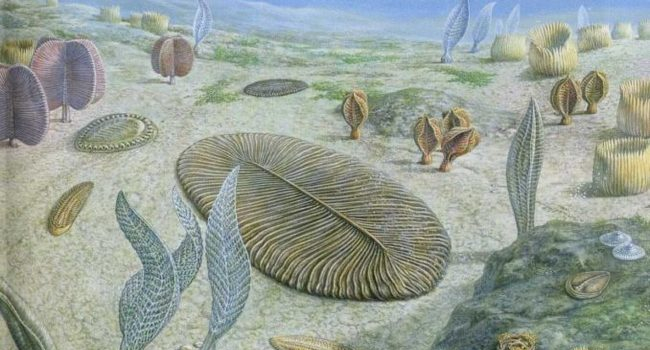
An international team of scientists from the UK and Spain has made a discovery that reshapes our understanding of the evolution of life on Earth. A new study published in the journal Geology reveals that the Cambrian explosion — the rapid emergence of new animal species — may have begun 15 million years earlier than previously thought. This finding shifts key evolutionary events to the late Ediacaran period, around 545 million years ago, opening new horizons for studying the origins of complex life.
What Is the Cambrian Explosion?
The Cambrian explosion is a period in Earth’s history when most major animal groups appeared in a relatively short geological timeframe — traditionally dated to around 530 million years ago. During this time, organisms with hard skeletons, complex organs, and diverse body plans emerged, laying the foundation for modern biodiversity. Until now, it was believed that before the Cambrian, complex multicellular organisms were rare, and the Ediacaran period (635–541 million years ago) was dominated by simple soft-bodied creatures such as jellyfish-like forms.
The new study, conducted by researchers from the University of Barcelona and the Natural History Museum in London, challenges this view. Analysis of fossilized traces — known as ichnofossils — has shown that complex organisms with segmented bodies, muscles, and early nervous systems already existed in the Ediacaran, well before the start of the Cambrian.
The Key: Ichnofossils
Ichnofossils are traces of ancient organisms’ activity, such as movement tracks, burrows, or feeding marks, preserved in rock. Unlike body fossils, ichnofossils provide insight into behavior and anatomy even when physical remains are absent. Scientists studied trace fossils from Ediacaran deposits in Spain (including the Carmona Basin formations) and other regions, dated between 550 and 541 million years ago.
“These organisms showed directed movement and the ability to respond to their environment, indicating a high level of development,” explained lead author Olmo Miguez Salas.
Using an innovative quantitative approach, the researchers compared movement patterns of Ediacaran organisms with the behavior of modern animals like worms and mollusks. This allowed them to reconstruct their anatomy, concluding that these creatures had segmented bodies, muscular systems, and likely primitive nervous systems — features previously associated only with Cambrian animals.
What Has Changed in Our Understanding of Evolution?
This discovery shifts the start of the Cambrian explosion from 530 to 545 million years ago, placing it in the late Ediacaran period. It means that complex multicellular organisms began evolving earlier than assumed, and the transition to modern animal types was more gradual. Key findings of the study include:
- Early development of complexity: Segmented bodies and active movement suggest evolutionary experimentation already occurred in the Ediacaran.
- A transitional period: The Ediacaran was not just a “prelude” to the Cambrian, but an active phase of complex life evolution.
- New analytical tools: Ichnofossils and quantitative methods offer new ways to study the earliest stages of life, where body fossils are rare.
Context: The Ediacaran and Cambrian Periods
The Ediacaran period (635–541 million years ago) is considered the era of multicellular life's emergence. It featured soft-bodied organisms like Dickinsonia and Spriggina, which lacked hard skeletons. Ichnofossils from this period were once thought to represent simple creatures like worms. However, the new research suggests some of these traces may have belonged to more complex organisms, potentially close relatives of Cambrian animals.
The Cambrian period (541–485 million years ago) marked a burst in biodiversity. Trilobites, mollusks, arthropods, and early chordate ancestors appeared. The new data suggest that evolutionary mechanisms such as body segmentation and nervous system development were already forming during the Ediacaran, making the transition less abrupt.
The Significance of the Discovery
This finding has several important implications:
- A rethinking of evolution: The Cambrian explosion was not a sudden event, but part of a longer evolutionary process beginning in the Ediacaran. This challenges established models of multicellular life evolution.
- New research methods: Quantitative ichnofossil analysis provides new avenues for studying ancient ecosystems where body fossils are absent.
- Insights into early life conditions: The presence of complex Ediacaran organisms points to more favorable environmental conditions (such as rising oxygen levels) than previously assumed.
The discovery is already being discussed on platforms like X and Reddit. Users note that shifting the Cambrian explosion's timeline may impact our understanding of evolutionary speed and the conditions that enabled life to thrive.
Research Outlook
Scientists plan to expand ichnofossil analysis by studying other Ediacaran sites, such as the Ediacara Hills in Australia and Mistaken Point in Canada. Combining these findings with geochemical rock analysis and ecosystem modeling will help clarify which factors — oxygen, climate, competition — drove evolution. Future missions, including the use of drones and robotic platforms to study sedimentary formations, could yield new insights into Earth’s earliest life traces.
Conclusion
The discovery by scientists from the UK and Spain overturns conventional thinking about the origin of complex life on Earth. Evidence that the Cambrian explosion began 15 million years earlier, during the Ediacaran period, underscores the gradual nature of evolution and the intricacy of ancient ecosystems. Ichnofossils and modern analytical methods open a window into the world where the foundations of present-day biodiversity were laid. This finding is not only a step toward understanding Earth’s past, but also an inspiration for the future study of life in the universe.