make preferable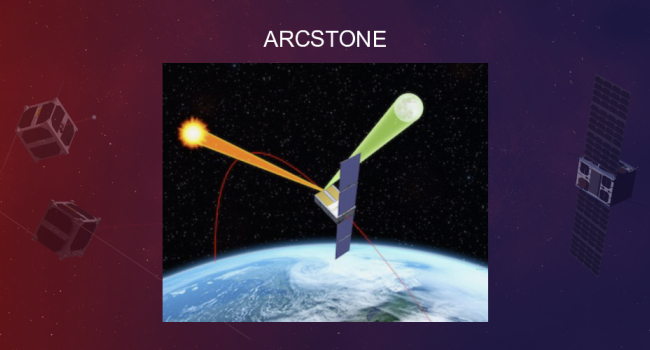
NASA scientists are preparing a groundbreaking mission called Arcstone, aimed at using the Moon as a cosmic mirror to calibrate Earth-observing satellites. This innovative project promises to dramatically increase the accuracy of remote sensing data, improving climate monitoring, weather forecasting, and natural resource management. Details of the mission were published on NASA’s official website.
The Moon as a Perfect Calibrator
The concept of using the Moon for satellite calibration dates back to the 1960s, but only with today’s technology has it become truly feasible. The Moon is ideal for this purpose because its surface reflects sunlight consistently and predictably, unaffected by Earth's atmosphere.
“The Moon is a natural calibrator that doesn’t change over time,”
said the project lead from NASA’s Langley Research Center.
The Arcstone mission involves launching a miniature CubeSat equipped with a high-precision spectrometer. Over a six-month mission, the instrument will measure sunlight reflected from the Moon, creating a reference standard for calibrating thousands of optical sensors onboard Earth-observing satellites.
The Calibration Problem Today
Currently, Earth observation satellites use various calibration methods, leading to inconsistencies and mismatched data. This makes it difficult to compare data from different satellites or monitor long-term environmental trends accurately.
Scientists liken this to trying to measure body temperature using thermometers with different scales — without a universal standard, reliable comparisons become problematic.
Arcstone will address this challenge by providing a unified lunar standard, allowing data from all optical satellites to be synchronized and harmonized.
How the Mission Works
The Arcstone CubeSat, no larger than a shoebox, will carry a spectrometer capable of analyzing light reflected from the Moon with unprecedented precision. Over its operational period, the satellite will collect benchmark-quality data to calibrate sensors monitoring Earth’s climate systems, oceans, forests, and agriculture.
If the mission proves successful, NASA intends to scale up the project, possibly establishing a permanent lunar-based calibration system. This could not only improve real-time data collection but also allow scientists to recalibrate decades’ worth of archived satellite data for increased reliability.
Potential and Advantages
The introduction of a "lunar standard" brings multiple scientific and practical benefits:
- Higher Data Accuracy: Unified calibration improves the reliability of measurements critical for weather prediction, climate tracking, and resource management.
- Re-evaluation of Archives: Standardized data allows scientists to correct past satellite records, eliminating long-standing inaccuracies.
- Lower Costs: A common calibration reference reduces reliance on expensive ground-based systems and simplifies satellite maintenance.
Moreover, Arcstone demonstrates the power of compact CubeSats to perform complex scientific tasks — setting a precedent for future low-cost, high-impact space missions.
Conclusion
With Arcstone, NASA aims to transform the Moon into a stable, space-based calibration tool, ensuring that the vast constellation of Earth-observing satellites speaks a common language. This mission could revolutionize how we understand our planet — not by looking at the Earth directly, but by studying how it sees the Moon.