make preferable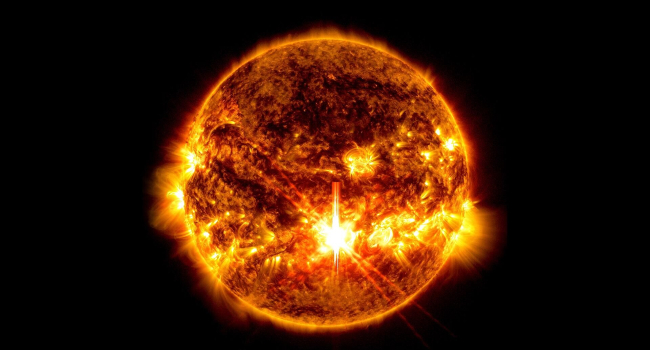
The most powerful solar flare in the past month has been recorded, potentially triggering geomagnetic storms on Earth. The Solar Astronomy Laboratory of the Space Research Institute of the Russian Academy of Sciences (IKI RAS) reported the event on its official website. The M8.5-class flare erupted from an active region directly facing our planet, increasing the chances of a direct coronal mass ejection (CME) impact. Here's what is known so far, what to expect, and how it ties into recent solar activity.
The New Flare: Key Details
On June 15, 2025, the Sun unleashed a strong flare preliminarily classified as M8.5 — one of the most intense in the past 30 days. The epicenter of the activity lies in active region 4114, positioned near the center of the solar disk, making Earth particularly vulnerable to a potential CME.
- Flare Specifications:
- Class: M8.5 (high intensity, close to X-class)
- Location: Region 4114, Earth-facing
- Potential Impact: If a CME follows, it could reach Earth within 2–3 days and trigger a geomagnetic storm rated G2 to G4.
- Comparison: M-class flares are less powerful than X-class ones, but an M8.5 is near the upper boundary of the M category, making it dangerous.
Scientists’ Warning:
If a CME is Earth-directed, it may follow a path similar to early June’s event, which resulted in a G4-level storm — a strong geomagnetic disturbance that disrupted radio communications and caused auroras at mid-latitudes.
Connection to Recent Solar Events
Solar activity has been ramping up in June 2025 as the Sun nears the peak of Solar Cycle 25. Several notable events have occurred in just the past week:
- June 14–15: An M6.8-class flare occurred late on the 14th, lasting 18 minutes. Though weaker than the M8.5, its effects are still being evaluated.
- Last Week: IKI RAS and the Institute of Solar-Terrestrial Physics reported a major plasma ejection from the Sun’s south pole. While it didn’t affect Earth, it signaled unusual polar activity.
Context:
This flare activity is linked to a rise in sunspot numbers within Region 4114, now considered one of the Sun’s most unstable zones. According to NOAA, there's a 65% probability of more M-class flares in the next 48 hours and a 10% chance for X-class events.
Possible Effects on Earth
If the CME associated with the M8.5 flare reaches Earth, the following consequences are expected:
- Geomagnetic Storms:
- G2–G3 (moderate/strong): May disrupt GPS, radio communication, and power grids in high-latitude regions.
- Worst-case scenario – G4 (severe): Could cause widespread technological disturbances like in early June.
- Auroras:
Could be visible as far south as 50°N latitude, including cities like Saint Petersburg and Murmansk. - Impact on Technology:
- Possible interference with satellites, including the Starlink network.
- Disruptions in aviation communications on polar routes.
- Health Effects:
People sensitive to atmospheric changes may experience headaches, blood pressure fluctuations, or sleep issues.
Timing:
If a CME occurred, it would likely impact Earth between June 17–18, 2025. IKI RAS is actively monitoring the situation to refine trajectory and intensity forecasts.
How to Minimize the Impact
- For Individuals:
- Reduce stress and avoid overexertion on June 17–18.
- Stay hydrated and limit caffeine intake.
- Monitor your well-being, especially if you have chronic conditions.
- For Technology and Infrastructure:
- Satellite and power grid operators should prepare for potential overloads.
- GPS users should be aware of possible navigation errors.
- Aurora Watching:
- Follow updates on spaceweather.com or the IKI RAS website.
- The best time for viewing auroras will be the night of June 17–18 in northern regions.
Scientific Background
This heightened solar activity is part of Solar Cycle 25, expected to peak around mid-2025. NASA notes that this cycle has been more intense than initially predicted, with frequent M- and X-class flares. IKI RAS is using data from GOES and SDO telescopes, as well as Russian satellites, to monitor the Sun. The M8.5 flare confirms that Region 4114 remains a major source of disturbances, and more events are expected soon.
What’s Next?
- June 17–18: CME arrival window and forecast updates.
- June–July 2025: Further flares likely as Region 4114 evolves.
- Long-term Outlook: As solar activity intensifies, enhancing the resilience of satellites and power systems will become increasingly critical.
Recommendation:
Keep an eye on updates from IKI RAS and NOAA’s Space Weather Prediction Center for the latest alerts and forecasts.
Conclusion
The M8.5-class solar flare recorded on June 15, 2025, is the strongest in a month and poses a threat of G2–G4 geomagnetic storms. If the plasma ejection from Region 4114 is Earth-bound, it could disrupt technology and produce visible auroras by June 17–18. This event highlights the active phase of Solar Cycle 25, which continues to challenge scientists’ expectations.