make preferable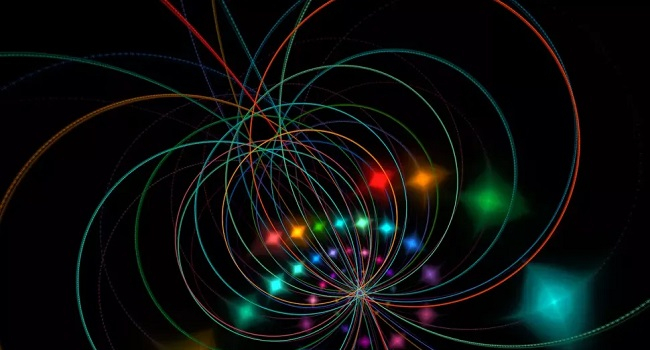
Israeli physicist Eduardo Gandelman from Ben-Gurion University has proposed a groundbreaking modification to string theory that could pull it out of a decades-long crisis. Published in The European Physical Journal C (EPJC), his work offers solutions to persistent challenges in explaining dark energy, quantum gravity, and cosmic inflation. Here’s how Gandelman aims to rescue string theory from its “swampland” and why this matters for physics.
String Theory: The Quest for a “Theory of Everything”
String theory is one of the most ambitious frameworks in theoretical physics, aiming to unify quantum mechanics and general relativity into a single model describing all particles and forces in nature. Instead of point-like particles (e.g., electrons, quarks, photons), it posits that fundamental entities are tiny, one-dimensional “strings” vibrating at scales near the Planck length (10⁻³⁵ m). Different vibrational modes produce distinct particles and interactions, including gravity.
Long hailed as a leading candidate for a “theory of everything,” string theory promises to explain:
- The origin of elementary particles.
- The four fundamental interactions (gravitational, electromagnetic, strong, and weak).
- Dark energy, which drives the universe’s accelerated expansion.
- Quantum gravity, describing gravity at subatomic scales.
However, since the early 2000s, string theory has faced significant hurdles, casting doubt on its viability.
Challenges of String Theory: The Landscape and the Swampland
A major issue is string theory’s complexity. Rather than predicting a single model for our universe, it yields 10⁵⁰⁰ possible universes, each with different particles, forces, and physical laws—a vast set known as the “landscape.” An even bigger problem is the “swampland,” an infinite array of mathematically possible but physically unrealizable models. Most string theory solutions that might describe our universe fall into this swampland, failing to match observed reality, including:
- Dark Energy: The constant vacuum energy density driving cosmic acceleration conflicts with string theory predictions.
- Cosmic Inflation: The rapid expansion of the early universe shortly after the Big Bang is poorly reconciled.
- Quantum Gravity: String theory struggles to integrate gravity with quantum mechanics at Planck scales.
To distinguish viable models from the swampland, physicists developed “swampland constraints.” These ensure a model’s physical consistency, but strict adherence often places our universe—with its dark energy and inflation—into the swampland, undermining string theory’s credibility.
Gandelman’s Solution: Dynamic String Tension
Gandelman introduces a radical approach by reimagining a core parameter: string tension, or the “tautness” of strings. Traditionally, string tension is a fixed constant set manually. Gandelman proposes a model where tension emerges dynamically, varying based on the strings’ behavior and interactions.
How It Works
- Tension and the Planck Scale: String tension is tied to the Planck scale, the minimum length (10⁻³⁵ m) and energy scale where quantum gravitational effects dominate. In standard models, this scale is fixed, limiting flexibility.
- Dynamic Model: Gandelman allows tension and the Planck scale to vary. This relaxes swampland constraints, enabling string theory to describe a universe with dark energy and inflation.
- Physical Viability: As string tension increases, swampland constraints weaken, moving the model from the swampland to the landscape and aligning it with observed reality.
“When string tension and the Planck scale grow large, the constraints lose their grip. This means the theory is no longer in the swampland but in reality,” Gandelman explains.
What It Achieves
Gandelman’s model enables:
- Dark Energy Explanation: It accounts for dark energy as a natural outcome of string dynamics, not an ad-hoc constant.
- Cosmic Inflation Compatibility: The model aligns with equations describing the universe’s early rapid expansion.
- Quantum Gravity Framework: It integrates gravity with quantum mechanics without contradictions.
- Predictive Power: It reduces the number of extraneous solutions, making string theory more testable.
Significance of the Work
If validated, Gandelman’s model could be a turning point for string theory. It counters criticism tied to the swampland and aligns the theory with experimental data, such as:
- Observations of dark energy from telescopes like Planck and DESI.
- Potential tests via cosmological measurements, including cosmic microwave background radiation or gravitational waves.
However, the model remains theoretical. Confirmation requires years of mathematical refinement and possibly new experiments in particle accelerators or astrophysics.
What’s Next?
To validate Gandelman’s model, researchers need:
- Mathematical Validation: Testing the stability of dynamic solutions across string theory’s 10–11 dimensions, most of which are “compactified” (curled up at tiny scales).
- Cosmological Tests: Comparing model predictions with data on cosmic microwave background, gravitational waves, and cosmic expansion.
- Experimental Evidence: While direct observation of strings at Planck scales is impossible, indirect effects could be detected at the Large Hadron Collider or future experiments.
Gandelman’s work may also inspire progress in rival approaches, like loop quantum gravity or noncommutative geometry, which also seek to unify quantum mechanics and gravity.
Conclusion
Eduardo Gandelman’s dynamic string tension model offers a lifeline to string theory, addressing its struggles with dark energy, cosmic inflation, and quantum gravity. By moving viable models out of the swampland and into the landscape, it aligns string theory with our universe’s observed properties. While still theoretical, this breakthrough could reinvigorate the quest for a “theory of everything,” with far-reaching implications for understanding the cosmos. Further tests and refinements will determine whether Gandelman’s vision can truly save string theory.