make preferable
American scientists from the Southwest Research Institute (SwRI) have made a breakthrough in solar research, discovering a previously unknown particle acceleration mechanism in the Sun’s corona. Using NASA’s Parker Solar Probe, researchers recorded powerful proton emissions, offering deeper insight into the nature of solar storms that threaten satellites, power grids, and navigation systems. The study results were published on the SwRI website.
What Did Scientists Discover?
While passing through the heliospheric current sheet (HCS)—a region where the Sun’s magnetic field polarity changes abruptly—the Parker Solar Probe detected protons accelerated to relativistic speeds (near the speed of light). The energy of these particles exceeded background levels by thousands of times.
The key mechanism turned out to be magnetic reconnection—a process in which magnetic field lines break and reconnect, releasing immense energy. This energy transforms magnetic force into the kinetic energy of particles, accelerating them to extreme speeds.
The scientists observed magnetic reconnection near the Sun in such detail for the first time. In the core of the ejection, particles reached incredible energy, noted Dr. Mihir Desai, lead researcher of the mission.
How Does It Work?
Magnetic reconnection occurs in plasmoids—fragmented magnetic islands within the HCS. These structures rapidly evolve, creating localized acceleration zones. The Parker Solar Probe recorded:
- Energetic protons with energy 1,000 times higher than the magnetic energy of the surrounding plasma.
- Unique signatures distinguishing these particles from those produced by solar flares, confirming their origin in the HCS.
This discovery refines our understanding of how solar energetic particles (SEP) form, which are key components of solar storms.
Why Is This Important?
Solar storms, caused by coronal mass ejections (CMEs) and SEPs, pose a threat to technology:
- Satellites: Energetic particles can damage electronics, as happened in May 2024 when solar storms disrupted GPS systems used in agriculture.
- Power grids: Geomagnetic disturbances can cause overloads and blackouts.
- Navigation and communication: Radio frequency interference disrupts GPS and radio signals.
- Astronauts: SEPs pose radiation risks to crews in orbit.
A better understanding of magnetic reconnection will:
- Improve solar storm forecasting using Parker Solar Probe data to refine prediction models.
- Help design protections for satellites and infrastructure, minimizing economic losses.
- Advance the study of coronal heating—the mystery of why the corona is millions of degrees hotter than the Sun’s surface.
The Role of Parker Solar Probe
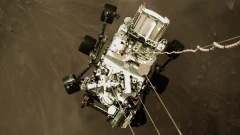
Launched in 2018 under NASA’s Living With a Star program, the Parker Solar Probe became the first spacecraft to enter the Sun’s corona. It withstands temperatures up to 1,370°C thanks to an 11.4 cm-thick carbon-carbon composite heat shield. In 2024, it approached the Sun to within 6.1 million km, reaching a record speed of 690,000 km/h for a human-made object.
Instruments like IS☉IS (Integrated Science Investigation of the Sun) measure particles across a wide energy range, distinguishing between protons, electrons, and ions (carbon, oxygen, iron, helium). This helped confirm that particle acceleration occurs specifically in the HCS, not just in solar flare regions.
What’s Next?
The SwRI discovery is just part of the Parker Solar Probe mission, which will continue studying the Sun through 2025. Scientists expect:
- Additional data on CMEs and solar wind during future passes through the corona.
- Refinement of magnetic reconnection models to predict SEP trajectories.
- Broader insights into plasma physics, applicable to astrophysics and fusion research.
These findings are key to understanding how the Sun affects Earth. We're getting closer to building reliable space weather forecasts, added Desai.