make preferable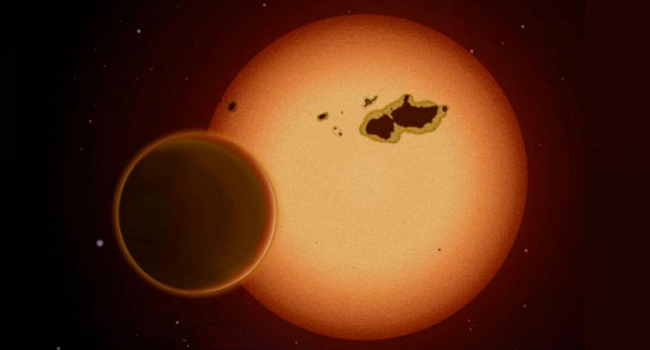
An international team of scientists led by the Yunnan Observatory of the Chinese Academy of Sciences has discovered a potentially habitable exoplanet, Kepler-725c—a super-Earth about 10 times more massive than Earth, orbiting within the habitable zone of a Sun-like star. Published in Nature Astronomy, the discovery marks a breakthrough in the search for worlds capable of sustaining life, and it was made using an innovative method known as Transit Timing Variation (TTV).
How Was Kepler-725c Discovered?
Traditional methods of detecting exoplanets—such as:
- Transit Method (measuring dips in brightness as a planet passes in front of a star) and
- Radial Velocity Method (measuring stellar wobbles caused by a planet’s gravity)
—are often limited to large planets with short orbital periods. They frequently miss smaller planets, especially in the habitable zones of Sun-like stars.
For the first time, the TTV method was successfully used to detect a super-Earth in the habitable zone. This technique tracks gravitational anomalies in a star’s planetary system. Scientists observed slight deviations in the transit timing of Kepler-725b, a gas giant with a 39.64-day orbit, caused by an unseen companion—Kepler-725c.
The timing shifts (about 10 minutes) revealed the presence of a second planet in a 1:5 orbital resonance with Kepler-725b (five orbits of the inner planet for every one of the outer). Data from NASA’s Kepler telescope—collected over 1,470 days and encompassing 21 transits—enabled accurate modeling of the planetary system.
Characteristics of Kepler-725c
- Mass: 10 ± 3 Earth masses
- Orbit: 207.5-day period; eccentricity 0.44 ± 0.02; semi-major axis 0.674 AU
- Insolation: Receives 1.4 times the sunlight Earth does—placing it within its star’s habitable zone
- Host Star: Kepler-725, a G9V-type star, similar to the Sun
- Planet Type: Likely a mini-Neptune with a dense hydrogen atmosphere or a Hycean world (a planet with subsurface oceans beneath a hydrogen-rich envelope), rather than a rocky Earth-like world.
Although Kepler-725c is unlikely to be Earth-like in composition, its location within the habitable zone—where liquid water could exist—makes it a prime candidate for studying potentially life-supporting conditions. Hycean planets are considered promising environments for exotic aquatic life forms.
Why This Discovery Matters
- New Search Method:
- TTV is effective for detecting low-mass planets in habitable zones—regions where transit likelihood is low.
- This expands the range of detectable Earth-like planets around Sun-like stars.
- Planetary System Insights:
- The 1:5 resonance between Kepler-725b and Kepler-725c enhances gravitational interactions, ideal for TTV analysis.
- Suggests similar hidden planets may exist in other systems.
- Habitability Potential:
- Even as a mini-Neptune, Kepler-725c’s atmosphere could be analyzed for biosignatures like dimethyl sulfide (DMS)—similar to studies of K2-18b.
- Could host life in subsurface oceans or beneath thick atmospheres.
- Future Missions:
- Highlights TTV’s role in upcoming missions like Habitable Worlds Observatory, focused on directly imaging Earth analogs.
How TTV Works
The Transit Timing Variation method detects time shifts in a transiting planet caused by the gravitational pull of another planet. In the Kepler-725 system:
- Kepler-725b showed transit timing irregularities due to the gravity of Kepler-725c.
- Modeling ruled out other causes (like stellar activity), confirming the second planet.
- The 1:5 resonance amplified the signal, making even a 10-Earth-mass planet detectable.
TTV is especially powerful in systems where gas giants are paired with outer planets in orbital resonance, where variations can reach hours instead of mere minutes.
Limitations and Outlook
- Planet Composition:
- Kepler-725c's mass and high insolation suggest a gaseous or water-rich composition—not a rocky super-Earth.
- Spectroscopic atmospheric data are needed to confirm its true nature.
- Distance:
- Located in the Cygnus constellation, it’s too distant for detailed study with current instruments.
- Future Research:
- Telescopes like the James Webb Space Telescope (JWST) or the European Extremely Large Telescope (E-ELT, expected 2028) could analyze the planet’s atmosphere for water vapor, methane, or biosignatures.
Conclusion:
Kepler-725c represents a new frontier in the search for habitable worlds. Although it's likely not a rocky Earth twin, its presence in the habitable zone and detectability via the TTV method signal major progress. This discovery paves the way for identifying more subtle Earth-like planets using indirect gravitational effects and highlights the potential of next-generation telescopes in the quest to find life beyond Earth.