make preferable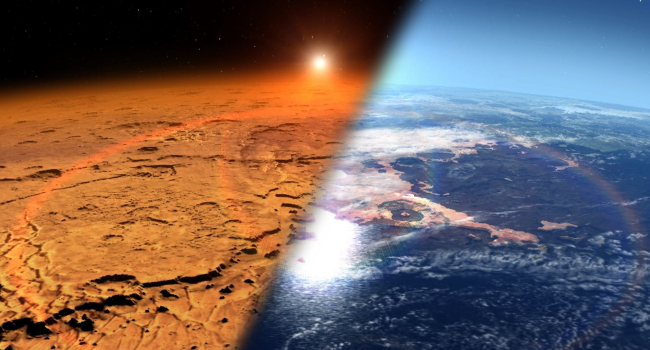
American researchers from the University of Chicago and Harvard, along with their colleagues, have developed a step-by-step plan to terraform Mars and make the Red Planet suitable for life. The study, published in Nature Astronomy, claims that modern technologies — such as SpaceX’s Starship rockets and advances in synthetic biology — make this ambitious project increasingly realistic.
“Thirty years ago, terraforming was science fiction, but today it's an achievable goal,” said the study’s lead author, Erika DeBenedictis.
Why Terraform Mars?
Co-author Edwin Kite from the University of Chicago emphasized: “Living planets are better than dead ones. Mars had water — and possibly life — billions of years ago. We can bring that state back.”
According to the researchers, terraforming would mark humanity’s first attempt at “ecological restoration” of another planet. Not only would this prepare Mars for future colonization, but it would also offer insights into climate engineering on Earth.
A Step-by-Step Plan for Terraforming
The process will take centuries, but the first steps could begin within decades. The plan includes three main phases:
1. Heating the Surface and Thickening the Atmosphere
- Technology: Use of solar mirrors, nanoparticles, or aerogel to reflect sunlight and warm the polar ice caps. This would release frozen carbon dioxide (CO₂), increasing atmospheric pressure from 6 mbar to 30–100 mbar.
- Result: A greenhouse effect, raising surface temperatures by 10–20°C and creating liquid water in low-lying areas such as the Hellas Basin.
- Timeline: 10–50 years using ~1 million tons of materials, delivered via Starship (which has a payload capacity of up to 150 tons).
2. Seeding Extremophile Microorganisms
- Organisms: Genetically modified bacteria, similar to terrestrial extremophiles (e.g., Deinococcus radiodurans), engineered to produce oxygen and nitrogen by processing the Martian regolith.
- Method: Dispersal from orbiting stations or drones over regions with liquid water.
- Result: Gradual oxygenation of the atmosphere (1–5% over 100–200 years) and formation of soil capable of supporting primitive plants.
- Timeline: 100–300 years.
3. Creating a Biosphere
- Plants: Introduction of mosses, lichens, and eventually coniferous trees adapted to low pressure and radiation.
- Infrastructure: Construction of domes for initial settlements using locally sourced oxygen and water.
- Result: A self-sustaining ecosystem where humans could live without spacesuits — at least in certain regions.
- Timeline: 500–1000 years.
Technologies and Resources
- Starship: SpaceX’s rockets can deliver hundreds of tons of cargo, including aerogel (~0.0001 kg/m² to cover 1 km²) and bioengineering equipment. Launch costs are estimated at $200–500 million per mission.
- Synthetic biology: CRISPR gene editing will allow the development of organisms resistant to Martian conditions (UV radiation, –60°C, low pressure).
- Local resources: Water extraction from polar ice (1.5–3 km³), CO₂ from the atmosphere, and regolith minerals for methane and fertilizer production.
Modeling shows that raising the temperature by just 5°C could create enough pressure for water to exist in liquid form near the equator. With the annual introduction of 10⁹ bacteria, oxygen levels could reach 13% within 500 years.
Risks and Ethical Concerns
Not all scientists support the idea. Nina Lanza of the Los Alamos National Laboratory warned: “Terraforming may destroy evidence of ancient life on Mars. We could lose the chance to study its original nature.”
Other risks include:
- Uneven climate effects: Localized heating might trigger dust storms, complicating missions.
- Ecological imbalance: Introducing alien organisms could result in uncontrollable biospheres.
- Ethical concerns: Terraforming raises fundamental questions about humanity’s right to alter other planets.
The researchers propose starting with controlled experiments as part of the Mars Sample Return mission (2028–2031), testing aerogels and bacteria in craters.
Reactions and Outlook
The project has sparked excitement on social media. Users call it “a step toward an interplanetary civilization,” though skeptics point to its enormous cost ($10–100 trillion over 500 years) and ethical dilemmas. Russian commentators compared the concept to the visionary ideas of Tsiolkovsky, emphasizing SpaceX’s role.
Next steps include:
- Lab testing of aerogels and bacteria in Mars-like conditions (2026–2030)
- Pilot missions for localized heating in Gale Crater (2035–2040)
- International cooperation with NASA, ESA, and ISRO for funding and development
Conclusion
The terraforming plan proposed by scientists turns a long-standing dream into a real roadmap. By using solar mirrors, nanoparticles, and extremophiles, humanity could create an atmosphere, flowing water, and eventually a living biosphere on Mars. Despite the risks and ethical debates, the project opens a new era of space expansion. Experiments starting in the 2030s may mark the first step toward a “second home” for humanity, inspiring generations of dreamers and scientists.