make preferable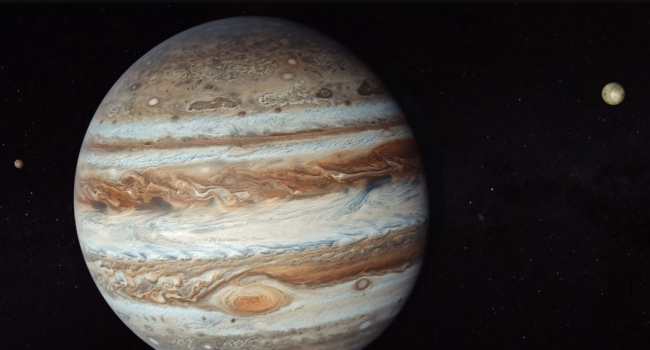
Indian researchers have unveiled an ambitious project that could redefine the future of deep space exploration. At the Planetary Science Conference (PSC), they presented a plan to use nuclear energy to power spacecraft engines capable of reaching Jupiter, Saturn, Uranus, Neptune, and even the Kuiper Belt. Lead author Malay Kumar Biswal stated that these technologies could lay the groundwork for interstellar missions, including journeys to Proxima Centauri.
Nuclear Propulsion: The Core Concept
The team examined two types of nuclear propulsion systems:
- Radioisotope Thermoelectric Generators (RTGs): These generate electricity from the heat produced by radioactive decay (e.g., plutonium-238). While they’ve powered missions like Voyager and New Horizons, their output is relatively low.
- Fission Electric Propulsion: These systems rely on uranium-235 chain reactions to produce high-energy output for electric engines. NASA’s KRUSTY reactor, for example, can generate up to 10 kW of power and is scalable for larger missions.
These systems were compared with traditional chemical and solar-powered propulsion. The nuclear systems demonstrated several key advantages:
- High energy efficiency: Capable of transporting payloads up to 10 tons, compared to just 1–2 tons for chemical rockets
- Reduced travel time: A mission to Jupiter (5.2 AU) could take only 3–5 years, rather than the 7–10 years typical of chemical propulsion
- Independence from sunlight: Critical for missions to the Kuiper Belt (30–50 AU) or the dark sides of planets, where solar energy is insufficient
“Nuclear propulsion is the only realistic way to reach the outer planets—and beyond—within a reasonable timeframe,” said Biswal.
Focus on the Kuiper Belt
Particular attention was given to the Kuiper Belt—a region beyond Neptune rich in asteroids, comets, and dwarf planets such as Pluto. Nuclear engines would enable:
- Delivery of heavy scientific instruments to analyze the composition of celestial bodies
- Deployment of orbital stations for extended studies
- Shorter mission durations, reducing the impact of cosmic radiation on spacecraft equipment
“The Kuiper Belt is a ‘museum’ of the Solar System’s formation. Nuclear technology could finally open it up for exploration,” Biswal emphasized.
Dreams of Interstellar Travel
While missions to Proxima Centauri (4.24 light-years away) remain a distant goal, nuclear propulsion is the only plausible path forward. Researchers propose concepts based on pulsed nuclear propulsion (such as Project Orion) or nuclear fusion, potentially achieving speeds up to 10% the speed of light. This would reduce the journey to around 40–50 years—compared to thousands using chemical engines.
“These are technologies that, in 50 to 100 years, could let us collect data from exoplanets,” Biswal stated.
Benefits and Challenges
Benefits of nuclear propulsion include:
- High payload capacity: Suitable for transporting large rovers, labs, or even base infrastructure
- Reliability: Nuclear reactors can operate for decades, supplying consistent energy in deep space
- Infrastructure potential: Future missions could benefit from refueling stations on orbits or asteroids
Challenges include:
- Safety risks: Launching nuclear reactors requires strict protocols to avoid accidents
- Thermal regulation: Dispersing excess heat in the vacuum of space is an engineering challenge
- Political barriers: International treaties restrict the use of nuclear technologies in space over concerns about weaponization
Comparisons with Other Technologies
The team compared nuclear systems with other propulsion methods:
- Chemical engines: Provide strong thrust but are inefficient (specific impulse ~450 s), suitable mainly for short-range missions
- Solar sails: Environmentally friendly but too slow—taking decades to reach Jupiter
- Ion engines: Highly efficient (specific impulse up to 9000 s) but require a powerful energy source—something only nuclear reactors can provide
NASA is already testing the KRUSTY reactor to power ion engines for long-duration missions. Indian scientists propose adapting similar systems for ISRO’s future missions, including a proposed Jupiter probe.
The Future of Nuclear Spaceflight
The Indian proposal highlights the need for global collaboration. Russia, the U.S., and China are also developing nuclear propulsion:
- Russia: Rosatom has created a plasma engine prototype and a nuclear module for Mars missions
- United States: NASA is working on a thin-film nuclear engine for interstellar applications
- China: Unveiled a Mars-bound nuclear propulsion system in 2024
India, with its strong background in nuclear energy and space science, could become a key player. ISRO is already planning missions to the outer planets, and nuclear technology could significantly accelerate their development.
Public Reaction and Next Steps
On X (formerly Twitter), users are actively discussing the project, calling it a “step toward star-bound missions.” Russian commentators compared it to Roscosmos initiatives, affirming that “nuclear propulsion is the future of deep space.” Critics, however, highlight the high cost and potential risks.
Planned next steps include:
- Laboratory testing of nuclear propulsion systems in India
- Joint ventures with NASA and ESA for technology sharing
- Development of international regulations for the safe use of nuclear power in space
Conclusion
Indian scientists, led by Malay Kumar Biswal, have proposed a groundbreaking approach to deep space exploration by using nuclear propulsion to reach Jupiter and the Kuiper Belt. These engines promise faster missions, greater payload capacity, and a potential path to interstellar travel. Despite technical and political hurdles, the project underscores the transformative potential of nuclear propulsion for unlocking the Solar System—and beyond. The success of future ISRO missions and global cooperation will determine whether this vision becomes reality.