make preferable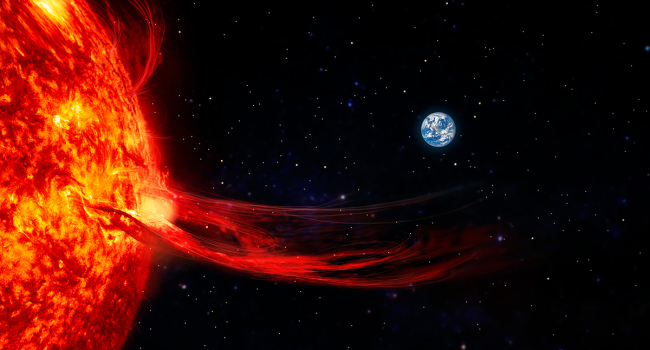
The magnetic storm that began on Earth during the night of May 29, 2025, has now lasted more than 17 hours, according to the Laboratory of Solar X-ray Astronomy at the Space Research Institute (IKI) and the Institute of Solar-Terrestrial Physics of the Russian Academy of Sciences. The peak activity occurred in the early morning hours, from 3:00 to 6:00 Moscow time, reaching level G3 (strong storm) on the NOAA scale.
Causes and characteristics
The storm is driven by a combination of several factors:
- High-speed solar wind: Reaching speeds of 800 km/s or more, which is twice the normal level (around 400 km/s).
- Northward orientation of the interplanetary magnetic field (IMF): This configuration intensifies geomagnetic disturbances and negatively affects Earth’s magnetosphere.
- Coronal holes: Newly formed large coronal holes in the Sun’s atmosphere have become sources of high-speed plasma streams, triggering the storm.
The geomagnetic Kp index peaked at 7 (equivalent to G3) but has now stabilized at a level of 4–5, indicating moderate activity. The temperature of the surrounding plasma is periodically rising to 1 million degrees Celsius, comparable to the solar corona.
Current conditions and forecast for May 30
According to the Laboratory, the storm is maintaining a moderate intensity level, and no further peaks are expected within the next 24 hours. However, geomagnetic activity is forecast to remain elevated until the end of the week due to the sustained high speed of the solar wind (600–800 km/s).
A moderate storm is expected on May 30 with a Kp index of 5, lasting throughout the day and peaking during daylight hours. Conditions are predicted to stabilize by May 31, with the Kp index dropping to 2, indicating calm space weather.
Consequences and recommendations
A G3-level storm may cause:
- Technological disruptions: Malfunctions in GPS, radio communications (HF, VHF, UHF), and power systems, including false triggering of protective equipment.
- Health effects: Weather-sensitive individuals may experience headaches, blood pressure fluctuations, fatigue, or insomnia. Around 70% of hypertensive crises and heart attacks occur during geomagnetic storms.
Residents of Moscow (55.75 N, 37.62 E, UTC+03) and other mid-latitude regions are advised to:
- Reduce physical exertion on May 30
- Avoid stress, drink more water, and avoid caffeine and alcohol
- Monitor blood pressure and consult a doctor if needed
Satellite and power grid operators are encouraged to check equipment for resistance to space weather disturbances.
Context of solar activity
The storm is linked to the peak of Solar Cycle 25, during which geomagnetic disturbances are more frequent. Coronal holes, which are sources of fast solar wind, form compression regions (CIRs) that enhance geomagnetic effectiveness. On May 25, 2025, an X1.1-class solar flare was recorded, but it did not produce a direct coronal mass ejection toward Earth. The maximum of solar activity is expected in the summer of 2025, although scientists do not anticipate a sharp increase in the number of storms.