make preferable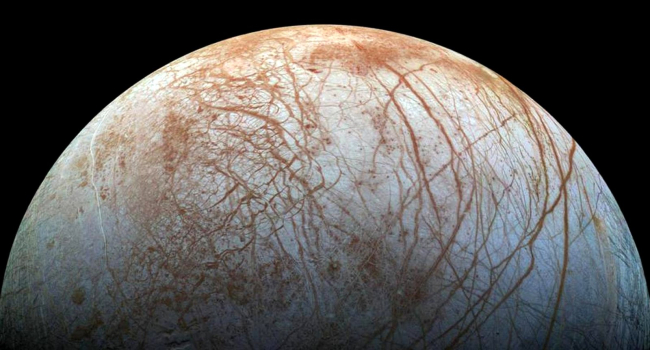
Astronomers have modeled the distant future of our Solar System, focusing on events unfolding 12 billion years from now, when the Sun will transform into a red giant. According to a new study published on the preprint server arXiv, during this dramatic phase, Jupiter’s icy moon Europa could temporarily become habitable — potentially offering a new refuge for humanity.
Catastrophic Changes in the Solar System
As the Sun expands, it will engulf Mercury and Venus, and Earth will become an uninhabitable, scorched rock. Temperatures on our planet will rise so high that oceans will boil away and the atmosphere will be stripped. Yet amid this devastation, new opportunities will arise on the Solar System's outer edges.
The so-called habitable zone — the region around a star where liquid water can exist — will shift outward. The Jovian system, home to Jupiter’s many moons, will become a key area of interest. Chief among these is Europa, whose thick shell of ice hides a vast subsurface ocean — possibly even more water than all of Earth's oceans combined.
Europa: An Icy World with Potential
Europa, one of the four Galilean moons, is already a major target in astrobiology due to its subsurface ocean. In the distant future, as solar output increases, Europa’s surface will warm just enough to cause sublimation of surface ice — turning it directly into vapor.
This process may create a tenuous atmosphere of water vapor, lasting tens to hundreds of thousands of years. Although most of this vapor would eventually escape into space, some could linger, allowing short-term conditions conducive to life. Scientists speculate that simple lifeforms could arise — or microbial life seeded by Earth could survive.
Melting ice would also expose Europa's liquid interior, offering a valuable source of water and potentially shelter for human colonies. It may be a brief window, but it's a profound one.
Jupiter as the New System Center
Jupiter itself would also transform. Moving into the newly expanded habitable zone, the gas giant will brighten, thanks to the formation of high-altitude water clouds. These clouds will reflect solar light, increasing illumination on Europa and accelerating surface warming.
In effect, Jupiter could become a "second sun" to its moons — not through nuclear fusion, but via reflected light, drastically altering local environments.
Limitations and Challenges
Despite the intriguing possibilities, researchers emphasize that Europa's habitability would be temporary — a mere blink in cosmic terms, though potentially long enough for human exploration or short-term colonization.
Key challenges include:
- Radiation: Jupiter’s strong magnetic field creates lethal radiation belts that pose threats to both biological organisms and electronics.
- Thin atmosphere: The water vapor envelope wouldn’t provide sufficient protection from cosmic rays or solar radiation.
- Water loss: Most vapor would be lost to space, limiting the time span of liquid water availability.
Sustainable colonization would require advanced solutions — from radiation shielding domes to water recycling systems and durable infrastructure.
Why This Research Matters
The simulation highlights that, even as Earth perishes, the Solar System may offer other windows of habitability. Moons like Europa, Ganymede, and Callisto emerge as prime candidates for future missions and technological development.
While these events are billions of years away, the study serves as a powerful reminder of the importance of studying icy worlds today — and of the need to think long-term about the fate of our species.
If humanity endures for millions of years, the technologies of tomorrow might allow us not only to adapt to changing conditions within the Solar System, but also to seek refuge among the stars, exploring exoplanets beyond our current reach.