make preferable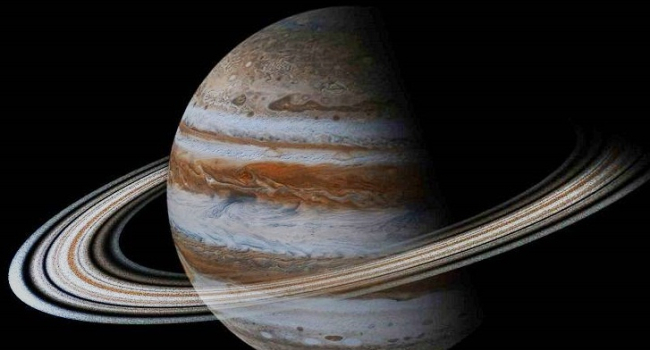
Scientists from the California Institute of Technology and the University of Michigan have uncovered new details about the early history of Jupiter, a key planet in our Solar System. Their research reveals that about 4.5 billion years ago, Jupiter was significantly larger and possessed a magnetic field dozens of times stronger than it is today. These findings help us understand how our planetary system formed.
Size and Magnetic Field of Young Jupiter
By analyzing the orbits of Jupiter’s smaller moons—Amalthea and Thebe—researchers determined that approximately 3.8 million years after the formation of the first solid bodies, Jupiter’s radius was twice its current size. Its volume at that time was equivalent to about 2,000 Earths, and its magnetic field was 50 times stronger than it is now. These characteristics indicate that young Jupiter was a true giant, exerting immense influence on its surrounding space.
A New Approach to Modeling
The scientists moved away from traditional planet formation models, which often relied on assumptions. Instead, they used precise measurements of orbital deviations of the moons and data on the conservation of Jupiter’s angular momentum. This approach enabled them to reconstruct the planet’s state during a critical period—the dissipation of the protoplanetary nebula, when the modern structure of the Solar System was taking shape.
Confirmation of the Core Accretion Theory
The discovery supports the core accretion theory as the primary mechanism for the formation of gas giants. According to this model, Jupiter began forming with a solid core that gradually attracted gas from the protoplanetary nebula, creating a massive atmosphere. The enormous size and powerful magnetic field of young Jupiter point to intense accretion processes in the early Solar System.
Significance for Science
The research sheds light on Jupiter’s role in shaping the architecture of the Solar System. Its colossal size and strong magnetic field likely influenced the orbits of other planets and the distribution of material in the protoplanetary disk. These findings help explain why the Solar System took on its current form and how Jupiter became the largest planet.
Conclusion
The discovery by American scientists reveals astonishing details about young Jupiter, portraying it as a giant with an incredibly powerful magnetic field and vast size. These findings deepen our understanding of planet formation and highlight Jupiter’s pivotal role in the history of the Solar System. The research opens new avenues for studying the evolution of gas giants and their impact on the development of planetary systems.