make preferable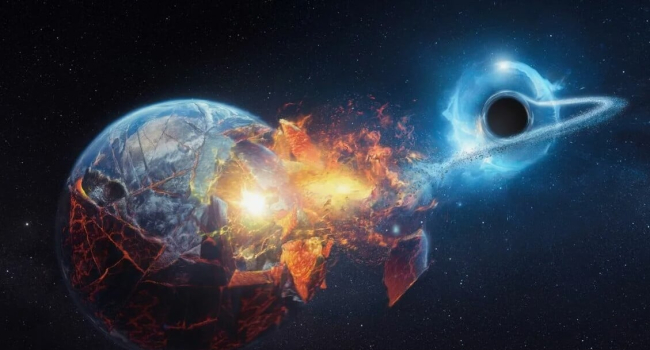
Scientists have proposed a new way to search for primordial black holes that may have formed in the early Universe. Researchers believe they could leave unique traces in the ancient structures of planets, asteroids—and even Earth. The respective study of an international team of astrophysicists was published in the journal Physics of the Dark Universe.
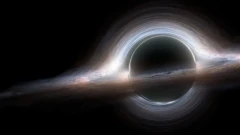
Primordial black holes are hypothetical objects that could have appeared shortly after the Big Bang. They are considered one of the potential candidates for the role of dark matter and may also be the source of gravitational waves and the key to unraveling many cosmic mysteries.
Upon entering planets or asteroids, black holes can absorb their liquid cores, leaving hollow shells that, if their size does not exceed 10 percent of Earth's radius, can retain their shape.
Such shells can be detected using modern telescopes. Their low density relative to their size indicates a hollow structure and the result of interaction with the primordial black hole, says the study's co-author, Dejan Stojkovic PhD, professor of physics in the University at Buffalo College of Arts and Sciences.
However, so far no primordial black holes have been detected with this method. If a black hole passes through a solid body, such as a rock, it can leave a microtunnel—a narrow straight channel about 0.1 µm in diameter. Scientists hypothesize that these tunnels can be found in objects over a million years old—in ancient rocks or structures.
But the new method of searching for primordial black holes is not very effective.
The probability of a primordial black hole passing through a billion-year-old boulder is 0.000001, the professor added.
But despite this low chance of detection, scientists believe that such experiments make sense because they do not require considerable resources.
This discovery could be the first step in proving the existence of primordial black holes and shed light on their future role in the evolution of the Universe.