make preferable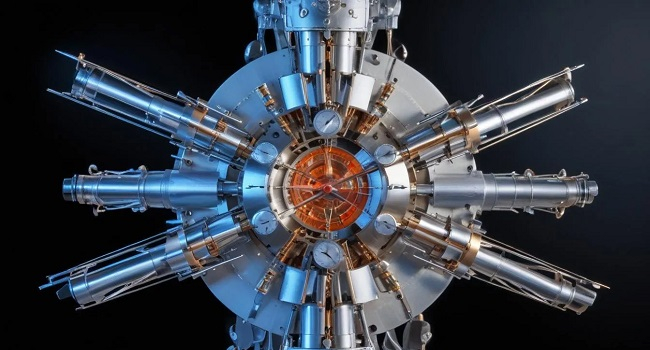
More recently, scientists have taken a step toward creating a nuclear clock that can greatly improve the accuracy of time measurement, The Conversation reports.
Accurate time measurement has become an important part of everyday human life. We use clocks to plan things, and GPS systems depend on accurate time data. However, despite all the technological advances, there is still no consensus on what a second is. Recent research in time measurement may change this perception.
Until 1967, a second was defined as 1/86400 of a day. Since then, however, the International System of Units has established a new definition based on the transition frequency of the cesium-133 atom. This transition occurs 9,192,631,770 times per second. Transitions in cesium atoms provide high accuracy, but scientists are looking for ways to improve this technology.
The difficulty is that higher transition frequencies must be used to improve accuracy. The more transitions per second, the less likely there is to be an error. To measure the transition frequency, scientists use a technique in which a known signal is combined with the signal they want to measure. The difference between the two produces a new, lower-frequency signal that is easier to analyze.
In this context, frequency combs, which use lasers to create many different waves of light, become an important tool. They allow energy to be transferred to millions of atoms simultaneously, increasing the probability of coinciding with the atomic transition frequency. This increases the accuracy of measurements.
In September 2021, scientists began using strontium to measure transitions that are in the range of visible light. This opens up the possibility of redefining the second by 2030. However, in 2024, U.S. researchers took it a step further by creating a nuclear clock that measures transitions in the nucleus of an atom. The atom used is thorium-229, which can be excited by ultraviolet light.
The advantage of nuclear clocks is that the transition frequency of thorium is about a million times higher than that of cesium. This means they can provide more accurate data, although the accuracy is currently lower than that of strontium clocks. Nevertheless, nuclear clocks promise a new generation of timekeeping devices with high accuracy.
Measuring time to the nineteenth decimal place will allow scientists to study fast processes such as interactions in quantum mechanics. More accurate measurements will also have an impact on positioning systems such as GPS, which require precise time to calculate distances.
Given that cesium-second time may soon be replaced, the new technology could lead to significant changes in navigation and communication. Ultimately, nuclear clocks could be the basis for a more accurate understanding of time and its impact on our society.