make preferable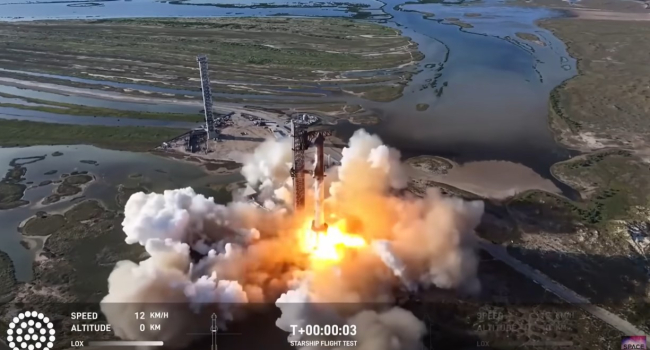
SpaceX has carried out the sixth test launch of the Starship spacecraft. The giant rocket took off on schedule on November 19 at 16:00 local time (November 20 at 02:00 Yerevan time). According to the plan, this flight was supposed to be similar in many ways to the fifth test, but immediately after the launch it became clear that SpaceX's plans had changed.
It was expected that during this flight SpaceX would again try to lower the first stage of the Super Heavy to the launch site and grab it with the launch mechanism or "food sticks", as they are unofficially called. However, the booster simply sank in the waters of the Gulf of Mexico. Little is still known about the reasons for the change in the landing plans for the Super Heavy.
SpaceX spokesman Dan Huot only briefly noted: “We deviated from certain conditions.” Apparently, some malfunction occurred during the flight that could prevent the first stage from landing safely on the launch pad, which is why experts decided not to even try to do it.
The spacecraft continued the flight and landed in the Indian Ocean 65 minutes later. Unlike the previous test, this time Starship tried to increase the aerodynamic contact angle during the final stage of the descent through the atmosphere in order to evaluate the operation of the flaps and study various landing scenarios.
In addition, during this test flight, some experiments were carried out with the heat shield: protective plates were specially removed from some parts of the spacecraft’s hull.
Unlike past test launches, this time SpaceX fired one of its Raptor engines in a vacuum. The craft then descended, landing in the Indian Ocean. This is a significant achievement for Starship, as engine performance is a critical component of future orbital spaceflight.