make preferable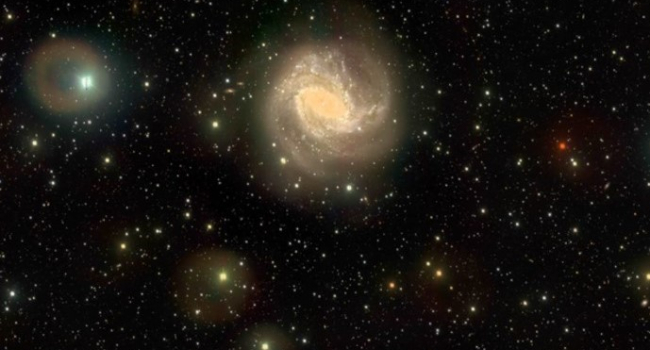
The National Institute of Astrophysics has presented detailed images of five galaxies in the local universe, obtained with the Italian VST (VLT Survey Telescope) telescope located in Chile. These galaxies, including the irregular NGC 3109 and Sextans A, the spiral galaxies Messier 83 (or NGC 5236) and IC 5332, and the irregular NGC 5253, are located between 4 and 30 million light-years from the Milky Way.
The images were obtained as part of the VST-SMASH (VST Survey of Mass Assembly and Structural Hierarchy) study, led by Crescenzo Tortora, a researcher at the National Institute of Astrophysics in Naples. The project aims to understand the mechanisms by which different types of galaxies form. The observations were made using three filters, which allowed us to capture the smallest details of the shape, color and distribution of stars in the galaxies.
The five galaxies were selected from 27 galaxies that the team is studying with the VST. These galaxies were carefully selected to provide a more detailed optical analogue of the data that the European Space Agency's (ESA) Euclid Space Telescope will collect in the coming years.

The results of the study are published in the journal The Messenger. "We are trying to understand how galaxies form, depending on their mass and morphological type. This means that we need to study the processes of star formation inside galaxies (in situ) and the processes of mergers with other galaxies," explained Crescenzo Tortora.
The VST observations allowed the team to study galaxies down to very low surface brightness, which would have been difficult to do just a few years ago. The VST telescope, with its large field of view, played a key role in obtaining these images in a relatively short time. By comparison, creating similar images with the Hubble Space Telescope would require many successive exposures.

“This is the first time that all these galaxies have been observed in such depth and detail and with such consistent data,” Tortora said, adding that in the coming years, only the Euclid Space Telescope will be able to study them at such depths, but it will not be able to rely on the extensive coverage at the VST optical wavelengths.
The Vera Rubin Observatory, although it observes in similar spectral regions, will only reach such depths after many years of observation, making the VST an instrument that could still yield interesting results for the study.