make preferable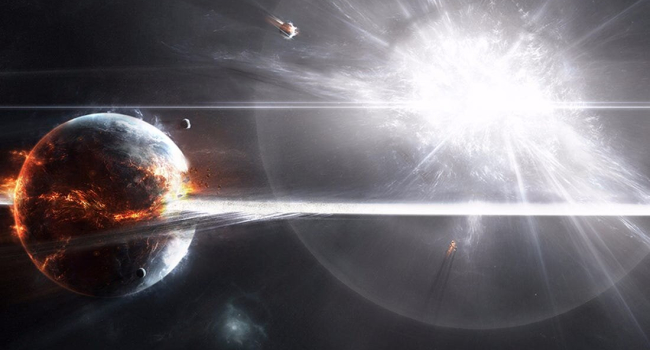
Astronomers have long been fascinated by the possibility of a nearby supernova affecting Earth. When massive stars like Betelgeuse exhaust their fuel, they explode in dramatic, brilliant supernova events. Betelgeuse, located about 650 light-years away, is one such star. While its explosion would create a spectacular celestial display, scientists confirm it won’t pose a threat to Earth. In fact, for a supernova to impact our planet, it would need to be much closer—within about 30 light-years. So, does any star out there actually pose a danger?
How close is too close?
According to Space.com, to understand how a supernova could impact Earth, it’s essential to consider the type and range of radiation and cosmic particles these explosions release. Supernovas produce energy across various spectrums: visible light, neutrinos, X-rays, gamma rays, and cosmic rays. Visible light, though intense, wouldn’t harm the planet; rather, it would only illuminate the night sky. Neutrinos, subatomic particles that interact very weakly with matter, also pose no threat, even though a supernova would produce vast numbers of them.
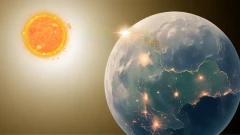
But high-energy gamma rays, X-rays, and cosmic rays are a different story. These energetic particles have enough force to break down molecular nitrogen and oxygen in Earth’s atmosphere, leading to the creation of nitrogen oxides. These compounds destroy the ozone layer, which protects the planet from harmful solar ultraviolet (UV) radiation. Without ozone, the influx of UV rays would decimate photosynthetic organisms like algae, disrupting the food chain and potentially causing a mass extinction.
So, how likely is it?
For any supernova to have this effect, it must be within approximately 25 to 30 light-years of Earth. Fortunately, there are no stars within this range that are on the verge of going supernova. The closest known candidate is Spica, a massive star located about 250 light-years away. Even though the Milky Way has its share of massive, aging stars, most are too far from Earth to pose a threat in the near term.
Long-term concerns
While we’re safe for now, Earth’s position in the galaxy isn’t static. Our solar system is gradually moving into the Orion Arm of the Milky Way, a region with high rates of star formation. Regions of star formation are often associated with more frequent supernovae, which means there’s an increased chance of a close encounter as Earth moves through this area over the next 10 million years.
Even with this heightened risk, supernovas close enough to damage Earth are predicted to be rare, with an expected frequency of only a few potentially harmful events per billion years. Yet, studies indicate a supernova about 360 million years ago may have caused a mass extinction, eliminating 75% of species at that time.
The ramma-ray burst factor
Besides typical supernovas, gamma-ray bursts (GRBs) pose a potential, if improbable, threat. GRBs occur when two neutron stars collide or in certain types of supernova events. Unlike regular supernovas, GRBs emit their energy in narrow, focused beams that can travel across galaxies, impacting planets up to 10,000 light-years away. Though GRBs are exceedingly rare and challenging to predict, their high-energy beams could strip Earth’s atmosphere if one were ever aimed directly at us.
Should we be worried?
Current evidence suggests Earth is safe from any imminent supernova threat. The nearest candidate stars are too distant, and the processes leading to supernovae are gradual, providing ample time for observation and analysis. While cosmic events like GRBs remain unpredictable, they are also exceedingly rare.
For now, Earth can continue its journey through the galaxy without immediate fear of cosmic destruction—though our place in the universe ensures we’ll always have to keep an eye on the stars.