make preferable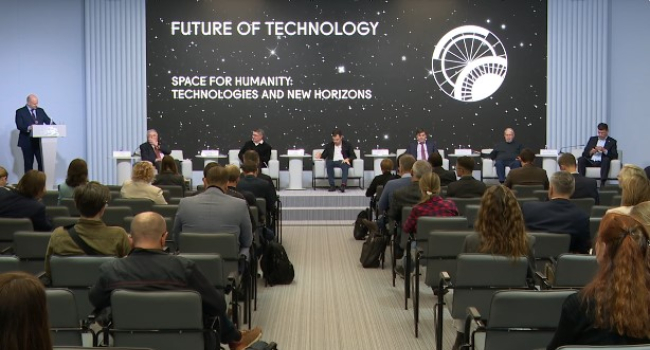
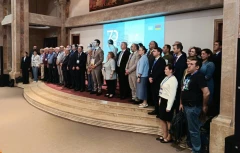
Ever since humanity began to explore space, the question has been constantly asked: why is it necessary? Why spend so many resources when there are still so many unsolved problems on Earth? Is space exploration a task with quite pragmatic goals, or simply the realization of a human dream? What are the priorities in this industry today? Dmitry Shishkin, Director of the Administrative Department of the Russian Roscosmos State Corporation, addressed these and other questions to Russian experts during a discussion on the topic of “Space for Humanity: Technologies and New Horizons” as part of the symposium “Creating the Future,” which was held in Moscow on November 4-6.
Why do we need to explore the Moon?
Scientific Director of the Space Research Institute, Academician of the Russian Academy of Sciences Lev Zeleny noted that when he was getting ready for the forum, he was thinking about what to talk about. Should he dream and talk about antigravity, wormholes, superluminal travel in the universe, the technique of communicating with aliens? But this, according to him, is "the day after tomorrow", and "tomorrow" is already coming, and he decided to talk about it "tomorrow". "Tomorrow we will have to explore the Moon," he said.
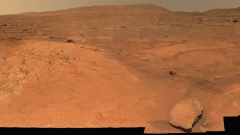
According to the scientist, the Moon is the closest celestial body to the Earth, and the 21st century will be marked by the exploration of the Moon. What attracts people to the Moon?
Firstly, these are resources. These are rare earth metals, the reserves of many of which on Earth will be exhausted by the middle of the 21st century. "This is the seventh continent of the Earth. The upper layers of the Earth were cut off during the formation of the Moon, and it contains the same periodic table. But there is another factor, the Moon is constantly bombarded by meteorites, they contain many rare metals," Lev Zeleny explained.
Secondly, the Moon is the spacepod of the future. The scientist explained that the Earth has strong gravity, it is a big hole, the exit from which requires great efforts. It will be easier for spaceships to launch from the Moon and explore the Solar and other systems.
Thirdly, the Moon is a wonderful observatory. "There is always a good astroclimate, the luminaries move slowly, it is convenient to study stars, radiation, cosmic particles. That is, it is a paradise for astronomers," the scientist said.
But how to implement all this? Many questions arise here: how to get out of the gravity well on Earth and take off from the Moon. What technologies will help to mine metals on the Moon? How to store energy taking into account severe weather conditions for the operation of batteries. How to build buildings and shelters on the Moon, how to live in conditions of many threats - dust, radiation, etc. According to the scientist, many of these issues are being worked on in various institutes of the Russian Academy of Sciences.
"Protection from space radiation. This is the most terrible threat to humans. Space is hostile to humans. It is fundamentally not anthropomorphic. But radiation can be fought. Not only shelters, but doctors are also developing special medications," Lev Zeleny noted.
He recalled that a space elevator, which Tsiolkovsky wrote about, could be used to escape the Earth's gravitational pit. "This is a very powerful cable that is secured to the Earth. And they go out to the geostationary orbit along it. It is secured there, and loads can move along it. It is clear that the whole point is in this cable. Now this concept has received a second wind - a cable woven from nanotubes is already beginning to approach the strength requirements needed to create such a structure," the scientist explained.
Asteroid landing
Writer and historian of cosmonautics Andrey Pervushin defined somewhat different priorities for Russia in space. He noted that in recent years, serious changes have occurred in cosmonautics, because a person like Elon Musk has entered it, and today, when talking about cosmonautics, we must take into account that private companies have entered it, and they do not simply carry out orders from space agencies, but they themselves determine the strategy.
"In the near future, the leading space powers will most likely withdraw from the fundamental agreements that were signed in the 60s, because they are holding back the development of the industry with the involvement of private capital. And recently, a unique and fateful event occurred. This is the unification of Russian and Chinese cosmonautics. There will be alliances and others, most likely, it will be announced that space resources can be appropriated, that is, private property for the ownership of these resources will appear. And this will increase the competitiveness of space activities. And it is time for Russia to abandon the strategy of reactive response to other people's initiatives," he said.
According to the writer, Russia should behave more aggressively in this area and choose a goal that it can present to humanity. And this, in his opinion, is not the Moon or Mars. These are asteroids that are close to the Earth's orbit or intersect them.
Studying these asteroids can solve six problems: fundamental scientific research; inventory of the natural resources of these asteroids in order to use them in the future; creation of technology for long-distance space flights to reach them; creation of technologies for protecting the Earth from collisions with asteroids. And, finally, the cosmonaut who first lands on an asteroid will go down in history on par with Gagarin and Armstrong.
Peace strategy and war strategy in space
Russian publicist, researcher and science fiction theorist Sergei Pereslegin believes that the strategic goal of space research is the research itself, considered as the ultimate form of social reflection. According to him, we can talk about economic space and strategic space. The strategic one has two directions: the strategy of peace and the strategy of war.
"The war will begin with the destruction of spaceports and the annihilation of low-orbit groups. Low-orbit groups are under threat from the ground, but high-orbit groups are not. Therefore, there will be a fight for high orbits. There will be a fight for the weapon of the final blow. I mean nuclear charges that will be concentrated very far from the Earth, maybe even beyond the Earth's orbit, for example, in the asteroid belt. Military space is inevitable and this will have to be dealt with," he said.
As for the strategy of peaceful space, this, according to Pereslegin, is the development of all types of technologies necessary for space research, which in the conditions of the approaching global depression can become the locomotive of the resumption of economic development. And for Russia, this is also the restoration of the cultural code and the struggle for civilizational leadership.
In light of this, the publicist believes that the development of near space - near-Earth orbit, the Moon - should be transferred to private astronautics. The state should also abandon middle space in favor of distant space: "In favor of the system of Jupiter, Saturn, Uranus, Neptune, Pluto. For this, a new technological platform on nuclear energy is needed. And the most difficult question is the cooling of nuclear sources by radiation. Of the projects that we have now, only the Zeus project, the nuclear tug project, has the right to exist. We do not need a Russian orbital station, it will not provide any new solutions. Instead, we need a space dock. We do not need the Moon. It will fall into our hands itself, we need deep space. And this is the task that needs to be set today," he said.
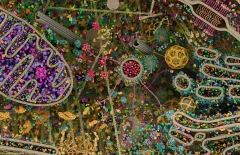
Bioprinting in space
Co-founder and managing partner of 3D Bioprinting Solutions, Yousef Khesuani, spoke about the successful experience of bioprinting on the ISS and a small race with American partners for supremacy in this area.
"We were developing bioprinting technology in parallel with the Americans. But ideologically, our approaches are completely different. Our colleagues' task was to harness microgravity and use classic Earth technologies in space conditions. We tried to use microgravity as a trigger for creating new objects. At the end of 2018, we conducted the first experiment on bioprinting in space, the Americans did it 6 months later," he said.
According to Hesuani, a new trend has already emerged today – biofabrication in space, and many countries are already doing this; for example, in Germany, an entire biofabrication institute has emerged, with a budget of 50 million euros.
The scientist explained why bioprinting should be transferred to space: space has special conditions that do not exist on Earth, it is a kind of ideal system. And these experiments are fundamental. According to him, the ISS and the future Russian space station should be treated as a full-fledged laboratory where experiments can be conducted for future space missions. And the equipment for it should be developed in such a way that it will be needed in 10-15 years.
"Let's not be shy about fantasizing, our task is to make the future wonderful, it is impossible without fantasy," he said.
The material was prepared within the framework of the symposium "Creating the Future", organized by the National Center Russia and held in Moscow on November 4-6. The Armenian News Agency - NEWS.am is the information sponsor of the symposium.