make preferable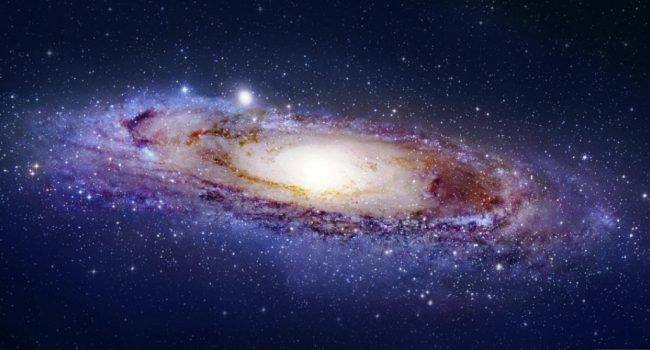
Over more than 7 years of operation, the ground-based HAWC observatory, which monitors cosmic rays, has detected 98 of the most powerful gamma rays ever observed in our galaxy. The particles are believed to have come from a single source, whose origin remains unknown. In the region where these record-high energy particles were expected to originate, there are no visible sources capable of imparting the recorded acceleration to the particles.
In 2015, the full array of detectors of the HAWC (High Altitude Water Cherenkov experiment) observatory in Mexico became operational. This array consists of three hundred tanks filled with nearly two hundred tons of highly purified water. Almost a hundred years ago, in 1934, Soviet physicists Pavel Cherenkov and Sergey Vavilov discovered the effect of faint light in a liquid when interacting with gamma radiation. Gamma rays knocked electrons out of atoms and accelerated them to speeds exceeding the speed of light in water, causing a glow.
The HAWC detectors use this principle to register cosmic rays on Earth. Gamma particles themselves do not reach the planet’s surface. The detectors register the products of their decay (interactions) with atmospheric particles. By tracing the resulting trajectories, the energy of the original gamma particles and the approximate region of the sky from which they arrived can be calculated.
High-energy particles are often associated with the concept of a natural accelerator — a "pevatron," a combination of the terms petaelectronvolt and acceleration. This level of energy indicates that the detected particles could be of extragalactic origin (capable of overcoming galactic magnetic fields and escaping the galaxy). However, there are also sources within our galaxy that emit particles with energies near PeV, meaning we may have local peVatrons. For instance, the Crab Nebula — the remnants of a supernova that exploded about a thousand years ago — is considered one such source.
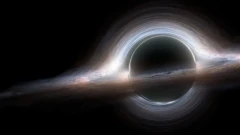
In general, a pevatron — a super-accelerator of particles — could be a neutron star, a black hole, a supernova explosion, or other objects and phenomena with powerful magnetic fields. Detecting them is challenging because magnetic fields distort the trajectories of particles. However, this distortion also provides insight into powerful physical phenomena in the universe, which cannot be recreated in laboratory conditions on Earth.
An unknown source of the most powerful gamma rays in the center of our galaxy has been designated HAWC J1746-2856. All 98 recorded emissions from this source exceeded 100 TeV in energy. "These results allow us to peer into the center of the Milky Way at energy levels an order of magnitude higher than ever observed before," physicists explain.