make preferable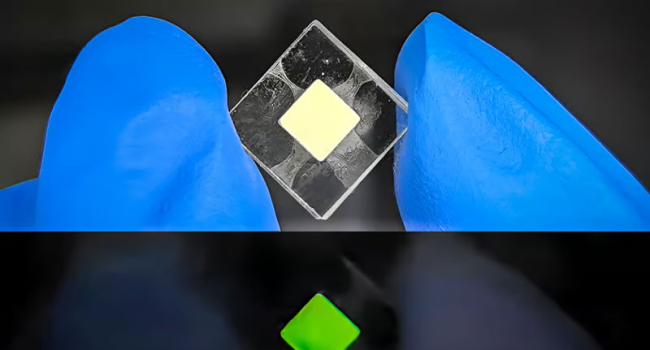
Chinese scientists have introduced a photovoltaic nuclear battery that is 8000 times more efficient than other similar batteries in existence.
Radioactive decay energy can be converted directly into electricity using a variety of semiconductors, produce heat and generate electricity using thermocouples, and can excite photons that can be used to generate electricity from photovoltaic cells. Chinese researchers from Suzhou University used the last method.
Scientists have created a polymer crystal and placed americium in it. After that, the man-made crystal began to shine, emitting green light. This glow will continue for decades, which makes the power source based on it conventionally eternal for practical use.
The scientists placed a thin-film photocell on top of the glowing crystal and encased everything in quartz glass to prevent radiation leakage.
The efficiency of such a nuclear battery was a modest 0.889%, but the researchers claim that this value is 8,000 times higher than that of previous similar designs.
Hundreds of hours of testing of this new element have shown it to consistently produce 139 microwatts per curie (a unit of radioactivity). Such elements could create a very durable nuclear battery for solving a wide range of problems on Earth and in space.