make preferable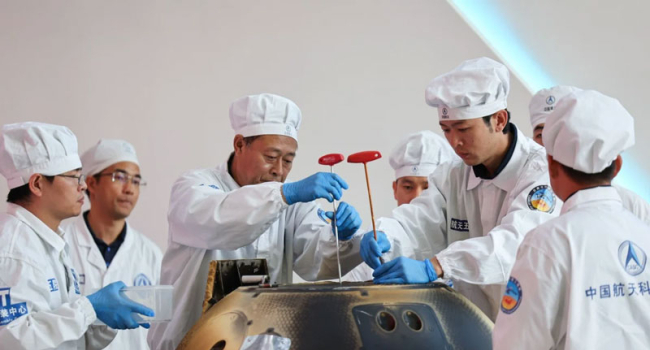
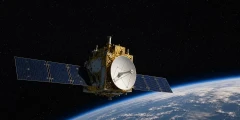
Today, preliminary information about the composition of the soil from the far side of the Moon, delivered to Earth by the Chinese probe Chang’e-6, was released for the first time. The probe brought about 2 kg of unique samples from the side of the Moon that is never visible from our planet. Full scientific articles on the soil analysis will appear in a year or later, but Chinese scientists did not keep the intrigue and shared preliminary data that surprised everyone.
The soil from the far side of the Moon turned out to be more loose or less dense than all previously delivered soil samples from the visible side of the satellite. This makes it very different from everything that space missions have brought to Earth since 1969. This alone deserves attention. But that’s not all. Before the appearance of these unique samples, all samples from the Moon mainly contained basalt rocks. In the soil samples from the far side, in addition to basalts, there are many “foreign” substances that look quite fresh in a geological sense.
Scientists suggest that they have received a mixture of more “mature” lunar soil and materials relatively recently ejected to the surface of the Moon. Several fresh impact craters were noted in the landing area, which apparently contaminated the surface at the sampling site with ejection products, including those that withstood the thermal shock. In particular, this was reflected in the glass and feldspar particles in the samples.
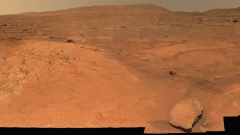
The Chang’e-6 probe landed and collected samples from the far side of the Moon at the end of June 2024 in a place called the South Pole-Aitken Basin. This is a huge impact crater that provides access to the depths of the ancient Moon and allows refining models of the satellite’s formation and evolution.