make preferable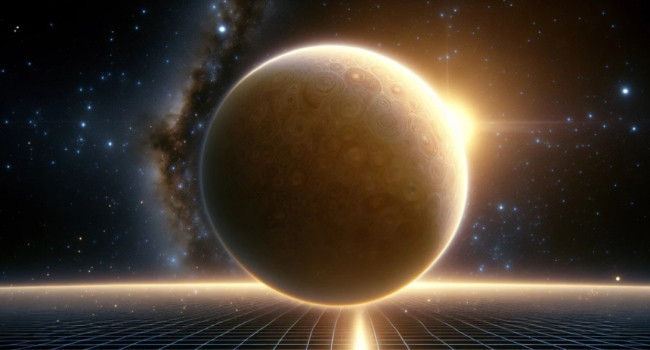
Astronomers from the Physical Research Laboratory (PRL) in Ahmedabad, India, along with their international colleagues, have discovered a new exoplanet with relatively high density. This discovery was reported in a research paper published in the journal Astronomy & Astrophysics.
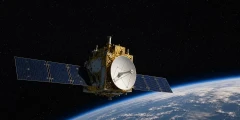
Using the Transiting Exoplanet Survey Satellite (TESS), astronomers conducted a survey of around 200,000 of the brightest stars near the Sun in search of transiting exoplanets. So far, more than 7,200 candidate exoplanets (TESS Objects of Interest) have been identified, of which 545 have been confirmed.
A team of astronomers led by Sanjay Baliwal from PRL has confirmed another transiting exoplanet (TOI) observed by TESS. The scientists detected a transit signal in the light curve of TOI-6651, a G-type star located approximately 690 light-years away, with an estimated age of 3.7 billion years. The planetary nature of this signal was confirmed through follow-up ground-based observations.
“We present the discovery and characterization of the dense exoplanet TOI-6651 b, transiting a metal-rich G-type subgiant,” the researchers write in the paper.
According to the study, TOI-6651 b has a radius of about 5.09 Earth radii and a mass 61 times greater than Earth's. This gives it a density of 2.52 g/cm³, making it the densest sub-Saturn discovered by TESS.
TOI-6651 b orbits its star every 5.05 days, with an eccentricity of 0.09 and at a distance of approximately 0.06 AU. The equilibrium temperature of the planet is estimated to be 1,493 K.
The researchers estimate that TOI-6651 b’s core has a mass of about 53 Earth masses. They suggest that the planet is composed primarily of dense materials such as rock and iron, which make up about 87% of its total mass, with the remaining mass likely consisting of a low-density hydrogen/helium envelope.
As for the host star, TOI-6651, it has a radius of about 1.32 solar radii and a mass of 1.72 solar masses. The star’s effective temperature is 5,940 K, and its metallicity is measured at 0.225 dex, meaning TOI-6651’s metallicity is 1.66 times higher than the Sun’s. A star’s metallicity can influence its spectrum, temperature, and the process of planet formation.
In conclusion, the researchers emphasized that the unusual properties of TOI-6651 b challenge existing planetary formation theories: “The existence of TOI-6651 b challenges traditional planetary formation theories and may be the result of merger events or significant atmospheric mass loss due to tidal heating, highlighting the complex interplay of dynamical processes and atmospheric evolution in the formation of massive dense sub-Saturns.”