



 make preferable
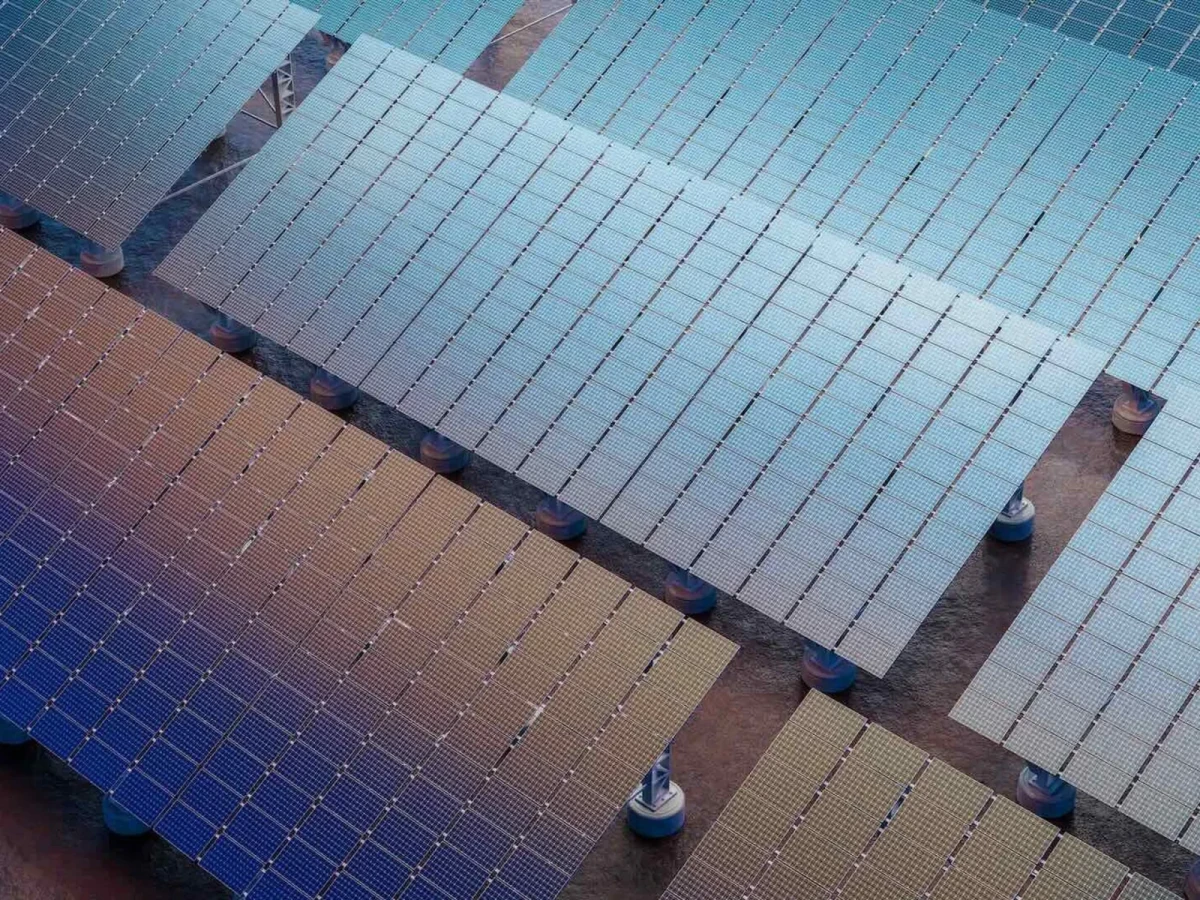
In Florida, entrepreneurs Luis Galarza and Laura Gutierrez founded SoFlo Solar to help solar system owners who were left without service after their installers went bankrupt. With the help of Claude, they analyze public building permit databases, identify companies that have gone out of business, and automate everyday processes. According to the founders, AI allows a small team to handle a workload that would previously have required far more employees.
Millions of solar installations may be left without service
Solar panels are often sold with promises of long-term warranty coverage. But the companies that install the equipment can shut down long before the loan term ends or repairs become necessary.
This is exactly the situation Galarza and Gutierrez encountered, having previously worked in solar sales. They met customers who were still making loan payments for equipment installed on their roofs but no longer knew whom to contact for service.
“The industry was making 25-year promises on behalf of companies that existed for five years,” Galarza explains. According to him, entrepreneurs themselves convinced buyers that the warranties would outlast their mortgages because they believed those promises. Yet just a year later, customers were calling them asking where the installer had disappeared to.
That is how SoFlo Solar came about — a company focused on servicing already installed solar systems, including those whose original business owners have ceased operations.
The founders believe the problem is far larger than isolated cases. By their estimate, there are more than 12,000 such installations in South Florida alone. Nationwide, of the roughly 6 million installed solar systems, nearly 2 million may be abandoned, in need of repair or maintenance, or could end up in a similar situation in the future.
These are the entrepreneurs’ own estimates, not official statistics.
How Claude helped turn an idea into a business
For solar panel owners left without their original installer, it can be difficult to find another company willing to take on the repair. To begin with, specialists often have to determine exactly what equipment is installed on the roof and whether it meets the necessary requirements. In addition, some contractors do not want to take responsibility for systems they did not install.
Galarza and Gutierrez suspected that servicing such sites could become a market of its own, but they did not know where to focus their efforts and advertising budget.
Galarza then gathered publicly available data on permits for solar system installations. In Fort Lauderdale alone, he found about 4,000 permits linked to more than 400 contractors.
With the help of Claude, he matched this database against state business and licensing registries to determine which installers were no longer operating. He then plotted the resulting data on a map.
This made it possible to identify areas where installations by defunct companies were concentrated. For SoFlo Solar, this information became a practical customer acquisition tool: by finding one system owner in such an area, the company could gain referrals from neighbors and acquaintances.
According to Galarza, it was precisely data analysis that made it possible to turn the initial hypothesis into a working business model.
AI helps a small team work more efficiently
Claude is used not only to find potential customers. Gutierrez says the tool also helped organize internal company processes: identify development directions, categorize opportunities, and plan service operations and business scaling.
The effect is especially noticeable in the work of field technicians. During on-site inspections, they can verbally describe what they see and what problems they have discovered. Based on this information, a report is generated for the homeowner — in plain language, without requiring them to understand technical details.
By the time the visit is complete, the specialists already have a document they can hand over to managers. Those use it to estimate the cost of the work and determine the next steps.
Previously, the process was far less organized. According to Galarza, his phone was overflowing with photos of solar panels that technicians sent him after inspections. He had to manually search for the right images and use them when filing warranty claims.
Now, information collection and processing happen in a much more structured way, and interaction between managers, technicians, and customers has become simpler.
There is also a language aspect: the team includes specialists who speak English, Spanish, and Portuguese. Claude helps them align information and reduce the likelihood that important details will be lost in translation.
A small business gains big-company capabilities
The founders of SoFlo Solar believe that Claude enables them to accomplish more tasks with less time, money, and human resources. According to Gutierrez, a team of two to four people can, thanks to this, operate as if it had around 20 employees.
The tool also speeds up the transition from an idea to a concrete workflow. The entrepreneurs use it to structure the actions needed to solve a problem and determine the sequence of next steps.
At the same time, Galarza emphasizes that AI does not remove human responsibility for the result. He sees Claude as a partner for discussing ideas and boosting productivity, but believes that all generated answers must be verified.
The story of SoFlo Solar shows one practical way generative AI can be used in a small business: it is not necessary to build your own complex product or automate absolutely every operation. Sometimes it is enough to use AI to analyze existing data, organize information, and eliminate routine tasks that previously consumed a significant share of working time.