make preferable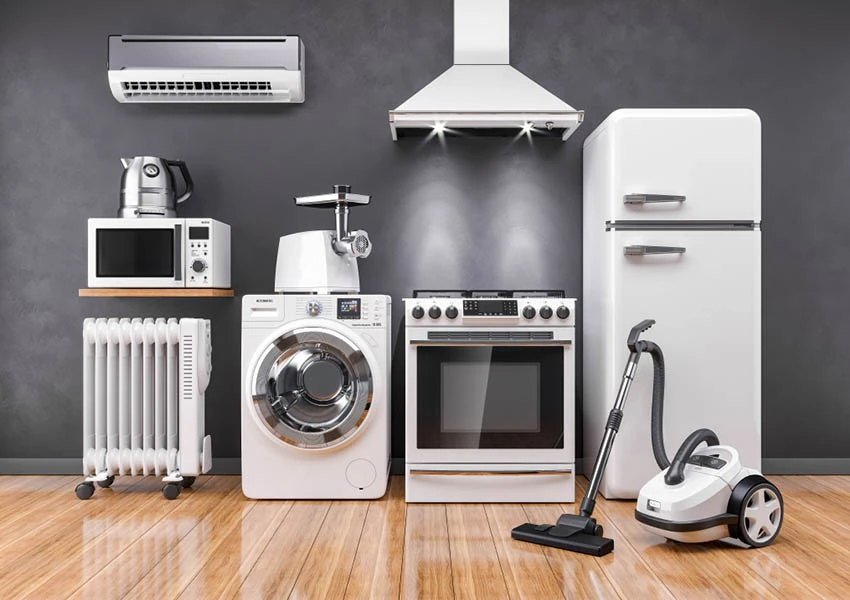
The green leaf icon on a household appliance panel is less about ecology and more about saving money. But why does a program that sometimes lasts two or three times longer than a regular one still use less electricity? The answer lies in physics: the appliance sacrifices speed to reduce the temperature and power of the most energy-intensive processes.
Eco modes are available on almost all major household appliances — from washing machines and dishwashers to air conditioners, vacuum cleaners, televisions, and refrigerators. The general idea is the same: use less energy, but the specific way savings are achieved depends on the device.
Time Instead of Temperature: How the Savings Work
In a washing machine or dishwasher, a significant share of electricity goes into heating the water. Spinning the drum, running the pump, and the electronics consume far less energy compared with the heating element.
That is why the eco program works on a simple principle: if you cannot use more energy, you can give the process more time.
The water is heated to a lower temperature, and the cycle becomes longer. Detergents have more time to work, while the mechanical action — drum rotation or water spraying — partly compensates for the lack of heat.
Modern detergents are also designed to work at relatively low temperatures: the enzymes they contain are already active at 30–40 °C.
As a result, electricity consumption can be noticeably reduced while maintaining comparable quality for everyday laundry or dishwashing.
Eco Modes Work Differently in Different Appliances
There is no universal algorithm behind the “green” button. Each appliance saves energy in its own way.
Air Conditioner
In normal mode, an air conditioner tries to cool the room as quickly as possible. Eco mode limits the compressor’s output and reduces the fan speed.
The room cools more slowly, but electricity consumption goes down. Noise levels also decrease, which can make this mode more convenient at night.
Washing Machine and Dishwasher
This is where the principle of “time instead of degrees” applies.
In eco mode, a dishwasher may use water at around 45–50 °C instead of a hotter standard cycle, but the program lasts much longer.
A washing machine also lowers the temperature and increases the duration of individual stages, including soaking.
For ordinary dirt, this approach saves electricity without a noticeable loss in results. But for heavy soiling, a low temperature is not always enough.
Corded Vacuum Cleaner
In a vacuum cleaner, there is no need to heat water at all, so the savings mechanism is completely different.
Eco mode simply reduces the motor’s power. For example, instead of the maximum 2000 W, the appliance may operate at a much lower power level.
On hard floors, that level of suction is often excessive anyway. And when cleaning curtains, furniture, or thin rugs, lower power can even be more convenient: the nozzle will not stick too strongly to the surface.
Robot Vacuum
Here, the main consumer of energy is also the motor.
Eco mode reduces suction power, allowing the battery to cover a much larger area. On tile, laminate, and other smooth surfaces, this is usually enough for daily collection of dust and small debris.
But savings have a downside: weaker suction handles sand in cracks, dense pet hair, and dirt embedded in carpets less effectively.
That is why a robot vacuum’s eco mode is better seen as a program for regularly maintaining cleanliness rather than a replacement for maximum power during deep cleaning.
Refrigerator
In refrigerators, eco mode is often linked not to everyday savings but to long absences by the owners. It may be called Holiday or Vacation.
In this mode, the refrigerator compartment operates at a higher temperature, and the compressor switches on less often. This reduces energy consumption while the door is hardly ever opened.
For everyday use, this mode is not intended: frequent opening of the refrigerator will cancel out the savings, and the temperature inside may become unsuitable for normal food storage.
Television
A TV’s eco mode works through the picture. The device lowers screen brightness and sometimes disables or limits certain image-processing algorithms.
It really does use less electricity, but the compromise is noticeable: the picture becomes dimmer, and contrast and black depth may be reduced.
In a dark room, the savings effect is usually more noticeable. In a brightly lit space, you often have to turn the brightness up more, so the benefit may be much smaller.
Why Constantly Washing and Cleaning in Eco Mode Is Not Always a Good Idea
Low temperature helps save electricity, but it has its limits.
In cool water, detergent residue, grease, and organic dirt may be removed less effectively. If you constantly use only low-temperature programs, grime and unpleasant odors may gradually build up inside the washing machine or dishwasher.
That is why it is useful to run a hotter cycle from time to time, especially if the manufacturer provides a special self-cleaning program for the machine.
This does not mean you need to wash clothes or dishes at a high temperature every time. The point is to alternate modes: the eco program is suitable for most routine tasks, while a hot cycle is for situations when it is truly necessary.
When It Is Better Not to Use Eco Mode
The main rule is simple: if saving energy means you have to run the appliance again, then there are no savings at all.
Heavy and greasy dirt. Hardened grease or old stains may come out poorly at low temperatures. For them, a hot program is often more effective.
Need for hygienic treatment. Low-temperature washing is not intended for situations where treatment with hot water is specifically required. Towels, bed linen, or items used after illness may require a higher temperature — in accordance with the recommendations of the appliance and fabric manufacturers.
When speed matters. An eco cycle can be significantly longer than a standard one. If dishes need to be cleaned quickly before guests arrive, or clothes are needed in an hour, then saving electricity is no longer the main criterion.
There is another way to reduce costs — use delayed start and run appliances during off-peak hours if your meter supports a lower tariff at those times.
Eco Mode Is a Compromise, Not a Magic Button
The eco program really can save energy, but it does so not because of some special technology that somehow makes the process both faster and cheaper at the same time. Most often, the principle is much simpler: less heating or power means more time to complete the same task.
That is why the green icon makes sense for everyday tasks with moderate dirt. When you need high temperature, maximum power, or a quick result, a standard or specialized program may be the more sensible choice.
Ultimately, eco mode is not about giving up hot cycles and high power altogether, but about using them only when they are truly needed.