




 make preferable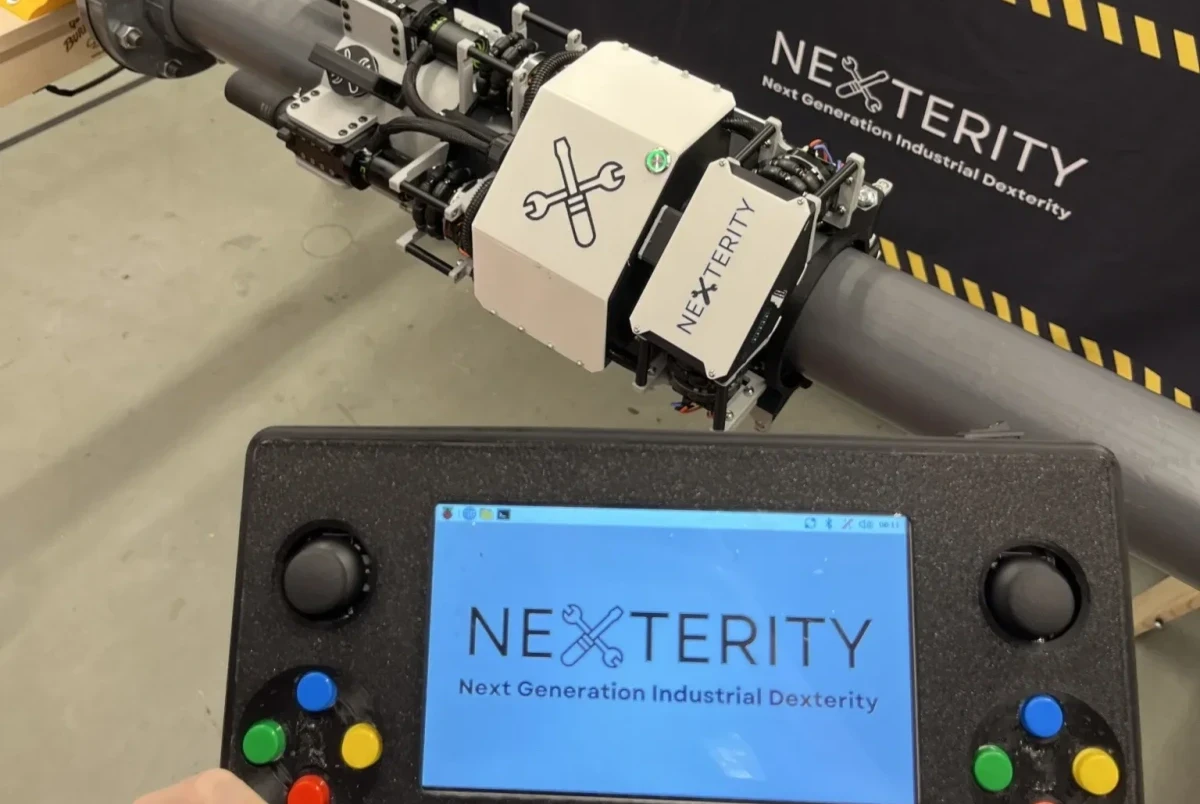
Nexterity is developing a remotely operated robot that can take over one of the most physically demanding and injury-prone tasks in pipeline installation and maintenance — loosening and tightening the bolts that connect pipe sections. The company expects that automating this repetitive work will reduce the strain on workers and boost productivity amid a shortage of skilled labor.
The idea belongs to Lindsey Elliott, a former engineer and planning specialist at ExxonMobil. For several years, she explored ways to improve the efficiency of infrastructure in the oil, gas, and petrochemical industries, eventually focusing on bolted flange connections.
Working with them regularly requires significant physical effort from pipefitters, TechCrunch reports.
The robot takes over the bolts
The Nexterity system consists of two main parts that are installed around the pipe. Once secured, the battery-powered robot can move along the pipe.
The machine’s main task is to loosen or tighten four bolts at the same time. A job that requires considerable physical effort from a human and must be repeated many times becomes an automated process.
The company has developed several robot configurations for different standard pipe diameters. At the same time, the equipment remains compact enough to fit in a Pelican case and be carried to a new location by one person.
This mobility is important to Nexterity’s business model. The company plans to provide robots not only for permanent installation, but also as rental construction equipment — similar to other specialized machinery brought to a site for the duration of a project.
‘When people work 12 hours a day, they get very tired’
According to Elliott, the problem is not only the difficulty of individual tasks. Pipefitters may work 12-hour days for several months, and physically exhausting work increases the risk of injury while also reducing productivity.
“These people get very tired when they’re expected to work 12 hours a day for three months straight,” Elliott told TechCrunch.
She also points to a chronic labor shortage in the industry. According to her, after speaking with pipefitters in the United States and Canada, she repeatedly heard about the low productivity of the North American pipefitting sector.
For Nexterity, this means automation must solve two problems at once: reducing the physical burden on existing specialists and enabling them to get more work done in the same amount of time.
Repetitive work turned out to be a strong candidate for robotics
Elliott’s robot design was shaped not only by her own engineering knowledge, but also by numerous conversations with industry professionals. In particular, she spoke with participants at the annual Bolting Symposium and members of the Pressure Vessels & Piping division of the American Society of Mechanical Engineers.
These specialists helped identify the most common range of pipe sizes.
According to Elliott, about 80% of pipes in use have diameters from two to eight inches — the standard NPS2–NPS8 range. For robotics, this is a major advantage: the more often the same operation is repeated under the same conditions, the easier it is to build a machine capable of performing it instead of a human.
“When you have that much repeatability, it’s a great candidate for automation,” Elliott says.
The robot could be needed far beyond the oil and gas industry
Although Nexterity grew out of the challenge of servicing oil, gas, and petrochemical infrastructure, the potential market is much broader.
Similar piping systems are used in water supply and wastewater facilities, water treatment plants, the food industry, mining, and nuclear energy. The same infrastructure is also needed at enterprises involved in producing environmentally sustainable materials and technologies.
This makes bolted connections an unexpectedly universal point for automation. The robot does not need to perform the full range of a pipefitter’s duties — it only needs to take over one physically demanding and highly standardized operation.
Nexterity is among 200 startups selected to participate in Startup Battlefield 200 as part of TechCrunch Disrupt. If this kind of equipment becomes widely adopted, robotics could gradually change the very nature of pipefitters’ work: people will remain on site, but the most physically demanding part of the job will be done by machines.